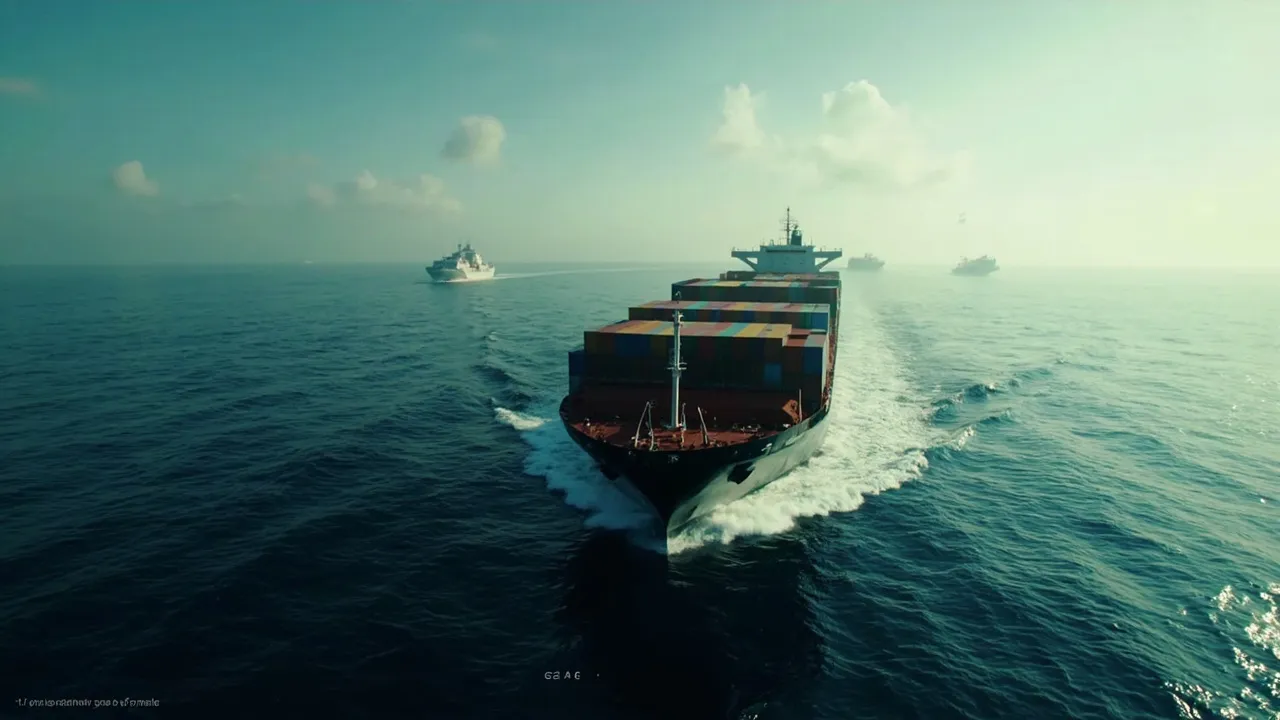
Black Sea Vessel Attacks Need Voyage-Level Exposure, Not a Country Risk Label

A red or green country-risk label is too blunt for the Black Sea in July 2026. A vessel can be acceptable when nominated, unacceptable by the time it reaches anchorage, and commercially stranded after a port restriction changes overnight.
The scale and speed of recent events make that clear. SupplyChainBrain reported that at least 124 Russia-linked vessels were targeted in the Black Sea and Sea of Azov between July 8 and July 20, citing statements from Ukraine's General Staff. Of those vessels, 89 were tankers. The report notes that Bloomberg could not independently verify the tally, but the operational signal is still impossible to ignore: exposure can shift across a fleet in days, not quarters.
For freight forwarders and shippers, the right unit of risk is therefore the individual voyage.
A map pin does not describe the exposure
"Black Sea risk" sounds geographic, but location is only one variable. Two ships sailing toward the same port on the same day may present materially different profiles.
A voyage assessment should separate at least six dimensions:
- Flag and registry: Which jurisdiction governs the vessel, and has its status changed recently?
- Registered and beneficial ownership: Who appears on the certificate, and who ultimately controls or benefits from the asset?
- Commercial relationships: Is the operator, charterer, cargo interest, insurer, or financier linked to a targeted or sanctioned party?
- Port-call history: Has the vessel recently called at Russian, Ukrainian, or other ports that alter its perceived alignment?
- Cargo: Oil, grain, military-adjacent goods, and humanitarian cargo can produce different security, sanctions, and reputational exposures.
- Sailing window: A route approved in daylight may become unavailable during a temporary nighttime restriction.
That final point is not theoretical. After the reported attacks, Novorossiysk imposed a temporary navigation ban from midnight to 5 a.m. local time. A five-hour closure can disrupt a loading sequence, push a vessel outside a berth window, and cascade into demurrage or missed downstream commitments.
The same report said the Caspian Pipeline Consortium stopped crude loadings from its Black Sea terminal because of shipowner security concerns. That terminal is the outlet for roughly 80% of Kazakhstan's crude exports. Maritime security, in other words, can quickly become production and inventory risk far inland.
Build triggers around decisions, not headlines
Risk monitoring is useful only when new information changes an action. A forwarder should connect each voyage to explicit triggers that determine whether the shipment proceeds, pauses, reroutes, or escalates.
Hold
Place a voyage on hold when screening produces an unresolved ownership match, the nominated vessel's documents conflict, war-risk cover cannot be confirmed, or the destination port suspends arrivals. A hold should stop booking release and document issuance without deleting the work already completed.
Reroute
Start a routing review when the port closes during the planned arrival window, the master or owner declines the call, the insurer excludes the intended waters, or estimated delay exceeds the customer's inventory tolerance. The review should compare alternate ports, inland connections, transshipment capacity, cargo suitability, and total landed cost—not merely sailing distance.
Insurance review
Escalate to the broker or underwriter after a change in vessel, ownership, port rotation, cargo description, or security warning. Teams should record the precise voyage facts presented to the insurer and retain written confirmation of cover. An old policy document is not proof that the current movement is accepted.
Customer escalation
Notify the customer when a security event threatens a contractual cutoff, creates a new surcharge, changes the route, or raises an exposure the customer must accept. The message should explain the decision required, the response deadline, and the operational consequence of silence.
These rules convert an alarming news feed into a manageable queue of exceptions.
Civilian status alone is not a control
Recent attacks also show why teams cannot assume a civilian trade corridor eliminates physical danger. In a separate report, SupplyChainBrain said that a July 19 missile strike killed 10 people aboard the Guinea-Bissau-flagged Golden Leo off Odessa. The vessel was reportedly moving through a maritime export corridor along the Romanian and Bulgarian coasts toward Turkey.
The lesson is not that every Black Sea voyage must stop. It is that labels such as "civilian vessel," "export corridor," or "non-Russian flag" are inputs, not approvals. Each decision must reflect the latest vessel identity, route, timing, port status, cover, and cargo interest.
Preserve the approval file as conditions change
When an incident occurs, the difficult question is often not "Who approved this voyage?" but "What did they know at the moment they approved it?"
The shipment record should preserve:
- Vessel identifiers and screening results, including timestamps
- Ownership, operator, charterer, and beneficial-interest evidence
- Cargo description, origin, destination, and end-user information
- Planned route, port rotation, and sailing window
- Security notices and port restrictions reviewed
- Insurance inquiries, responses, exclusions, and effective periods
- Customer instructions and acceptance of additional cost or delay
- The approver, decision, rationale, and next review deadline
Do not overwrite the first approval when conditions change. Create a new decision event linked to the evidence that triggered it. That produces a defensible timeline and lets operations see whether a voyage is approved now—not merely whether it was approved once.
Make risk executable in the TMS
Spreadsheets and inboxes make it difficult to connect a fast-moving security alert with every affected shipment. A transportation management system can match updated vessel, port, route, and cutoff data against active bookings; place only exposed movements into review; and retain the evidence behind every release.
CXTMS helps freight forwarders manage shipment-level exceptions, document approvals, and customer communications in one operational record. When maritime conditions change by the hour, that traceability is what turns risk policy into consistent execution.
Request a CXTMS demo to see how voyage-level controls can fit into your freight-forwarding workflow.