Singapore 3PL Growth Makes Transshipment Optionality a Control-Tower Discipline

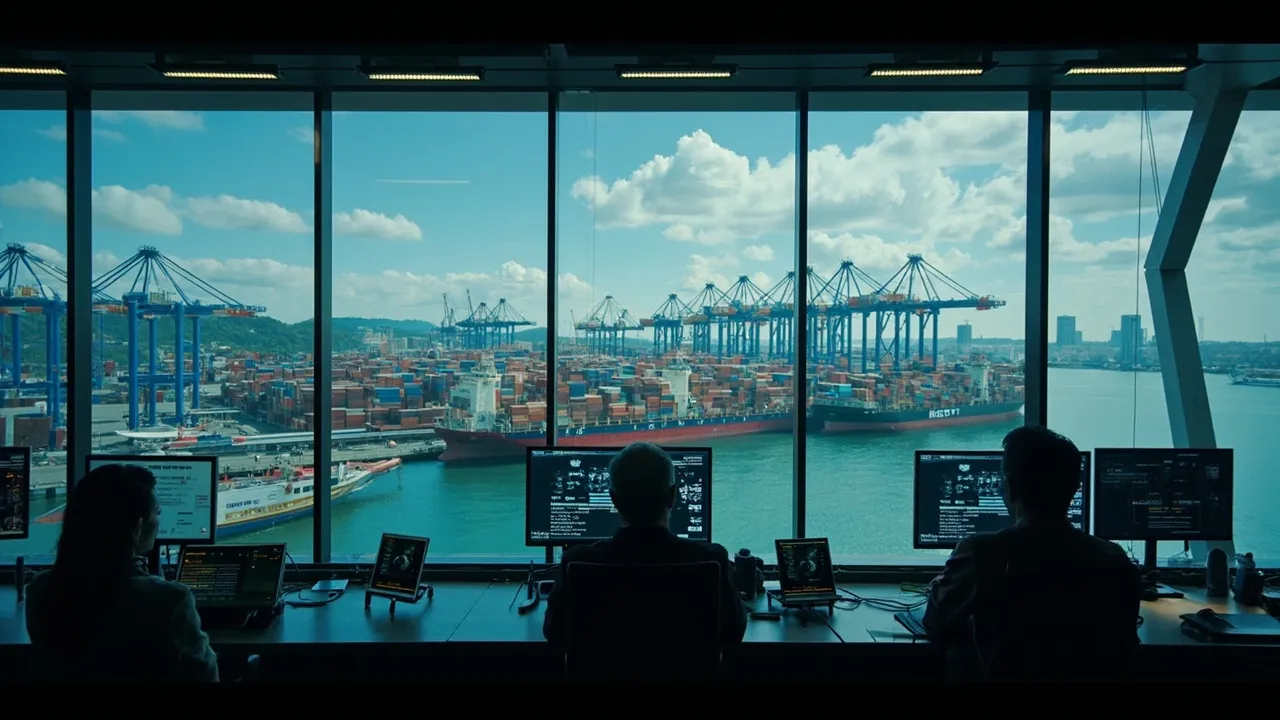
Singapore is easy to describe as a logistics hub. That label is accurate, but it can also make the operating problem sound too static. The real value is not that freight touches Singapore. It is that Singapore can give shippers options when Asia-Pacific networks start to misbehave.
Mordor Intelligence estimates Singapore's third-party logistics market at $6.02 billion in 2026, with growth to $7.23 billion by 2031 at a 3.74% CAGR. That is not explosive growth, but it is important growth in a market that already sits at the intersection of ocean, air, regional warehousing, customs, cross-border distribution, and exception recovery.
For freight forwarders and logistics companies, the number should be read less as a local-market forecast and more as a planning signal. Singapore's 3PL capacity is becoming a more deliberate part of regional resilience. When an origin delay, port rollover, airfreight shortage, customs issue, or inventory imbalance hits the network, Singapore often becomes one of the places where teams decide whether to wait, split, re-route, replenish, consolidate, or expedite.
That decision cannot live in email. It belongs in the control tower.
Singapore Is More Than Local Warehousing
Singapore's appeal comes from density. Ocean carriers, airlines, freight forwarders, contract logistics providers, bonded facilities, regional headquarters, and technology teams operate close enough to make multi-leg decisions practical. A shipment can move through the port, shift into regional distribution, connect to air capacity, or wait for downstream instructions without leaving the broader hub ecosystem.
That matters because Asia-Pacific freight rarely fails in one clean place. A factory delay in Vietnam may collide with a missed sailing. A China-origin order may need to be split between ocean and air. A Southeast Asia replenishment program may have inventory in the wrong node. A customs-document issue may need to be fixed before a shipment reaches the destination border. A customer may accept a later delivery for low-margin SKUs but demand protection for launch inventory, spare parts, medical goods, electronics, or retail promotion stock.
Singapore gives operators optionality, but optionality has a shelf life. The best decision at 10 a.m. can be gone by 4 p.m. if a flight closes, a vessel rolls, free time starts, or the customer promise changes. The control-tower question is simple: which options are executable right now, and which shipments deserve them?
Congestion Turns Optionality Into A Cost Question
The case for better hub discipline is stronger because transshipment points are absorbing more disruption. Logistics Management's 2026 ocean market update cited Xeneta data showing spot rates had already increased 37% on China-to-U.S. West Coast routes, partly because congestion from Middle East disruption was spreading into major Asian transshipment hubs including Singapore.
That statistic is useful because it connects physical congestion to commercial exposure. A transshipment delay is not just a milestone problem. It can change rate timing, carrier options, detention risk, inventory position, customer allocations, and mode conversion economics. When effective capacity tightens at hub level, logistics teams need to know which shipments can wait and which shipments should move through a different path before cost or service failure compounds.
The old playbook was to ask for a carrier update and escalate the urgent loads. That is too slow for a hub environment where modes, facilities, service levels, and customer commitments overlap. Shippers need a model that compares delay cost, inventory coverage, customer priority, customs readiness, and recovery paths in one view.
Build The Singapore Optionality Model
A practical Singapore optionality model starts with SKU criticality. Not every shipment deserves the same intervention. The control tower should distinguish promotional stock, repair parts, line-down materials, seasonal goods, cold-chain products, high-value electronics, low-margin replenishment, and goods that can miss a window.
The second field is origin lane. A shipment moving from South China through Singapore carries different risks than a shipment from Indonesia, Malaysia, Vietnam, India, or Australia. Origin lane determines sailing frequency, feeder dependency, air conversion options, documentation patterns, and alternate hub choices.
Hub dependency should be explicit. Does the shipment require Singapore, or is Singapore one qualified option among Port Klang, Tanjung Pelepas, Hong Kong, Bangkok, Manila, or direct service? If Singapore becomes congested, the control tower should know whether the route can change without breaking customer, customs, or carrier constraints.
Inventory position is the next filter. If destination inventory covers 21 days of demand, a delayed container may not justify premium recovery. If there are three days of supply left and sales are accelerating, the same delay becomes a service risk. That logic should be attached to shipment records, not rebuilt manually during every disruption call.
Customs requirements matter as well. Optionality disappears when documents do not travel with the freight. Commercial invoices, packing lists, certificates, bonded-movement rules, product classifications, customer-specific requirements, and broker ownership should be visible before a team chooses an alternate gateway or mode.
The model also needs an alternate gateway and recovery SLA. For each critical lane, the system should show the approved backup route, incremental transit time, expected cost, capacity status, and decision deadline. A backup that cannot be tendered before cutoff is not really a backup.
3PL Technology Has Become The Operating Layer
The 3PL market is not growing only because companies want outsourced labor and storage. They want operating leverage. Inbound Logistics' Top 100 3PLs coverage shows how broad the expected technology stack has become across providers, including control tower capability, TMS, WMS/WES, global trade management, optimization, predictive analytics, automation, ERP integration, and visibility.
That list matters because Singapore optionality crosses all of those categories. A recovery decision may require TMS routing, WMS inventory status, trade documentation, carrier capacity, customer-service rules, landed-cost impact, and predictive delay logic. If those inputs sit in separate systems, the control tower becomes a meeting, not an operating capability.
The strongest forwarders and 3PLs will not simply tell customers that Singapore is available as a regional hub. They will show which shipments should use it, when to convert mode, when to hold inventory, when to split orders, when to route around congestion, and what each decision means for cost and service.
Optionality Needs Execution Discipline
Singapore's 3PL growth reinforces a larger point about modern logistics: resilience is no longer just a network-design slide. It is a daily execution discipline. Hubs create choices, but choices only matter when they are visible, priced, prioritized, and actioned before cutoff.
CXTMS helps freight forwarders and logistics companies bring that work into one operating workflow. By connecting shipment milestones, inventory signals, routing rules, customs documents, customer commitments, exceptions, and cost data, CXTMS turns regional hub optionality into executable decisions instead of after-the-fact firefighting.
If Singapore, Asia-Pacific transshipment, or regional 3PL coordination is becoming harder to manage, schedule a CXTMS demo. We will show how to turn hub options into control-tower decisions your operations team can actually use.