Rhine Low Water Is a Reminder That Inland Shipping Needs Depth Triggers

Low water on the Rhine is not just a weather item. It is an operating signal.
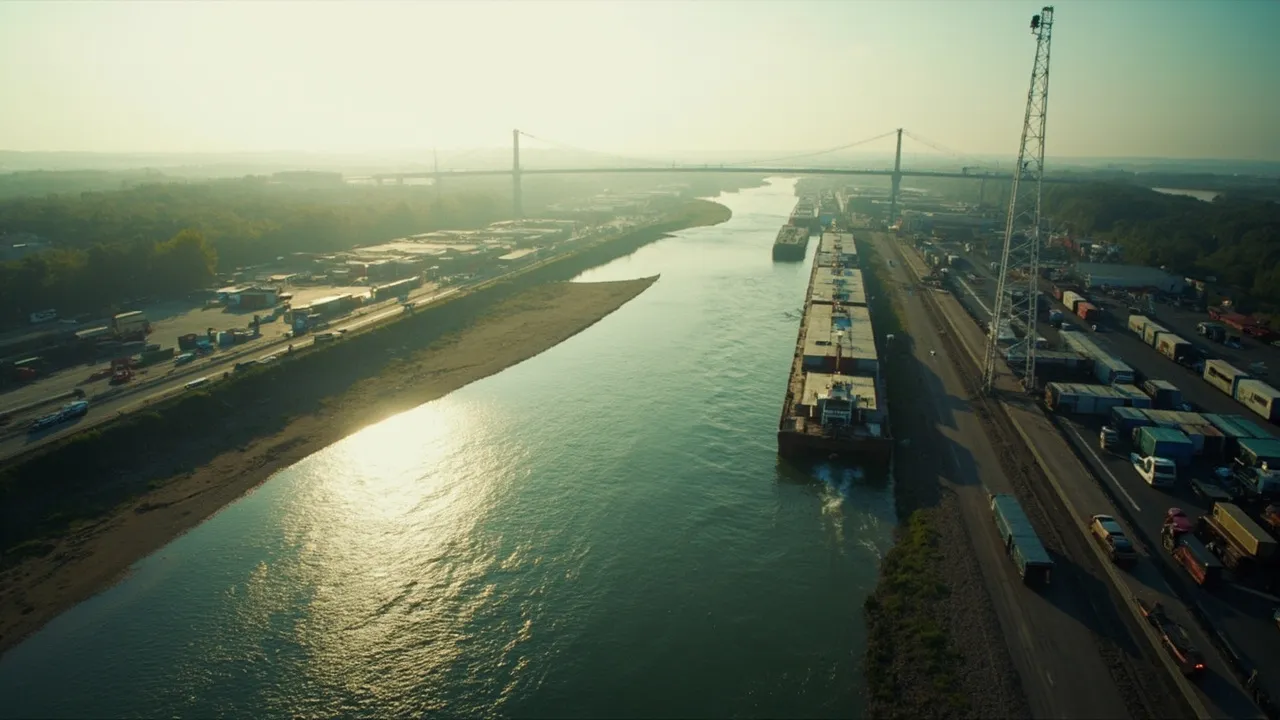
Reuters reported that shallow water was hampering Rhine river shipping in Germany, forcing vessels to sail with reduced loads and pushing transport costs higher. For shippers that depend on the river for chemicals, coal, steel, grain, petroleum products, containers, or project cargo, the problem is not only that one corridor becomes expensive. It is that the trigger often arrives before the transportation plan is ready to change.
The Rhine is one of Europe's most important inland freight arteries because it connects industrial Germany, Switzerland, France, Belgium, and the Netherlands to major seaport and manufacturing networks. When draft becomes constrained at key gauge points, a barge that looked economical on paper may need to sail partly loaded, wait for better water, split cargo, or hand freight to rail and truck capacity that was never reserved.
That makes low water a planning discipline problem. Inland waterways need the same operational monitoring that logistics teams already apply to ocean lanes, border crossings, and port congestion.
The Risk Is Load Factor, Not Just Delay
Many disruption playbooks treat transportation risk as a binary event: the shipment moved, or it did not. Low-water shipping is different. Barges may still move, but with lower utilization. A vessel that cannot load to its normal draft turns a water-level reading into a cost-per-ton problem.
That is why the first operational question is not "Is the Rhine open?" It is "At this water level, how much can this barge legally and commercially carry?"
Reduced load factors create a cascade. More sailings may be needed to move the same volume. Freight that cannot wait may shift to rail or truck. Emergency road capacity raises cost, adds emissions, and competes with other shippers at the same time. Rail substitutes may be limited by wagon availability, terminal slots, hazardous goods rules, and network congestion. Customer ETAs become unstable because the original route is still technically possible but no longer economically or physically adequate.
The difference matters. A TMS that only records mode and planned pickup misses the early warning. A transportation team that watches gauge depth, draft limit, and load factor can act before the shipment becomes a service failure.
Europe Already Runs On Tight Modal Tradeoffs
Low water also lands in a European logistics market that has little room for lazy fallback planning. Mordor Intelligence notes that EU Green Deal incentives are encouraging a modal shift from road to rail and waterways, while rail freight fell 2.8% year over year in H1 2024, exposing capacity shortfalls that can slow the transition. The same source cites a 500,000-driver shortfall in Europe that could swell to 745,000 by 2028, with operators raising wages 15% to 25% annually and road freight rates rising 18% to 22% in major corridors.
Those numbers explain why a Rhine disruption is not easily solved by calling more trucks. The fallback mode has its own constraints.
Mordor also reports that manufacturing supplied 32.01% of Europe's freight and logistics market share in 2025. That makes inland disruption especially relevant for industrial supply chains where bulk inputs, production sequencing, and plant delivery windows are tightly linked. If a chemical plant, steel mill, auto supplier, or construction-materials customer is waiting on barge-fed inventory, the water gauge becomes part of the production calendar.
This is where inland shipping needs a more structured control file. Without it, teams rely on local knowledge, broker calls, and late exceptions. That may work for a single shipment. It does not scale across customers, commodities, origins, plants, rail terminals, and contract terms.
Build The Water-Level Trigger File
The first field is the river gauge. Each shipment should be linked to the relevant gauge points, threshold values, forecast trend, and date-time stamp. A generic "Rhine risk" flag is too vague. The operating question is which location is controlling draft for this move.
The second field is the commodity. A low-water trigger for petroleum, chemicals, grain, containers, steel, or oversized industrial equipment should not produce the same response. Hazardous cargo, temperature sensitivity, handling limits, and customer priority all change the decision.
Third is barge draft. The system should know the planned vessel type, normal draft, minimum safe operating draft, and how load limits change as water falls. That connects the physical river condition to the commercial plan.
Fourth is load factor. If the barge can only carry 60% of the planned cargo, the transportation plan should show the residual volume, cost impact, added sailing requirement, and whether the remaining freight should wait or shift mode.
Fifth is the rail or truck fallback. Fallback capacity should include carrier, lane, terminal, equipment fit, lead time, rate basis, emissions impact, and appointment feasibility. Naming a substitute mode is not enough. The substitute must be executable.
Sixth is surcharge exposure. Low-water surcharges can be tied to gauge thresholds, tonnage, commodity type, contract terms, or spot-market conditions. Finance and customer-service teams need to know when a shipment crosses a chargeable threshold before the invoice arrives.
Finally, the file needs customer priority. A high-margin production shipment, contractual service-level commitment, medical input, or stockout prevention move may justify early modal substitution. A replenishment load with inventory cover may wait for water levels to recover. The decision should be explicit.
Depth Signals Belong In Exception Workflows
Logistics Management's State of Logistics coverage described a market moving from periodic optimization to continuous adaptation, shaped by trade-policy shifts, energy challenges, labor shortages, and rising operating costs. It reported U.S. business logistics costs of $2.4 trillion, or 7.8% of GDP, but the lesson travels well beyond the U.S.: disruption has become an operating condition, not an occasional interruption.
For inland shipping, continuous adaptation means converting infrastructure signals into decisions. Gauge falls below threshold. Load factor changes. Surcharge risk appears. Rail fallback is checked. Truck capacity is priced. Customer ETA is updated. Inventory cover is reviewed. The shipment either proceeds, splits, waits, or changes mode.
CXTMS helps logistics teams turn those signals into repeatable workflows. Instead of treating river levels as an external alert that someone must manually interpret, teams can connect gauge thresholds, commodity rules, carrier options, surcharge exposure, inventory buffers, and customer priority to the shipment record. That gives planners an evidence trail for why a barge was part-loaded, why freight shifted to rail, or why a customer ETA changed before the missed window.
Low water on the Rhine will not be the last infrastructure signal to hit freight plans. The durable lesson is to make depth operational. If your inland waterway plan still depends on late phone calls and manual spreadsheets, request a CXTMS demo. CXTMS helps logistics teams convert infrastructure risk into mode decisions before the shipment misses its window.