AI Hardware Demand Is Forcing Air Cargo Teams to Prioritize Premium Capacity

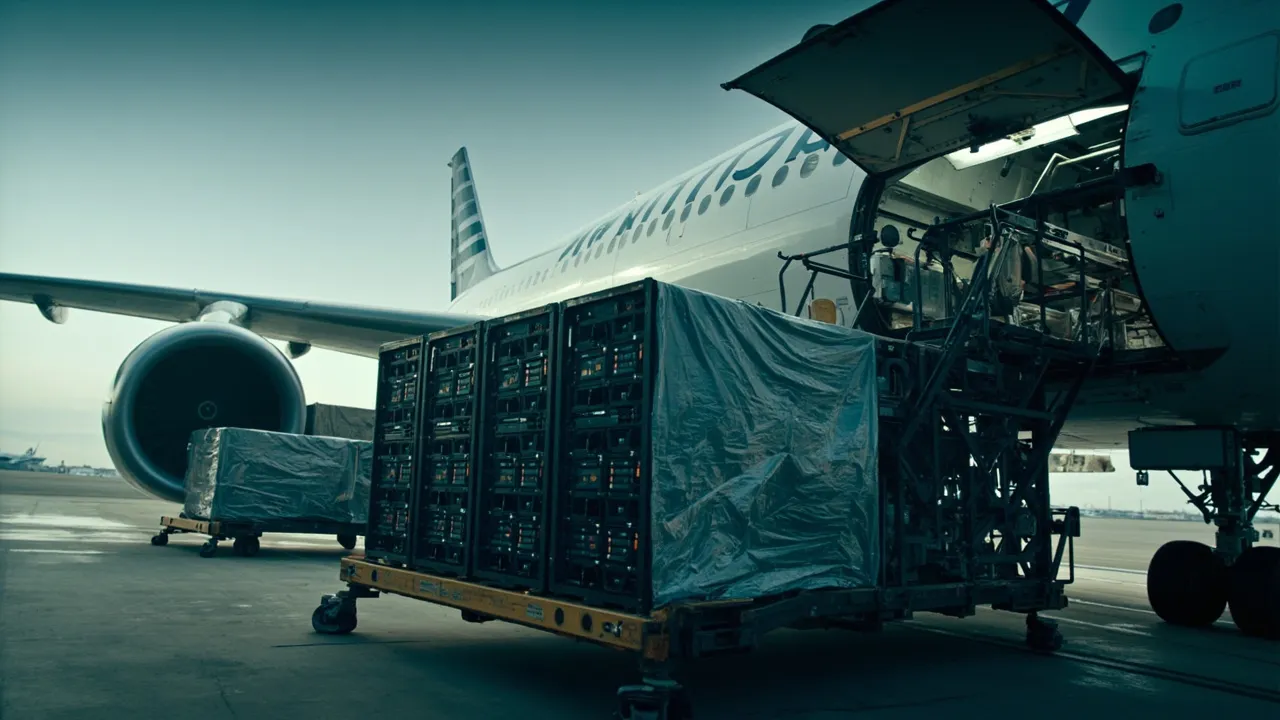
Air cargo is getting a new kind of peak season. It is not being driven only by holiday retail, emergency parts, or fashion launches. It is being pushed by the physical buildout of artificial intelligence.
Supply Chain Dive reported that global air cargo demand rose 7% year over year in June, according to Xeneta, while the average global spot rate reached $3.40 per kilogram, up 38% year over year. The same report said AI hardware and semiconductor demand are helping offset weaker e-commerce traffic, especially on Asia Pacific to North America corridors.
That is the operating problem: AI-related freight can represent less than 10% of total air cargo volume and still set the marginal price for the capacity everyone else needs.
For shippers, forwarders, and logistics service providers, the question is which shipments deserve the premium lane before the panic buy begins.
Small Volume Can Set The Market Price
AI hardware does not need to dominate every aircraft to dominate the pricing signal. It only has to compete for scarce capacity on the right lanes at the right time.
Supply Chain Dive cited Xeneta data showing spot rates from Northeast Asia to North America rose 41% from the week starting Feb. 23 to the week starting June 22. Southeast Asia to North America rose 42% over the same period. Those increases point to a premium-capacity fight concentrated in the corridors that connect chip production, electronics assembly, and North American demand.
The underlying semiconductor signal is even sharper. Supply Chain Dive reported that Taiwan posted 15% GDP growth in Q1 2026, its fastest quarterly expansion in nearly five decades, and that global semiconductor sales doubled year over year to 106% growth in April. When that kind of production cycle hits the freight market, air cargo becomes a release valve for schedules that cannot wait for ocean service.
The result is a pricing environment where ordinary prioritization starts to fail. A customer may have a penalty clause. A supplier may miss a commit date. Those requests cannot all become premium air moves when the same Transpacific capacity is being pulled toward AI infrastructure.
Air Cargo Is Still Stabilizing, Not Comfortable
The market is not simply overheated everywhere. That makes the planning challenge harder.
Logistics Management's State of Logistics air cargo coverage noted that the two biggest issues for shippers remain capacity and rates. It also reported that analysts see market conditions beginning to stabilize after spot rates surged more than 30% year over year in April.
But stabilization is not slack. Logistics Management warned that labor shortages, elevated fuel costs, supply chain disruptions, infrastructure constraints, cybersecurity risks, geopolitical uncertainty, and changing customer expectations continue to challenge the air cargo sector.
Supply Chain Dive's June numbers reinforce that point. Xeneta reported a 62% global dynamic load factor, up three percentage points year over year. When load factors rise while high-value AI hardware is competing for uplift, the marginal shipment gets more expensive and less certain.
That is where many teams make the wrong move. They treat premium air as a service recovery tool instead of a governed capacity pool. By the time a shipment is late, the rate ceiling has already moved.
High-Tech Freight Changes The Allocation Model
The broader air freight market is large enough to absorb many cycles, but high-tech cargo changes the mix. Mordor Intelligence estimates the global air freight market at $169.53 billion in 2026, growing to $225.26 billion by 2031 at a 5.85% CAGR. It identifies accelerated supply-chain needs for high-tech electronics as a growth driver and notes that semiconductor producers in Southeast Asia and Mexico fly critical components to final assembly lines to support just-in-time manufacturing.
That is the key phrase: critical components. AI hardware freight is often low in cube relative to value, but high in schedule consequence. A missed component can delay server deployment, data-center commissioning, customer installation, or production ramp-up.
Premium air capacity should be allocated before the exception occurs. That means creating a clear decision model around which SKUs, customers, and lanes qualify.
The Air-Capacity Allocation Model
A practical allocation model starts with SKU criticality. Not every high-value product is urgent, and not every urgent product is strategic. The record should identify whether the shipment protects revenue, production continuity, customer uptime, regulatory obligation, or contractual service.
The second field is chip exposure. If a shipment contains AI accelerators, advanced semiconductors, specialized memory, server components, or equipment tied to a data-center build, it belongs in a different review path.
Third is customer penalty. A premium air decision should account for financial exposure: chargebacks, service credits, installation delays, lost sales, contractual penalties, or plant downtime. Without that number, teams often confuse loud escalation with real economic impact.
Fourth is supplier commit. If the supplier has already missed a committed handoff, air freight may be a recovery tool. If the supplier is routinely late, repeated premium moves are a supplier-performance issue.
Fifth is airport pair. The AI hardware effect is lane-specific. Transpacific routes from Northeast and Southeast Asia to North America are behaving differently from other lanes. Allocation rules should reflect origin, destination, handling risk, and available uplift.
Sixth is rate ceiling. Teams need a pre-approved threshold by lane, customer, and shipment type. If the spot market breaks that ceiling, the decision should escalate automatically instead of turning into a last-minute debate.
Finally, the model needs a mode-shift threshold. Some freight should move by ocean, sea-air, deferred air, or staged replenishment unless a specific date, penalty, or production risk justifies premium air. The threshold should be visible before a planner clicks "expedite."
CXTMS Turns Premium Air Into A Governed Workflow
AI hardware demand is not just another market headline. It is a stress test for freight governance.
CXTMS can help logistics teams connect SKU criticality, supplier commit dates, customer penalties, airport pairs, rate ceilings, carrier options, and shipment visibility in one execution workflow. Instead of treating premium air as an emergency button, teams can define which moves qualify, who approves them, and when a mode shift is still acceptable.
That matters because AI infrastructure demand may not last at today's pace forever, but the operating lesson will. High-value cargo can reshape a lane even when it is a small share of total volume. Companies with clear priority rules will protect the shipments that truly need air capacity.
If premium air freight is becoming the default answer in your network, request a CXTMS demo. CXTMS helps logistics teams turn shipment priority, supplier performance, rate governance, and air cargo visibility into a disciplined execution workflow before urgency becomes the pricing strategy.