AI Freight Fraud Turns Carrier Onboarding Into a Live Control

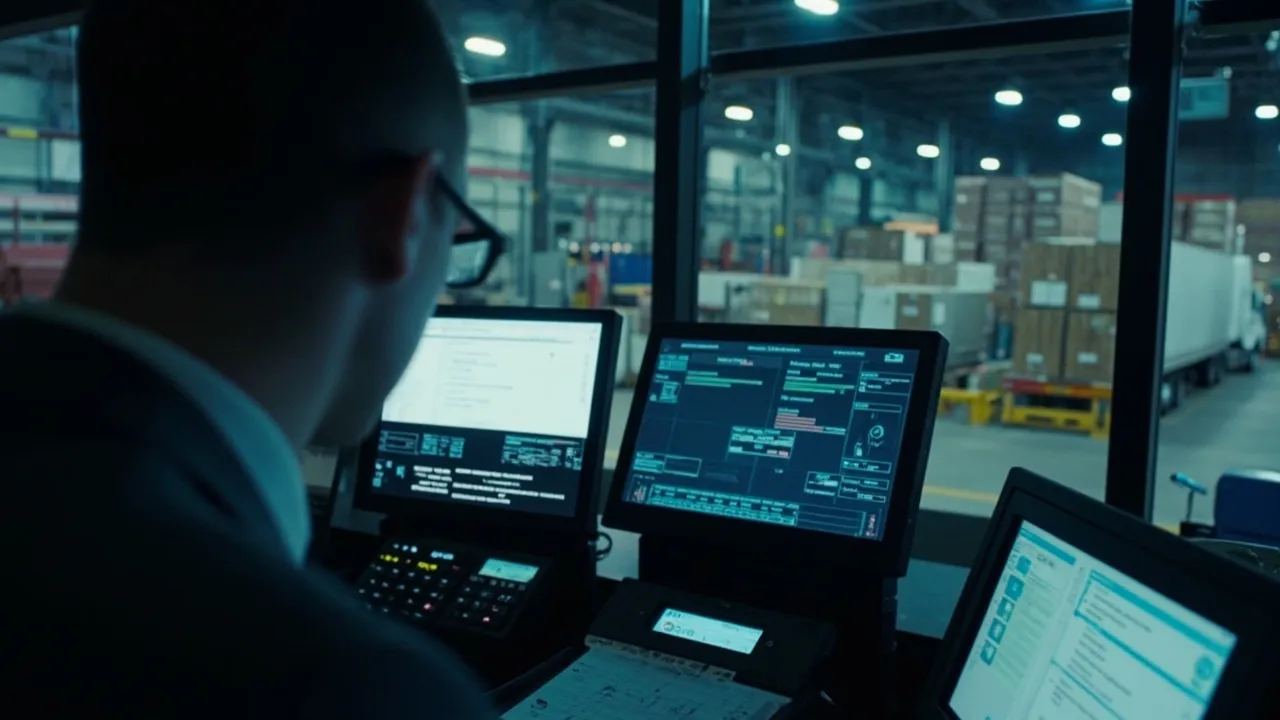
Freight fraud used to feel like a front-door problem. Vet the carrier, collect the packet, confirm insurance, save the documents, and move on. That model is cracking because the attack surface has moved into the same digital workflows that make logistics faster: quoting, onboarding, load boards, document exchange, dispatch communication, and payment.
SupplyChainBrain put the issue plainly: AI is making logistics faster, but it is also making freight fraud easier. The article cited FBI reporting that cargo theft losses in the U.S. and Canada reached nearly $725 million in 2025, up 60% year over year. Reported incidents rose 18%, while the average value per theft increased 36% to $273,990.
Those numbers are not just a theft story. They are an identity story. Spoofed credentials, fabricated documents, fake carrier identities, cloned domains, compromised inboxes, and fraudulent web links now sit inside ordinary transportation workflows. A criminal does not always need to break a seal. Sometimes they only need to look enough like the approved carrier at the right moment.
That is why carrier onboarding can no longer be treated as a static compliance event.
Static Vetting Is Too Slow For Synthetic Risk
The old carrier file still matters. Authority status, insurance, safety data, tax forms, payment instructions, contacts, equipment, operating history, and signed agreements are all necessary. But necessary is not the same as sufficient.
Static onboarding assumes the risk profile is mostly stable after approval. AI-enabled fraud attacks that assumption. Documents can be generated or altered quickly. Email domains can be cloned. Contact identities can be spoofed. Bank account changes can be timed near payment. A legitimate carrier profile can be used as cover for a fraudulent dispatch contact.
FreightWaves' Q1 cargo theft coverage shows the operational shape of the problem. FreightWaves reported that Overhaul recorded 574 U.S. cargo theft incidents in Q1 2026, averaging 6.4 thefts per day. Total thefts fell from late 2025, but deceptive pickup schemes jumped 31% year over year. Electronics accounted for 17% of incidents, food and beverage for 15%, and auto parts theft surged 142% from Q4 2025.
That is the uncomfortable signal: even when aggregate theft counts soften, fraud tactics can become more sophisticated. The better reading is that criminals are shifting toward identity manipulation, impersonation, and pickup deception because those methods exploit weak workflow controls.
AI Raises The Stakes On Both Sides
AI is not the villain. Weak process is. The same technology that can accelerate fraudulent documents can also compare documents against route history, detect mismatched identities, flag unusual communication patterns, and force review before a load is released.
The problem comes when logistics teams automate an already-thin control model. Faster carrier approval without stronger validation simply scales the weakness. Faster document processing without anomaly detection leaves less time to notice a fake certificate, changed bank detail, unusual email domain, or suspicious pickup sequence.
That concern fits the broader logistics technology moment. FreightWaves' coverage of the 2026 State of Logistics Report said U.S. business logistics costs totaled $2.4 trillion, or 7.8% of GDP, and described volatility as a permanent feature of the operating environment. The same article noted that AI is moving from trial to targeted commercial use through four capabilities: interpret, predict, recommend, and execute.
Fraud control belongs in that same sequence. Interpret the counterparty data. Predict risk. Recommend a hold, check, or escalation. Execute the control before freight leaves the dock. If AI only accelerates tendering and document exchange, it leaves trust behind. If AI strengthens verification inside the workflow, it becomes a control layer.
The Live Carrier-Control Record
The practical answer is a live carrier-control record tied to the shipment, not a dusty onboarding folder.
Start with authority status. The system should confirm that the carrier authority remains active and appropriate for the shipment at tender and again near pickup. A stale onboarding-day check does not prove the carrier is safe for today's load.
Next is insurance. Coverage should match commodity risk, shipment value, equipment type, and effective date. A certificate that looked valid last month may not cover a high-value electronics move today.
The third control is pickup identity. The person, tractor, trailer, driver contact, dispatcher, and expected arrival should connect to the approved carrier record. If the pickup identity changes after tender, the release process should slow down.
Then check the email domain. A near-match domain, personal email, unusual reply-to address, or sudden contact change should trigger review. Many fraud schemes live in tiny communication differences that busy teams overlook.
The fifth control is geofence behavior. The carrier should appear where the load plan says it should appear. Unexpected approach patterns, wrong first movement, or a route that does not match the shipment plan can be early warnings.
Sixth, require driver confirmation. Pickup should not rely only on a name in an email thread. Confirmation can include appointment identity, dispatch verification, license details, equipment match, facility gate check, and a documented release decision.
Seventh, monitor POD anomalies. Proof of delivery should match the consignee, expected location, timeline, signature pattern, seal record, and document metadata. A clean-looking POD can still be wrong if it does not fit the shipment history.
Finally, use a payment hold when the record does not add up. Fraud prevention has to connect operations and finance. A suspicious carrier, changed bank account, abnormal POD, or disputed delivery should stop payment until the exception is resolved.
CXTMS Connects Risk To Execution
The key is making these checks part of transportation execution instead of a separate compliance ritual. Fraud is now embedded in workflow, so validation has to be embedded there too.
CXTMS helps logistics teams connect carrier qualification, shipment milestones, documents, pickup evidence, exception alerts, and payment controls in one transportation management layer. Fraud rarely announces itself through one obvious failure. It appears as a cluster: a new contact, a changed domain, a rushed pickup, a mismatched driver, a high-value load, a strange POD, or a payment detail that changed at the wrong time.
When those signals live in disconnected inboxes, spreadsheets, portals, and carrier notes, the pattern is easy to miss. When they are attached to the shipment record, the team can decide before release, before payment, or before the next load is tendered.
AI freight fraud is not an argument against faster logistics. It is an argument for verified speed. The winners will not be the teams that approve carriers the fastest. They will be the teams that can prove, at the shipment level, that the carrier, driver, documents, route, delivery, and payment all belong to the same legitimate transaction.
If your carrier onboarding process still ends when the packet is approved, request a CXTMS demo. CXTMS helps freight forwarders and logistics teams turn carrier qualification into live shipment-level risk control.