Freight Distress Is Becoming a Vendor Risk Signal for Shippers


Freight distress rarely starts with a formal failure notice.
It usually shows up first as softer signals: a missed pickup, a late appointment, a dispatcher asking for faster payment, or a carrier declining lanes it used to accept. By the time a provider files for bankruptcy or announces a closure, the shipper has often been seeing operational smoke for weeks.
That is why freight distress is becoming a vendor risk signal, not just an industry headline.
FreightWaves reported a new round of bankruptcies and WARN notices across trucking, warehousing, cold storage, staffing, and contract logistics. The largest cuts were tied to an Avon, Indiana, facility where Humano said an entire operational unit would permanently cease operations around Aug. 17, affecting 586 employees. SIMOS filed a separate WARN notice for the same address, listing 574 affected employees across receiving, equipment operator, support, lead, sorter, and shipping loader roles.
Those are not abstract labor-market numbers. They are shocks that can change appointment reliability, dock throughput, order cycle time, and escalation paths.
Distress Is Broader Than Trucking
The same FreightWaves report showed how wide the pressure has become. Tucker Boyz Transportation filed for Chapter 11 protection on June 23, listing $126,000 in assets, $152,000 in liabilities, 22 trucks, and 22 drivers. Navstar Express filed for Chapter 7 with two trucks and two drivers. Touchstone Logistics filed for Chapter 11 with liabilities listed at $1 million to $10 million. Power Lane Logistics Distribution & Warehousing filed for Chapter 11, as did Azhderian Cold Storage in California.
Ryder Integrated Logistics also filed a WARN notice for 76 layoffs at a customer site in Plainfield, Indiana. Kuehne + Nagel had a WARN notice affecting 90 employees in Lewisville, Texas, and GXO Logistics had a small WARN closure in San Bernardino, California.
The pattern matters more than any one filing. Distress is touching carriers, warehouse labor providers, cold storage businesses, and contract logistics sites. Vendor risk cannot live only in annual procurement reviews.
The Warning Signs Arrive Before Failure
Provider distress has a habit of leaking into operations before it becomes public.
A trucking company under cash pressure may push for shorter payment terms, resist detention disputes, reduce weekend coverage, or accept freight it cannot properly service. A warehouse partner losing labor may miss inbound appointments, stretch unload times, increase mispicks, or slow outbound staging. A broker or 3PL facing margin pressure may tender freight to weaker carriers or delay claims responses.
Shippers often treat these events as isolated exceptions. One late pickup gets blamed on weather. One appointment miss gets blamed on a driver. One claims delay gets blamed on paperwork. But when the same provider begins showing multiple changes across acceptance, service, billing, claims, and communication, the transportation team is looking at a risk pattern.
The right question is not "Did this vendor fail today?" It is "Is this vendor becoming less dependable than its historical baseline?" Tender acceptance, pickup compliance, delivery performance, appointment reschedules, claims frequency, invoice disputes, dwell time, response time, and escalation volume all become risk indicators when tracked by provider, lane, facility, customer, and freight type.
Strong Carriers Are Also Changing the Market
Distress does not happen in isolation. While weaker providers struggle, stronger carriers are becoming more selective about the freight they want.
Supply Chain Dive reported that FedEx Freight, now operating independently, is targeting healthcare, grocery, technology, data center, food and beverage, and other higher-margin segments. The company reported fourth-quarter revenue of $2.4 billion, up 4.8% year over year, while average daily shipments fell 5.9%. Revenue per shipment increased 11.5%, weight per shipment rose 3%, and revenue per hundredweight climbed 8.2%.
That combination tells shippers something important: capacity quality is not simply available or unavailable. It is being re-priced and aimed at freight profiles carriers consider strategically attractive.
If a shipper relies on fragile providers for core lanes while higher-performing carriers focus on more profitable verticals, the risk is double-sided. Weak partners may fail or shrink coverage. Strong partners may demand cleaner freight, tighter appointments, higher density, or better margins.
Warehouse Continuity Belongs in the Same Scorecard
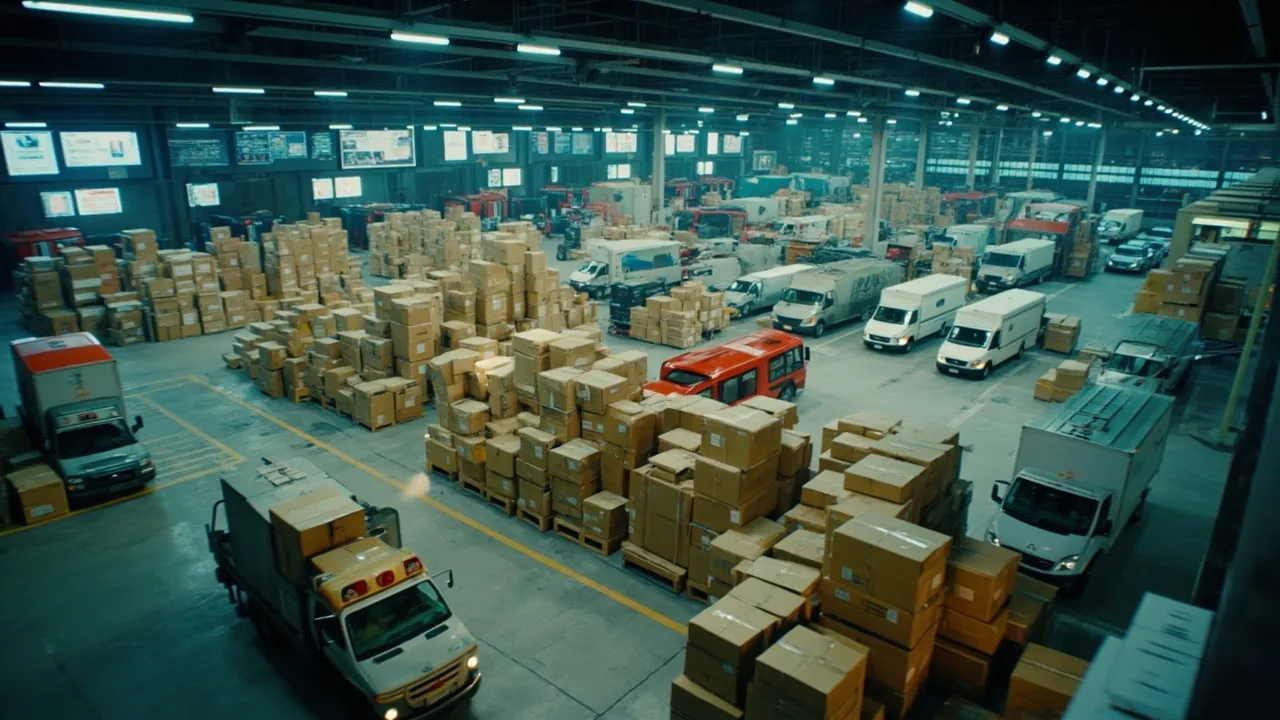
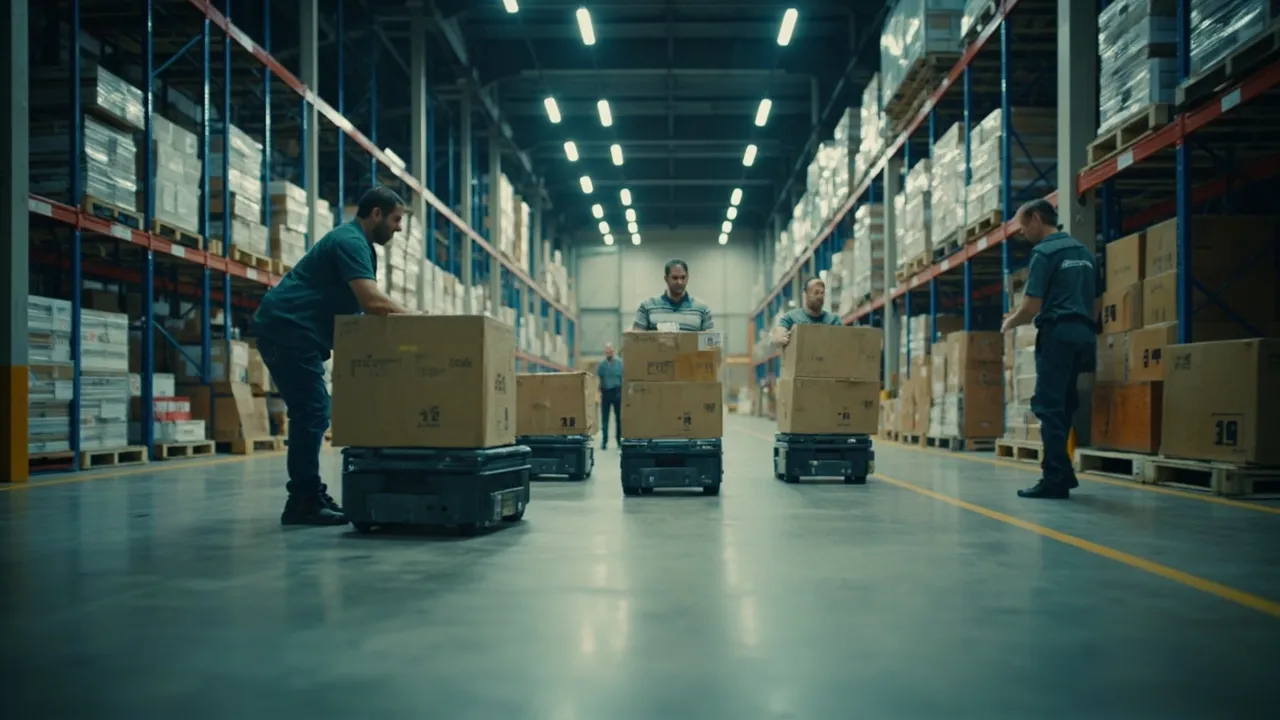
Transportation teams sometimes separate carrier risk from warehouse risk, but the customer does not experience them separately. A carrier miss and a warehouse labor disruption both become a service failure if an order does not ship, a delivery appointment is lost, or a consignee chargeback appears.
The Avon WARN notices are a useful reminder. More than 1,100 affected roles across two staffing providers at the same facility can change the operating reality quickly. Even if the building stays open, institutional knowledge leaves. Receiving, sorting, loading, and support work may need to be reassigned or rebuilt. That can show up as longer dock dwell, lower trailer turn velocity, more staging errors, and weaker exception response.
Cold storage distress carries its own stakes. A refrigerated warehouse disruption can create product integrity risk, tighter appointment windows, and limited alternate-capacity options.
Shippers should not wait for a formal closure before building contingencies. If one location handles a meaningful share of inbound flow, outbound fulfillment, returns, or temperature-controlled storage, the operation needs alternate capacity, inventory visibility, and routing options ready before the disruption is obvious.
Risk Management Needs Forward-Looking Signals
Supply chain risk programs are becoming more dynamic because third-party dependencies can create losses faster than traditional reviews can catch them. SupplyChainBrain's discussion of technogenic risk highlighted the same principle in technology supply chains: vendor-specific patterns, operational role, and breadth of exposure matter.
The logistics version is straightforward. A carrier serving one low-volume backup lane does not carry the same exposure as a carrier handling 30% of a key retail network. A warehouse provider with a minor overflow role does not carry the same exposure as the only cold storage node near a major customer.
Risk scorecards need to weight both probability and impact. How likely is disruption, how much does the shipper depend on that provider, and how quickly could volume move elsewhere?
Turn Exceptions Into an Early-Warning Layer
The practical move is to connect vendor scorecards to execution data.
Start with baseline performance by provider and lane. Then watch for deviation: lower tender acceptance, more fall-offs, more rescheduled appointments, longer dwell, rising claims, slower document turnaround, more invoice exceptions, or sudden communication gaps. Add context where available, including WARN notices, bankruptcy filings, facility closures, safety trends, and capacity withdrawals.
The goal is not to panic every time a provider has a bad week. It is to distinguish normal operational noise from a pattern that deserves contingency planning.
CXTMS helps logistics teams make that distinction by connecting carrier scorecards, warehouse milestones, tender history, claims, invoice exceptions, appointment performance, and escalation workflows in one transportation operating layer. If freight distress is starting to show up in your provider network, schedule a CXTMS demo and see how CXTMS turns vendor risk signals into earlier, clearer action.