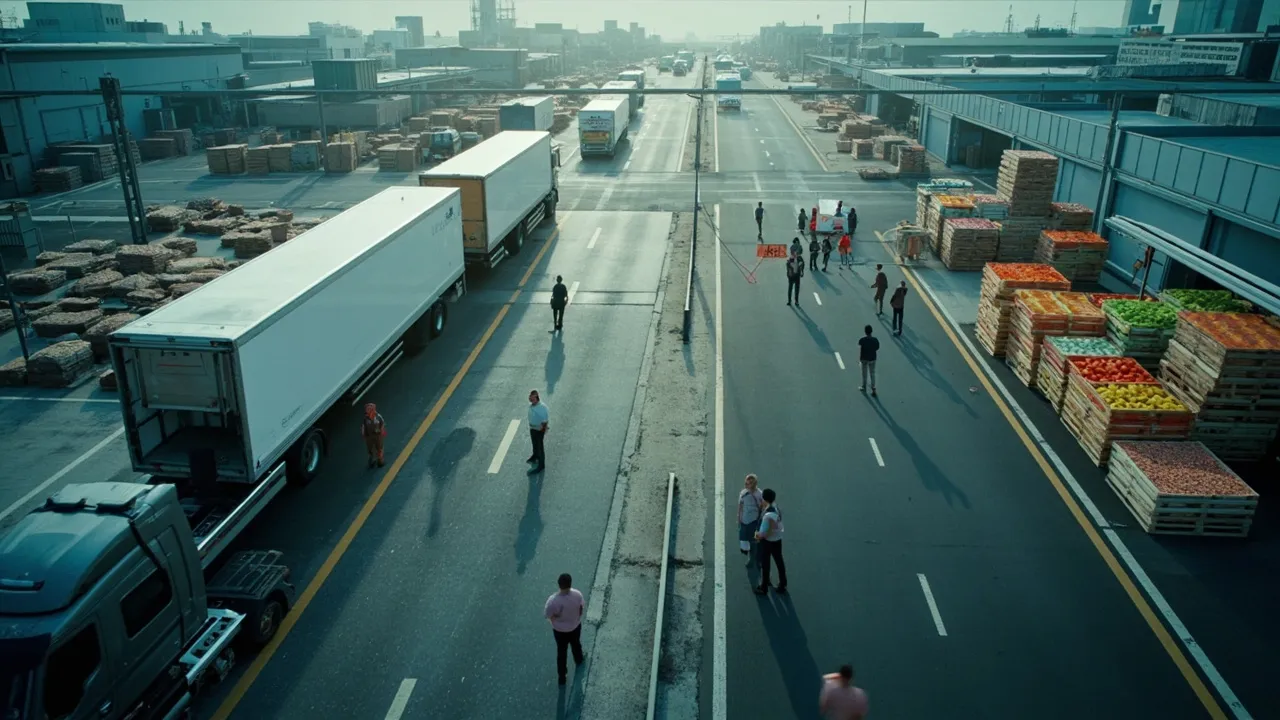
Walmart’s 30-Minute Delivery Reach Turns Store Fulfillment Into a Network Design Benchmark

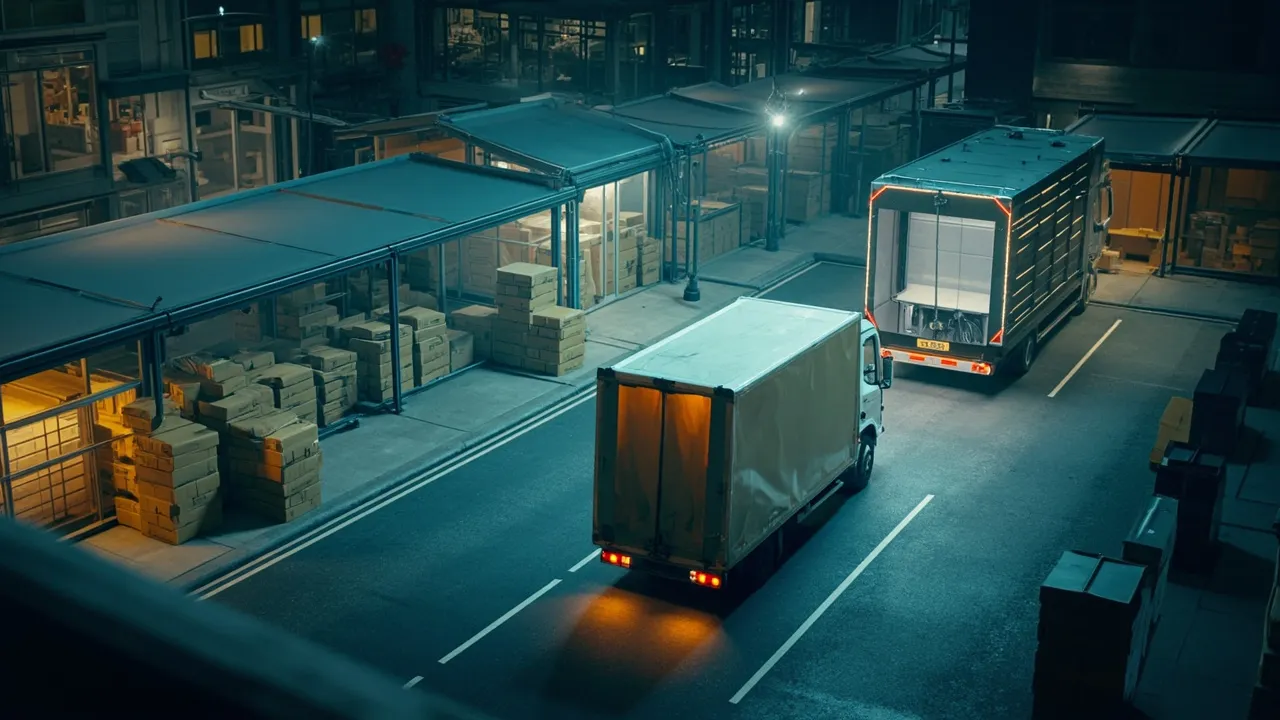
Walmart's latest delivery-speed numbers are not just a retail brag. They are a network design signal. When a retailer says it can reach roughly 60% of the U.S. population in 30 minutes or less, the important part is not only the clock. It is the operating model underneath the promise: local inventory, store labor, parcel and gig capacity, order rules, and customer-facing delivery options all working from the same playbook.
According to Supply Chain Dive, Walmart told analysts that U.S. sales using store-fulfilled delivery have more than doubled over the past two years. In Q1, more than 36% of store deliveries arrived in three hours or less, and sub-hour options were growing the fastest. The company also said fast-delivery category sales grew more than 50% year over year, while Walmart Fulfillment Services units shipped same day or next day rose nearly 150% in the quarter.
Those numbers should get the attention of anyone responsible for transportation planning, even outside retail. Speed is no longer a premium service layered on top of a static distribution network. For the best operators, speed is becoming an output of network design.
Store fulfillment changes the role of the store
A store that fulfills delivery orders is not just a sales floor. It becomes a forward stocking location, a micro-distribution node, a labor pool, and a dispatch origin. That is powerful because stores sit close to demand. It is also messy because stores were not originally built to behave like parcel hubs.
The first operational challenge is inventory accuracy. A 30-minute promise collapses quickly if the system believes a SKU is on the shelf but an associate cannot find it, or if inventory is technically available but locked inside an aisle reset, returns bin, or backroom exception. Store fulfillment turns inventory visibility from a planning nice-to-have into a customer promise control.
The second challenge is labor timing. Picking, staging, handoff, and substitution decisions have to happen inside a very narrow window. A store can have the product and still miss the delivery target if labor is scheduled around foot traffic rather than order release patterns. Faster delivery therefore forces tighter coordination between demand forecasting, workforce planning, and transportation execution.
The third challenge is local carrier orchestration. Dense store networks create more origin points, but they also create more dispatch decisions. Which orders should move by van route, which by courier, which through a third-party delivery partner, and which should be held for pickup? The answer changes by time of day, basket size, distance, margin, service tier, weather, and driver availability.
That is the real lesson: the node only creates speed if the execution layer can make good decisions fast.
Proximity helps, but it does not solve the network
Proximity is the obvious advantage in store-fulfilled delivery. Start closer to the customer and the route gets shorter. But proximity without discipline can create expensive fragmentation. Inventory gets spread too thin. Store teams get overloaded. Transportation spend rises because every order feels urgent. Customer promises become inconsistent across ZIP codes.
Inbound Logistics makes the same point from a broader ecommerce-network perspective: the next frontier of speed is geography, and retailers get faster not by upgrading every shipment to premium service, but by starting closer to the customer. Its analysis argues that brands are increasingly positioning inventory within one or two zones of primary demand clusters, but warns that proximity works only when paired with disciplined SKU forecasting and real-time inventory visibility (Inbound Logistics).
That framing matters because the store-fulfilled model is not simply "ship from everywhere." It is "ship from the right local node when the economics, inventory position, and customer promise make sense."
For non-retail shippers, the equivalent might be a regional parts depot, field service branch, dealer location, cross-dock, or customer-facing warehouse. The principle is the same. Local nodes are valuable only when the company can decide what inventory belongs there, which orders should consume it, and when transportation should protect speed versus cost.
Drones are a speed layer, not the whole answer
Walmart's drone program adds a useful caveat to the speed story. Supply Chain Dive reported that the retailer reached its 1 millionth drone delivery in Q1, with more than 40% of those drone deliveries occurring in that quarter. A separate Supply Chain Dive report noted that Walmart and Wing plan to expand drone coverage to 150 stores over the next year and more than 270 locations in 2027. That expansion could reach more than 40 million potential customers near those locations.
Drones are operationally interesting because they compress short-distance delivery time for the right order profile. But they are not a universal last-mile answer. Payload, weather, service area, regulation, noise, landing constraints, and product mix all matter. The best way to think about drone delivery is as a selective speed layer inside a broader local fulfillment network.
Logistics teams should avoid confusing a novel delivery mode with a complete delivery strategy. The real capability is dynamic order orchestration: knowing which node, mode, carrier, and promise should apply to each order based on operational reality.
What this means for network design
Walmart's 30-minute reach raises the benchmark because it reframes speed as a systems problem. The visible customer experience is fast delivery. The hidden machinery is a connected set of planning and execution decisions.
Shippers trying to build similar responsiveness should focus on four disciplines.
First, promise logic needs to reflect actual capacity. Delivery windows should be based on inventory confidence, pick capacity, carrier availability, and local cutoff rules, not generic marketing ambitions.
Second, transportation systems need to support multi-node decisioning. If an order can ship from a store, a regional warehouse, a branch, or a supplier drop-ship point, the system has to compare service, cost, risk, and inventory impact before releasing the order.
Third, local fulfillment must be measured beyond delivery time. Store-fulfilled delivery can hide costs in labor disruption, substitutions, split shipments, failed pickups, returns, and inventory imbalance. The network scorecard should capture those tradeoffs.
Fourth, exception management has to move closer to real time. In a three-day parcel network, a late pickup may still be recoverable. In a 30-minute promise, the exception window is brutally short. Teams need alerts, backup rules, and escalation paths before the customer experience breaks.
The CXTMS takeaway
Walmart's store-fulfilled delivery model shows where logistics is heading: faster promises built from connected local inventory, transportation rules, and execution visibility. Not every shipper needs 30-minute delivery. Most should not chase it blindly. But every shipper can learn from the architecture.
Local nodes only work when inventory promise, transportation execution, and order rules are connected. CXTMS helps logistics teams bring those pieces into one operating layer, with visibility into shipment status, carrier performance, exception workflows, and cost-to-serve tradeoffs. That is how companies protect service speed without turning every urgent order into an expensive scramble.
Ready to connect fulfillment decisions with transportation execution? Schedule a CXTMS demo and see how smarter logistics orchestration turns network design into a service advantage.