USPS Smart Lockers Turn Local Marketplace Exchanges Into a Last-Meter Logistics Network

Local online sales have always had a logistics gap. A marketplace may help a buyer find an item across town, but the final handoff often happens in a parking lot, on a porch, or through an improvised delivery arrangement with limited security and almost no operational visibility.
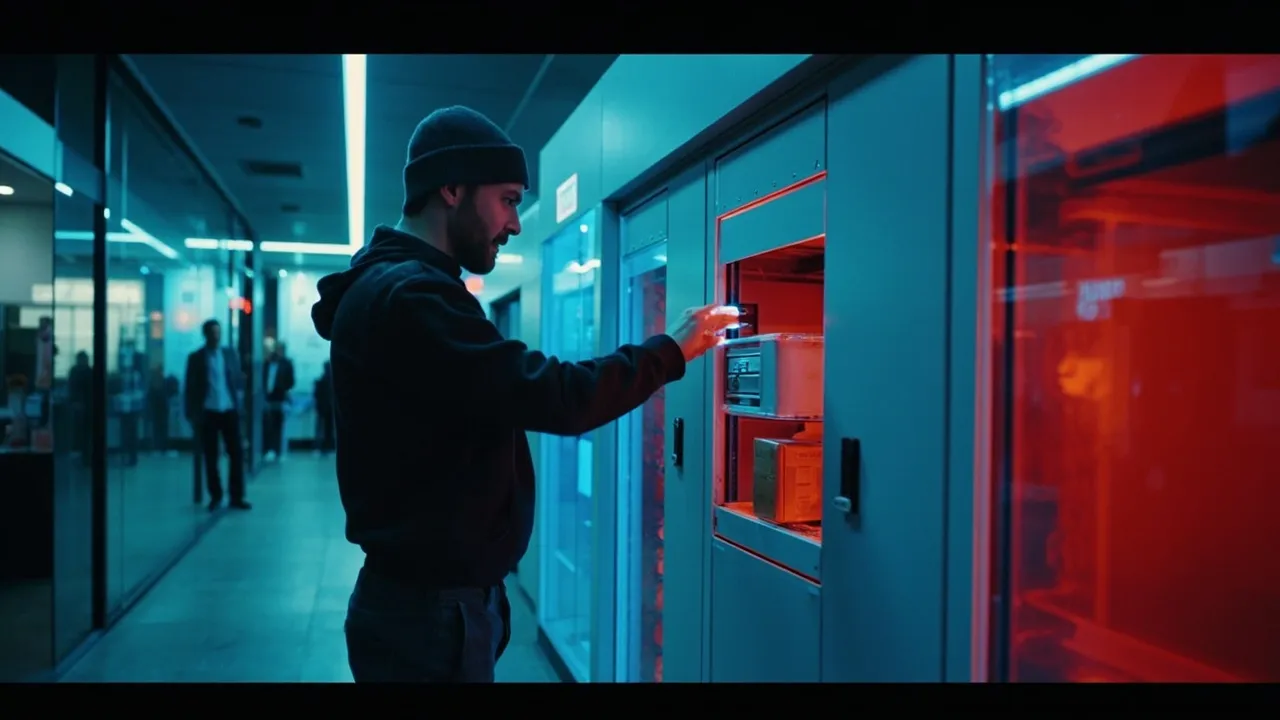
USPS Local XChange turns that informal meeting into a structured last-meter workflow. Sellers can deposit packaged marketplace purchases in eligible USPS Smart Lockers, while buyers retrieve them using a QR code. The two parties no longer need to coordinate an in-person meeting, and the exchange produces events that can be tracked from booking through pickup or return.
The service is inexpensive enough to invite experimentation. Supply Chain Dive reports that Local XChange costs $5.51 per package. As of October 2025, roughly 700 post office locations had smart lockers. Together, those assets begin to look less like a collection of boxes and more like a distributed local exchange network.
A Marketplace Handoff Becomes a Logistics Move
Local XChange starts through USPS Click-N-Ship. A seller selects the service, chooses an eligible locker and prints a label at home or at the smart-locker location. The seller packages the item, scans the label and deposits the parcel into an assigned compartment. USPS then notifies the buyer, who uses a QR code to retrieve it.
That sequence creates four useful logistics stages:
- Deposit: The seller presents the labeled item and the locker accepts it.
- Custody confirmation: The compartment closes and the system records that the package is secured at a specific location.
- Pickup window: The buyer receives notification and has a defined period to collect the item.
- Exception: The package moves to counter custody or return processing if the buyer does not arrive.
These events solve a problem that ordinary marketplace messaging cannot. A message saying “I dropped it off” is only a claim. A recorded locker deposit is an operational event associated with a label, location and timestamp.
The model also gives both parties more flexibility. They do not need to be available simultaneously, and neither has to share a home address or choose an unfamiliar meeting place. The locker acts as a secure buffer between two schedules.
The Pickup Clock Is Part of the Service
The exchange does not end when the seller closes the locker door. According to Supply Chain Dive, buyers have five calendar days to collect a Local XChange package. If they do not, USPS removes it from the locker and holds it at the location's retail counter for another 10 days. After 15 days from the initial notification, USPS mails the package back to the seller.
That clock matters because a locker is constrained inventory space. An uncollected parcel blocks a compartment that could support another transaction. Moving overdue items to the counter restores locker capacity, while the final return rule prevents abandoned goods from accumulating indefinitely.
Marketplaces and logistics operators should therefore avoid measuring the network only by location count. The more useful measures include:
- deposits per locker and per compartment;
- median time from deposit to pickup;
- percentage collected within 24 hours and within five days;
- compartment occupancy by hour and day;
- transfers to counter custody;
- returns after the full 15-day window; and
- failed deposits caused by size or capacity constraints.
A site with fewer compartments but rapid pickup may support more exchanges than a larger site where packages sit for days. Utilization, dwell and exception rates reveal whether the network is actually creating convenient capacity.
Adoption Will Depend on Convenience, Not Novelty
Smart lockers are not yet the default delivery choice in the United States. Supply Chain Dive cites research showing that only 6% of U.S. shoppers prefer parcel-locker delivery, compared with 12% globally. That gap is a warning against assuming that installing more lockers automatically creates demand.
Local XChange has a distinct proposition, however. It is not merely asking shoppers to replace home delivery. It replaces a face-to-face exchange that may be inconvenient, difficult to schedule or uncomfortable. In that context, $5.51 buys asynchronous handoff, a neutral location and a recorded custody trail.
Coverage still creates friction. A seller must have a USPS.com account and select a smart-locker kiosk within 50 miles of the return address. The item also must be packaged in a box or polybag and fit an available compartment. Marketplace checkout flows should expose those rules before payment so sellers do not discover an eligibility problem at deposit.
Connect Locker Events to Customer Service
The customer experience will be stronger when marketplace and carrier systems treat locker events as part of one transaction record. A buyer should not have to search an email for one QR code, check a marketplace chat for another update and contact USPS separately when something changes.
At minimum, an integration should capture the exchange identifier, USPS label, selected locker, deposit timestamp, buyer notification, pickup deadline, collection event, counter transfer and return event. Each state should trigger a clear customer message and an appropriate support action.
For example, a deposit without a buyer notification should create an alert rather than wait for a complaint. A package still in the locker near day five should trigger a reminder with the deadline and pickup instructions. A counter transfer should replace the locker instructions immediately. If the item enters return processing, the marketplace can pause settlement or open the appropriate buyer-seller resolution workflow.
This is where transportation management principles become relevant even for a trip across town. The physical distance may be short, but the exchange still has capacity, custody, service-time and exception risks. Visibility needs to answer who has the item, where it is, what should happen next and when intervention is required.
USPS has supplied the physical handoff layer. Marketplaces, carriers and technology providers now have an opportunity to make that layer operationally coherent. The winners will not be those that display the most locker pins on a map. They will be those that turn each locker event into a reliable, understandable customer journey.
Ready to connect delivery events, exceptions, and customer communication in one transportation workflow? Request a CXTMS demo and see how your team can manage the last meter with the same discipline as the long haul.