Penske’s Supply Chain Insight Shows Visibility Is Turning Into an AI Execution Layer

Supply chain visibility has spent years being sold as a dashboard problem. Get the data in one place, show the shipment dots, add exception alerts, and the operation will supposedly become more resilient. That was useful, but it was never enough. A logistics team does not win because it can see a late load sooner. It wins when that signal changes the plan before cost, service, or inventory damage spreads.
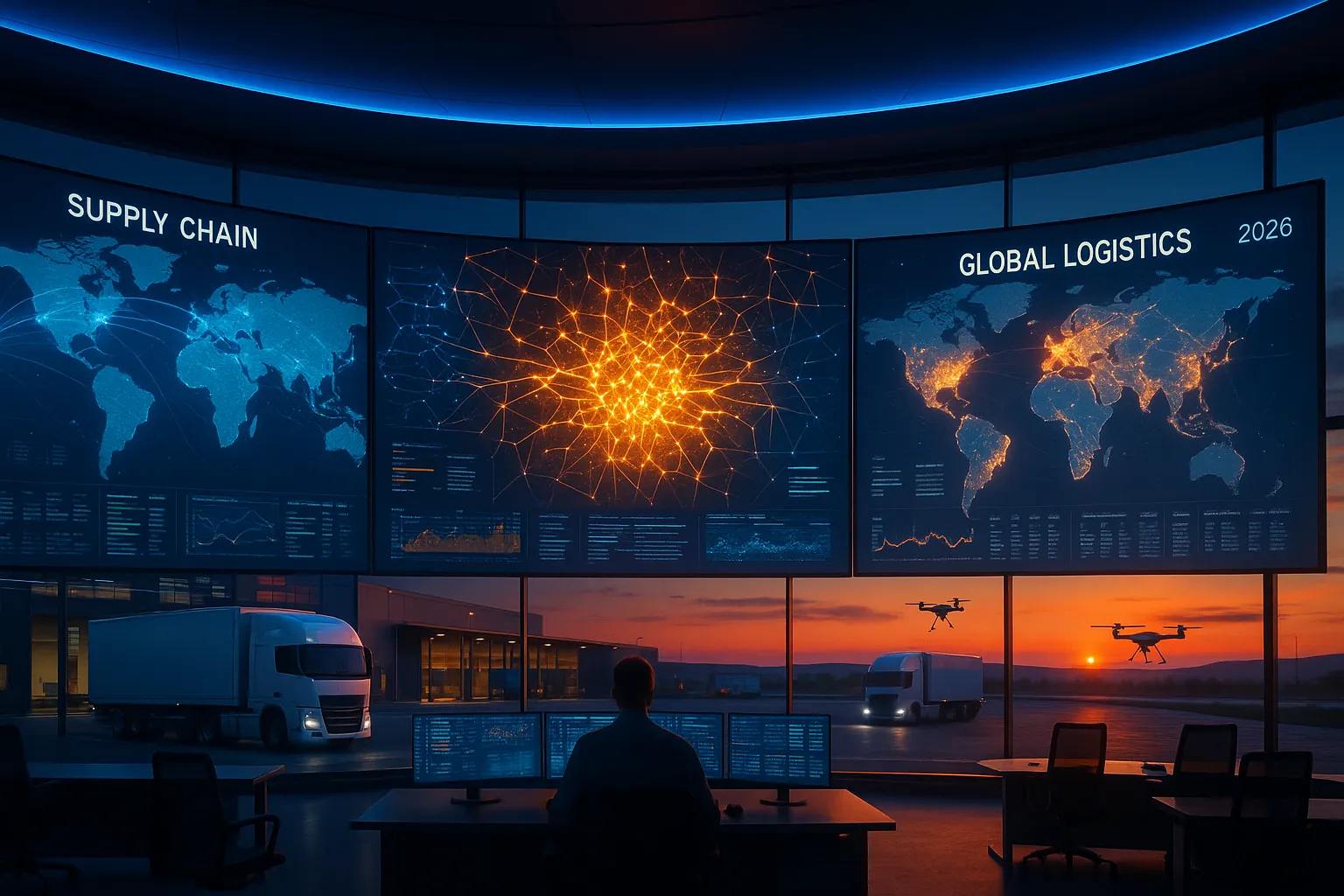
That is why Penske Logistics' launch of Supply Chain Insight matters. Logistics Management reports that the platform provides a real-time view of freight transportation and warehousing operations, bringing loads, orders, and inventory into a single operating picture. The interesting part is the direction of travel: visibility is becoming an AI execution layer.
Penske describes Supply Chain Insight as a secure AI technology platform and mobile application designed to simplify operational data across systems. It is built on Microsoft Azure, uses Snowflake as the core data platform, and is intended to integrate with transportation, warehousing, third-party, carrier, and partner systems. The next fight is not who can display the cleanest map. It is who can connect fragmented operational facts fast enough for teams to act.
Fragmentation is the real visibility problem
Penske's Vishwa Ram put it cleanly in the Logistics Management coverage: most supply chains do not have a visibility problem; they have a fragmentation problem. Shippers usually have plenty of data. It is just trapped in transportation systems, warehouse systems, carrier portals, ERP records, spreadsheets, customer service notes, appointment tools, freight audit files, and partner feeds.
The result is a familiar operational mess. Transportation sees the truck. Warehousing sees the dock constraint. Customer service sees the order promise. Finance sees the accessorial. Nobody sees the whole chain quickly enough to make the best decision.
A traditional dashboard can make that mess prettier without fixing it. An execution layer has to normalize events, identify which metrics matter, surface exceptions by business impact, and push the next action into the workflow. Penske says Supply Chain Insight includes more than 85 pre-built and customizable metrics, plus AI-powered natural language queries for loads, orders, and performance data. That is a practical signal: leaders want to ask operational questions in plain language, while frontline teams need thresholds, alerts, and exception queues that match how the business runs.
AI is moving from reporting into decision support
The broader market is moving the same way. Logistics Management's 2026 technology roundtable argues that supply chain technology is shifting from insight to execution, with AI moving from analytics into embedded decision support. The article notes that measurable AI returns are showing up in high-frequency decision loops such as inventory positioning, warehouse slotting, transportation planning, and supplier performance management.
Those are daily logistics decisions: which carrier should take the load, whether an order should be consolidated, where inventory should be positioned, which dock appointment needs intervention, whether warehouse labor should be redeployed, and which supplier delay is about to create an expedite.
The same roundtable cites 10% to 20% reductions in warehouse travel time from slotting optimization models that adapt to order patterns. It also points to AI-driven routing and carrier selection improving load consolidation and cutting empty miles. Those numbers frame AI as an operational discipline, not a boardroom slogan. The value comes when the recommendation is embedded in planning, execution, and accountability.
This is where visibility platforms either graduate or stall. If a tool only answers "Where is my shipment?" it remains a reporting layer. If it answers "What should we do now, who owns it, and what will it cost if we wait?" it becomes part of execution.
Warehousing and freight have to be planned together
Supply Chain Insight's coverage across freight and warehousing is important because many logistics failures are cross-functional. A load may be on time according to the carrier but useless if the receiving site has no labor window. Inventory may be technically available but sitting in the wrong node for the customer promise. A warehouse may ship perfectly while transportation misses consolidation opportunities that inflate cost.
That is why the split between TMS, WMS, carrier portals, and spreadsheets creates hidden waste. Transportation planning needs order priority, dock capacity, inventory status, carrier performance, and customer commitments. Warehouse teams need inbound ETA confidence, order release timing, labor visibility, and exception context.
Inbound Logistics' 2026 technology coverage describes AI as becoming a supply chain "system of action" rather than a standalone feature. It also says visibility remains a priority, but its definition has evolved into actionable intelligence. That is the right lens. Visibility is no longer a destination. It is raw material for orchestration.
Inbound Logistics also points to real-world automation benchmarks, including logistics cost reductions of up to 15% from proactive orchestration and up to 80% automation of freight decisions in some AI-enabled environments. Not every shipper will hit those numbers, but the direction is unmistakable: operations teams want systems that close loops, not systems that merely observe them.
Enterprise buyers will expect integration, not another portal
The Azure and Snowflake foundation in Penske's announcement is more than vendor trivia. Large shippers increasingly expect logistics platforms to plug into cloud, analytics, identity, security, and governance standards they already use. They also expect performance at scale because freight and warehousing networks generate messy, high-volume event streams.
That matters for adoption. If a platform cannot integrate with existing systems, it becomes one more portal to check. If it cannot handle external carriers, warehouses, and partners, it will show only the managed slice of the network and miss the handoff risks that cause real disruption.
The strongest visibility systems will therefore behave less like standalone applications and more like connective tissue. They will pull operational data from internal and external sources, translate it into common business metrics, and support action across planning, exceptions, carrier communication, warehouse coordination, and executive reporting.
What logistics teams should take from this
First, stop treating visibility as the finish line. Visibility is table stakes. The real test is whether the system changes decisions inside the operating window.
Second, prioritize workflows over widgets. A dashboard that shows 200 KPIs can still fail if it does not route the right exception to the right owner with enough context to act.
Third, evaluate AI by the decision loop it improves. Transportation planning, warehouse slotting, carrier selection, supplier delay management, and inventory positioning are better targets than vague claims about autonomous supply chains.
Finally, make integration a buying requirement. If freight, inventory, orders, warehouses, carriers, and partners remain disconnected, AI will spend most of its time compensating for bad plumbing.
CXTMS is built around that same practical premise: logistics technology should connect visibility to execution. CXTMS helps freight forwarders and logistics teams manage transportation planning, carrier workflows, shipment events, documentation, exceptions, and performance analytics in one operating layer. If your team is tired of knowing about problems without a clean way to act on them, schedule a CXTMS demo and see how a modern TMS can turn visibility into execution.