Amazon Connect Decisions: Why Agentic Supply Chain Planning Is Moving From Dashboards to “AI Teammates”

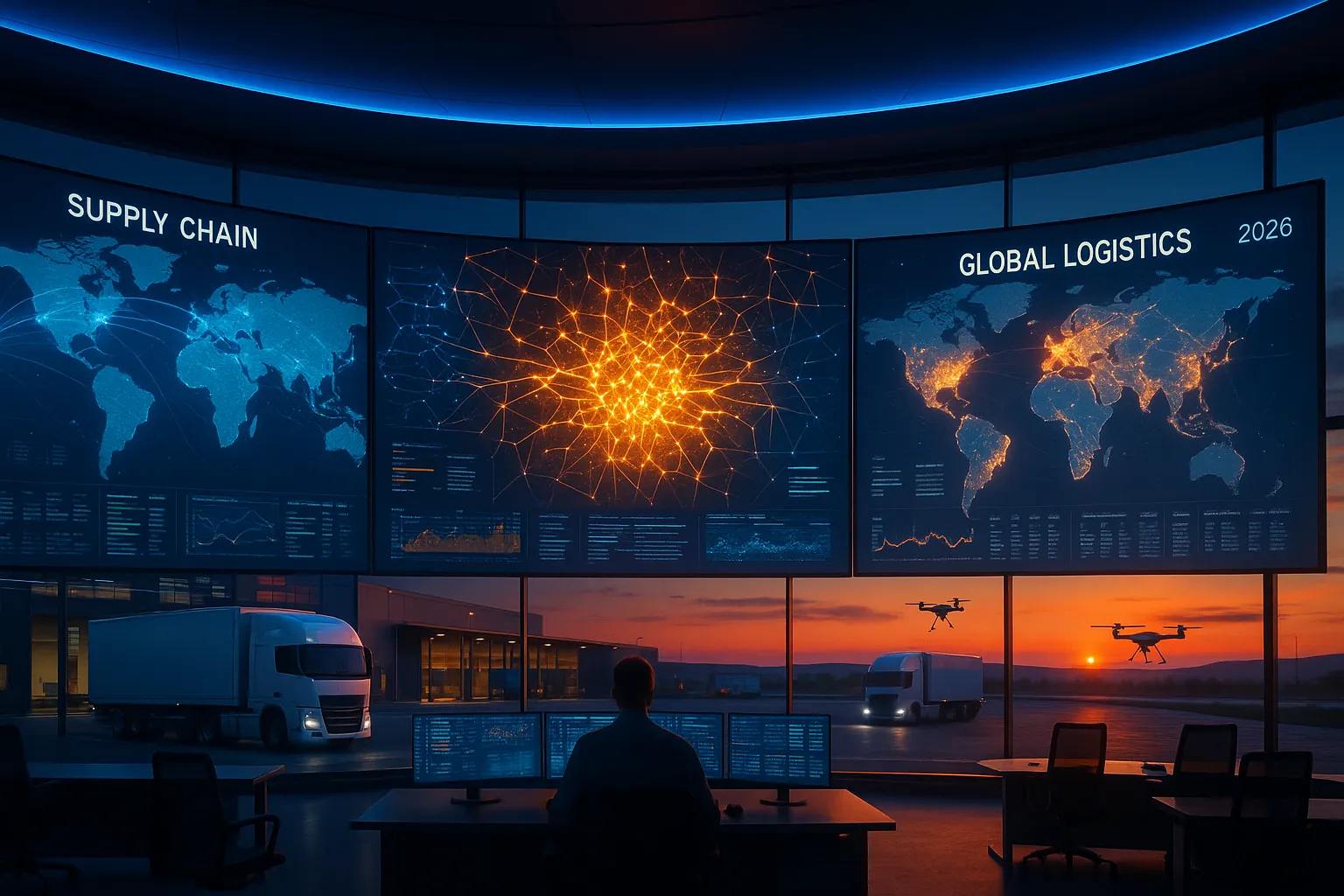
Supply chain planning has spent years trying to become more visible. Better dashboards. Better alerts. Better data lakes. Better control towers. All useful. But the Amazon Web Services launch of Amazon Connect Decisions is a clear signal that the next fight is not about seeing the problem first. It is about compressing the time between signal, analysis, decision, and action.
Supply Chain Dive reports that Amazon Connect Decisions combines more than 25 specialized supply chain tools into a set of AI agents Amazon calls "teammates." The product is designed to help users analyze data, calculate options, prioritize work, and make more informed decisions in hours instead of days.
That language matters. The market is shifting from software that explains what happened to software that helps planners decide what to do next.
From static dashboards to decision systems
A traditional supply chain dashboard is a mirror. It reflects demand variance, inventory gaps, forecast misses, carrier delays, purchase order risk, or service exceptions. The better ones make the reflection timely and accurate. But they still leave the hard work to people: diagnose the root cause, compare options, chase data from other systems, decide what matters most, and coordinate the fix.
Amazon's framing pushes beyond that. According to Supply Chain Dive, Connect Decisions connects data from multiple systems, centralizes decisions into a hub, traces root causes, presents potential resolutions, and can assess thousands of alerts to prioritize planner tasks. AWS also says the AI teammates learn from team actions over time, translating those patterns into better planning, analysis, and recommendations.
That is the key difference between visibility and decision support. Visibility says, "Here are 700 alerts." Decision support says, "These 12 require action, this one threatens the customer commitment, here are the tradeoffs, and this is what similar planners did last time."
No planner needs more noise. They need a system that can separate signal from distraction.
Amazon's SKU scale is the real proof point
The most interesting statistic in the launch is not the count of AI tools. It is the operating context behind them. Supply Chain Dive reported that the platform draws on Amazon's decades of experience managing more than 400 million SKUs. That is a brutal planning environment: demand volatility, inventory placement, fulfillment constraints, promotions, supplier variability, transportation capacity, and customer service expectations all colliding at once.
Most freight forwarders and logistics providers do not operate at Amazon's SKU scale. But they do face the same structural problem: planning decisions are rarely isolated. A late supplier update changes booking urgency. A port delay affects inventory promises. A customer expedite request changes margin. A customs document issue changes delivery risk. A carrier capacity shift changes routing choices.
This is why agentic planning has momentum. The value is not a prettier interface. The value is a system that can reason across connected data sets and make the planner's next decision easier.
The market is ready, but integration debt is ugly
Demand for logistics technology is not the bottleneck. Inbound Logistics' 2026 logistics IT market research found that 65% of surveyed technology providers reported sales growth of 10% or more year over year, while 52% saw their customer base grow by at least 10%. The same report points to persistent labor shortages, supply disruptions, sustainability pressure, and rising customer expectations as forces pushing companies toward more advanced systems.
That appetite is real. But agentic AI exposes a problem the industry has been able to dodge with dashboards: fragmented data.
AI teammates are only useful if they can see the actual operating picture. That means connected SKU data, orders, inventory, carrier schedules, transportation costs, customer commitments, warehouse capacity, documents, exceptions, and financial rules. If those facts live in separate spreadsheets, inboxes, portals, and legacy systems, the AI will either hallucinate confidence or drown in exceptions.
This is where the current wave of AI pilots will split. Some companies will get a useful planning layer because they have done the integration work. Others will get another interface sitting on top of messy processes.
The control tower is growing up
Logistics Management argues that digital supply chains are becoming more autonomous and responsive to real-world conditions, with companies using AI to slot inventory, predict demand, direct warehouse activities, reroute freight, and respond faster to disruptions. The same article cites McKinsey research that nearly 80% of U.S. companies faced some type of supply chain disruption in 2025, compared with 33% in 2024.
That is the operating environment agentic tools are being built for. Disruption is no longer an occasional event that can be handled by a weekly meeting and a spreadsheet. It is continuous. Tariffs change landed-cost assumptions. Weather events shift capacity. Port delays reshape ETAs. Promotions distort demand. Labor gaps affect warehouse throughput. Customer expectations keep tightening anyway.
A mature control tower cannot just watch all of that happen. It has to coordinate response.
But autonomy needs guardrails. The right model is not "let the AI run the supply chain." That is reckless, and frankly a little lazy. The right model is governed action: the system recommends, ranks, documents, and executes routine steps within approved thresholds while escalating commercial, compliance, and customer-impact decisions to humans.
For example, an AI teammate might automatically group low-risk replenishment alerts, recommend a transfer between facilities, suggest a carrier based on cost and service history, or draft a customer update. But it should still escalate when the decision affects margin, contractual service levels, regulatory exposure, or a strategic customer relationship.
What freight forwarders should take from this
Freight forwarders live in exception density. Every shipment is a small operating system made of rates, bookings, documents, milestones, handoffs, customer promises, carrier constraints, and margin decisions. That makes forwarding an ideal environment for agent-assisted planning, but only if the technology strengthens human control instead of burying teams under opaque recommendations.
The practical question is not whether forwarders need "agentic AI." The practical question is which workflows deserve decision support first.
Start with the expensive loops: missed pickup risk, delayed arrival notices, document exceptions, carrier rebooking, detention and demurrage exposure, customs milestone gaps, customer expedite requests, and margin-sensitive mode changes. These are areas where faster triage has measurable value and where human judgment still matters.
The winning TMS pattern will look less like a passive shipment record and more like a workbench: detect the exception, explain the root cause, show options, quantify tradeoffs, assign next steps, preserve the audit trail, and learn from the resolution.
That is what the phrase "AI teammate" should mean in logistics. Not a gimmicky chatbot. Not automation theater. A system that helps experienced operators move faster without surrendering accountability.
CXTMS is built for freight teams that need connected execution, not another disconnected dashboard. With shipment management, carrier coordination, document workflows, exception handling, customer communication, and analytics in one operating layer, CXTMS gives forwarders the foundation for agent-assisted planning that keeps humans in charge. If your team is ready to turn visibility into faster decisions, schedule a CXTMS demo.