Workforce Orchestration: The Missing Link Between Supply Chain Planning and Execution

Supply chain plans rarely fail because the spreadsheet was completely wrong. They fail because the assumptions behind the spreadsheet stop being true at 9:17 a.m. on a Wednesday.
A carrier misses an appointment. A surge order lands after the dock schedule is already full. A key forklift operator calls out. The warehouse has inventory, the transportation plan has a pickup window, finance has a cost target, and customer service has a promise date. None of those views is technically false. They are just not being managed together.
That is why workforce orchestration is moving from an HR conversation to a core logistics execution discipline. In a recent Supply Chain Brain discussion of workforce orchestration, Fab Brasca argues that workforce decisions can no longer sit downstream from operations. Labor must be evaluated alongside supply, demand, logistics, and financial outcomes in the same operating flow. The article frames the shift bluntly: sequential planning is too slow for an environment where decision cycles are being compressed from days or weeks into continuous operational flows.
That matters because logistics is where planning assumptions meet physical constraint. Labor is not an afterthought. It is capacity.
The execution gap is usually a labor visibility gap
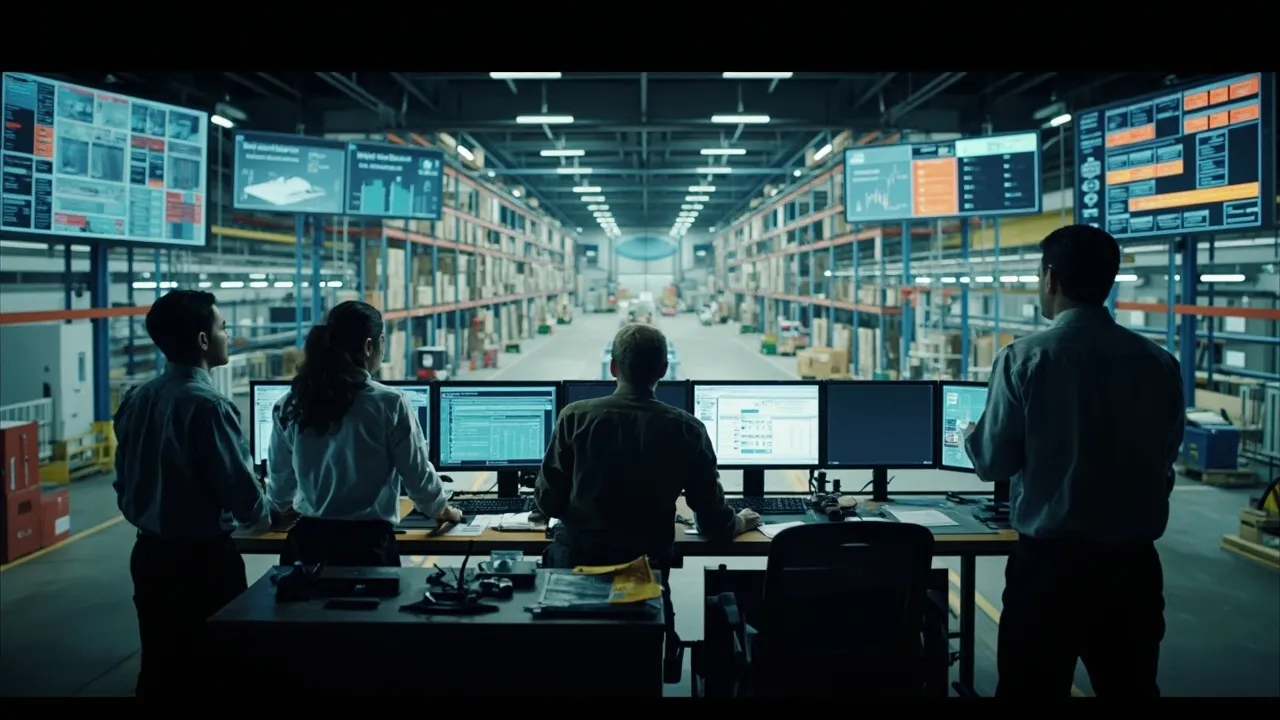
Transportation and warehouse plans often look coordinated until the labor model is exposed. A distribution center may have enough dock doors for the planned volume but not enough trained people on the right shift to unload, stage, scan, and reload freight inside the carrier appointment window. A forwarder may have a clean consolidation plan, but if documents, pallets, and inspection labor are not ready at the same time, the load misses cutoff anyway.
The painful part is that these failures are predictable if the right signals are connected. Demand forecasts, order releases, appointment schedules, carrier ETAs, shift rosters, equipment availability, overtime thresholds, and cost targets all describe the same operation from different angles. When they sit in separate systems, managers discover conflicts only after the plan has already been committed.
That is the gap workforce orchestration is meant to close. It does not mean replacing supervisors with software. It means giving supervisors a current, shared view of the work, the people, the constraints, and the financial trade-offs before the bottleneck becomes an expedite.
Labor behaves like inventory
Logistics teams already understand inventory constraints. If the stock is in the wrong place, promised service levels break. If replenishment arrives late, downstream plans change. If safety stock is too thin, variability becomes expensive.
Labor behaves the same way. People have location, availability, skill, productivity, and fatigue constraints. A cross-trained dock associate is not interchangeable with a new temporary worker on a complex international shipment. A team that can process standard outbound orders may not be ready for hazmat documentation, cold-chain handling, or project cargo staging. Treating labor as a generic headcount number hides the operational truth.
Supply Chain Brain's article makes this point clearly: workforce decisions must be made with the same visibility and rigor as decisions about materials and inventory. In logistics terms, the question is not simply "Do we have enough people?" It is: do we have the right labor capacity, at the right location, with the right skills, aligned to the freight plan that is actually unfolding now?
Financial planning needs execution reality
The workforce discussion also connects directly to margin. Deloitte's Consumer Products Industry Outlook, based partly on a global survey of 250 senior consumer products executives and analysis of the top 100 public consumer products companies by revenue, argues that companies are shifting from price-taking toward profitable volume. That phrase should make logistics leaders pay attention.
Profitable volume is not just a sales strategy. It is an execution test. Growing volume only helps if the operation can absorb it without drowning in overtime, premium freight, missed appointments, detention, rework, and customer penalties. A plan that adds volume while ignoring labor and transportation constraints may look attractive in a board deck but destroy margin on the floor.
This is where workforce orchestration becomes practical. If demand rises on a specific lane or customer program, the business should be able to model the labor and freight consequences together. Can the warehouse process the additional orders within current shifts? Will dock congestion push pickups into detention exposure? Does the plan require weekend labor, temporary staffing, cross-dock changes, or mode upgrades? What happens to margin if service is protected with overtime versus rescheduling freight?
Those questions cannot wait for a monthly planning meeting. They have to be answered while the operation is still adjustable.
The data connections that matter
For transportation and warehouse teams, workforce orchestration starts with five data connections.
First, demand and order flow must be visible early enough to shape labor and appointment planning. If the warehouse learns about volume only when orders drop for picking, the operation is already reactive.
Second, dock and yard schedules need to reflect carrier ETAs, not just planned appointments. A schedule built on yesterday's assumptions is a congestion machine.
Third, shift plans must include skills, not only headcount. International freight, temperature-controlled cargo, regulated products, returns, and high-value loads often require specific handling knowledge.
Fourth, cost targets need to travel with execution decisions. Supervisors should know when adding labor protects service profitably and when it simply masks a broken promise with more expense.
Fifth, exception workflows must connect teams quickly. A late inbound truck should trigger more than a status update. It should tell the warehouse, transportation planner, customer-service team, and cost owner what changed and what decision is needed.
From plan handoff to operating control
The old model treats planning as something that happens upstream and execution as something that happens afterward. That handoff is too brittle for modern logistics. Freight networks now run through volatile demand, labor shortages, tighter customer windows, automation investments, regulatory requirements, and cost pressure that leaves little room for manual recovery.
Workforce orchestration offers a better model: planning and execution as a continuous loop. Execution data updates the plan. Labor availability changes the transportation decision. Carrier visibility changes the dock schedule. Cost impact changes the service option. The goal is not a perfect plan; it is a plan that keeps adapting before the business loses control.
CXTMS fits into that execution layer by helping logistics teams manage shipments, milestones, carrier workflows, documents, exceptions, and cost visibility in one operating environment. When transportation plans are tied to real-time execution signals, teams can see where labor, freight, and customer commitments are drifting apart.
The companies that win will not be the ones with the most elegant annual plan. They will be the ones that connect planning assumptions to daily operational control. If your team is still managing labor constraints, dock schedules, and carrier exceptions in separate spreadsheets and email threads, book a CXTMS demo to see how execution visibility can close the planning gap before it hits your customers.