Warehouse Microgrids and Energy Independence: How Logistics Facilities Are Cutting Energy Costs 40% With On-Site Power Generation

Energy has always been the invisible line item that warehouse operators accept as a cost of doing business. That acceptance is evaporating in 2026. Rising grid instability, surging electricity demand from AI data centers competing for the same power supply, and increasingly punitive sustainability mandates are forcing logistics operators to fundamentally rethink how their facilities consume—and generate—power.
The answer for a growing number of distribution centers and fulfillment hubs is energy independence through on-site microgrids, and the financial case has never been stronger.
The Warehouse Energy Problem Is Bigger Than You Think
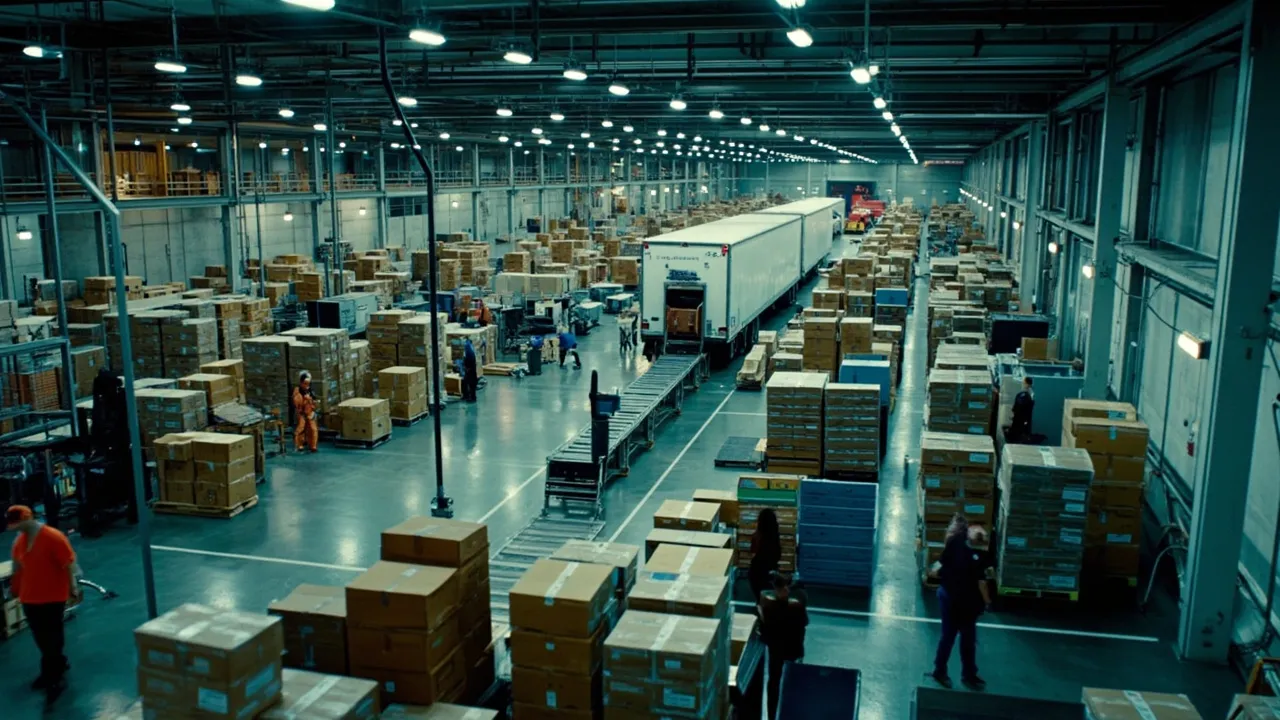
Approximately 15% of a warehouse's total operating budget goes toward energy costs, according to Prologis, the world's largest logistics real estate company. For a 500,000-square-foot distribution center running 24/7 with automated material handling systems, refrigeration, and EV fleet charging infrastructure, that figure can climb well above $1 million annually.
The problem is compounding. Modern warehouses are adding robotics, autonomous mobile robots (AMRs), conveyor systems, AI-driven sorting equipment, and on-site EV charging at an accelerating pace—each one drawing more power from an increasingly strained grid. As one energy professional told Supply Chain Dive, energy is like air and water: "You just assume when you get to the plant, the lights are working and the motors are running." That assumption is becoming dangerously unreliable.
Grid strain from the explosive growth of AI and data centers has transformed energy demand from a steady climb into a steep surge, creating a new competitive landscape where warehouses and hyperscale computing facilities are fighting for the same power capacity.
The Microgrid Controller Market Hits $15.5 Billion by 2030
The response from the market has been decisive. The global microgrid controller market is projected to reach $15.53 billion by 2030, growing at a compound annual growth rate (CAGR) of 14.8%, according to a February 2026 market report from GlobeNewsWire. Key growth drivers include the rise of advanced grid-interactive microgrids, growing demand for energy independence, and developments in smart city infrastructure.
A separate analysis from MarketsandMarkets pegs the broader microgrid controller market at $8.42 billion in 2025, projecting it to reach $18.75 billion by 2029 at a 22.6% CAGR—an even more aggressive growth trajectory that underscores how quickly commercial and industrial facilities are adopting decentralized energy management.
For logistics operators, the technology stack typically includes:
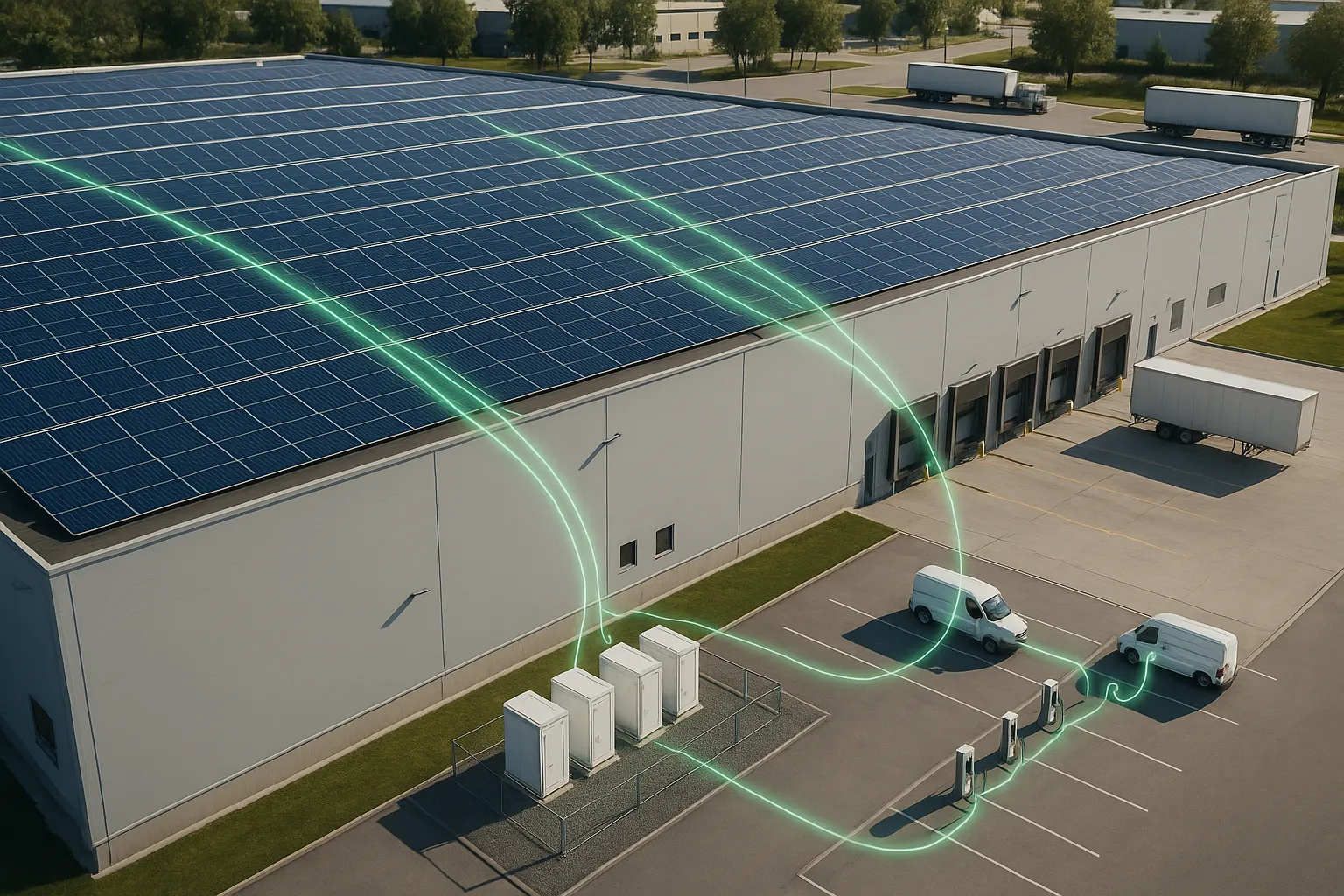
- Rooftop and canopy solar arrays that leverage the massive, flat roof surfaces warehouses already provide
- Battery energy storage systems (BESS) that capture excess solar generation for peak-demand periods and overnight operations
- Intelligent microgrid controllers that orchestrate energy flow between solar generation, battery storage, EV charging, and grid connection
- Demand response capabilities that allow facilities to reduce grid draw during peak pricing periods or sell excess power back
Amazon's Net-Zero Delivery Station Blueprint
The most high-profile example of where logistics energy management is heading broke ground in February 2026. Amazon's new Stockton-on-Tees delivery station in the UK is the first in Europe designed to meet the UK Net Zero Carbon Buildings Standard. The facility features more than 15,000 square feet (1,400 m²) of rooftop solar panels powering daytime operations, an all-electric heating and cooling system, and carbon-storing construction materials. Amazon projects the station will cut emissions by at least 20% compared to a conventional facility.
While Amazon's scale makes this a showcase project, the underlying principles apply to distribution centers of every size. The key insight is that logistics facilities have a built-in advantage for energy independence: massive roof footprints, predictable energy demand patterns, and ground-level space for battery storage and EV charging infrastructure.
Beyond Solar: The Full Energy Independence Stack
The transition to warehouse energy independence in 2026 extends far beyond simply bolting solar panels to rooftops. As Logistics Business reported in their analysis of the warehousing energy landscape, the sector is moving toward holistic, multi-technology approaches that combine solar, wind, battery storage, and intelligent energy management into integrated microgrids.
Industry data shows warehouse solar installations can reduce energy costs by 40-65%, with typical payback periods of just 2-4 years. When combined with battery storage systems—whose prices have dropped dramatically through 2025—the economics of "islanding" a logistics facility from the main grid become compelling even for mid-market operators.
The concept of islanding, where a facility connects to the grid but can switch to independent operation during outages or peak pricing, is particularly valuable for logistics operations where downtime has cascading effects across the entire supply chain. A four-hour grid outage at a major distribution center during peak season can delay thousands of shipments and cost hundreds of thousands of dollars in service-level penalties.
The strategic calculus is also shifting. B Corp-certified companies saw 20% turnover growth compared to just 3% for standard SMEs in 2025 B Lab UK data, demonstrating that sustainability is now a marker of high-performing, resilient businesses—not just a compliance checkbox.
The Competitive Advantage of Energy-Independent Warehouses
For shippers evaluating their warehouse and distribution strategy, energy independence creates advantages that extend well beyond utility savings:
Operational resilience. Microgrids with battery backup ensure critical logistics operations continue during grid outages, protecting service-level commitments and avoiding costly disruption cascading through supply chains.
Cost predictability. On-site generation locks in a significant portion of energy costs, insulating operations from volatile utility rates and demand charges that can swing 30-50% year over year in many markets.
Sustainability credentials. As Scope 2 emissions reporting becomes mandatory in more jurisdictions, energy-independent facilities dramatically reduce a shipper's carbon footprint and simplify compliance reporting.
EV fleet integration. As logistics fleets electrify, on-site solar and battery systems provide the charging infrastructure that makes fleet electrification economically viable—without overwhelming local grid capacity.
Real estate value. Properties with installed microgrid infrastructure command premium lease rates and attract tenants who increasingly view energy independence as a prerequisite, not a perk.
How CXTMS Connects Energy Strategy to Logistics Operations
Energy management and transportation management are converging. Distribution center energy costs directly impact per-unit shipping economics, EV fleet charging schedules need to align with dispatch planning, and carbon reporting requires integrated visibility across both facility operations and freight movement.
CXTMS provides the operational intelligence layer that connects these domains. By integrating facility-level cost data with transportation planning, route optimization, and carrier management, CXTMS helps shippers understand the true landed cost of their logistics operations—including the energy dimension that most TMS platforms ignore.
Ready to build a logistics operation that's resilient from the ground up? Schedule a CXTMS demo to see how integrated visibility across transportation, warehousing, and energy management can transform your supply chain economics.