Thoma Bravo's $12 Billion WWEX-Auctane Mega-Merger: How PE Consolidation Is Creating a New Logistics Tech Giant


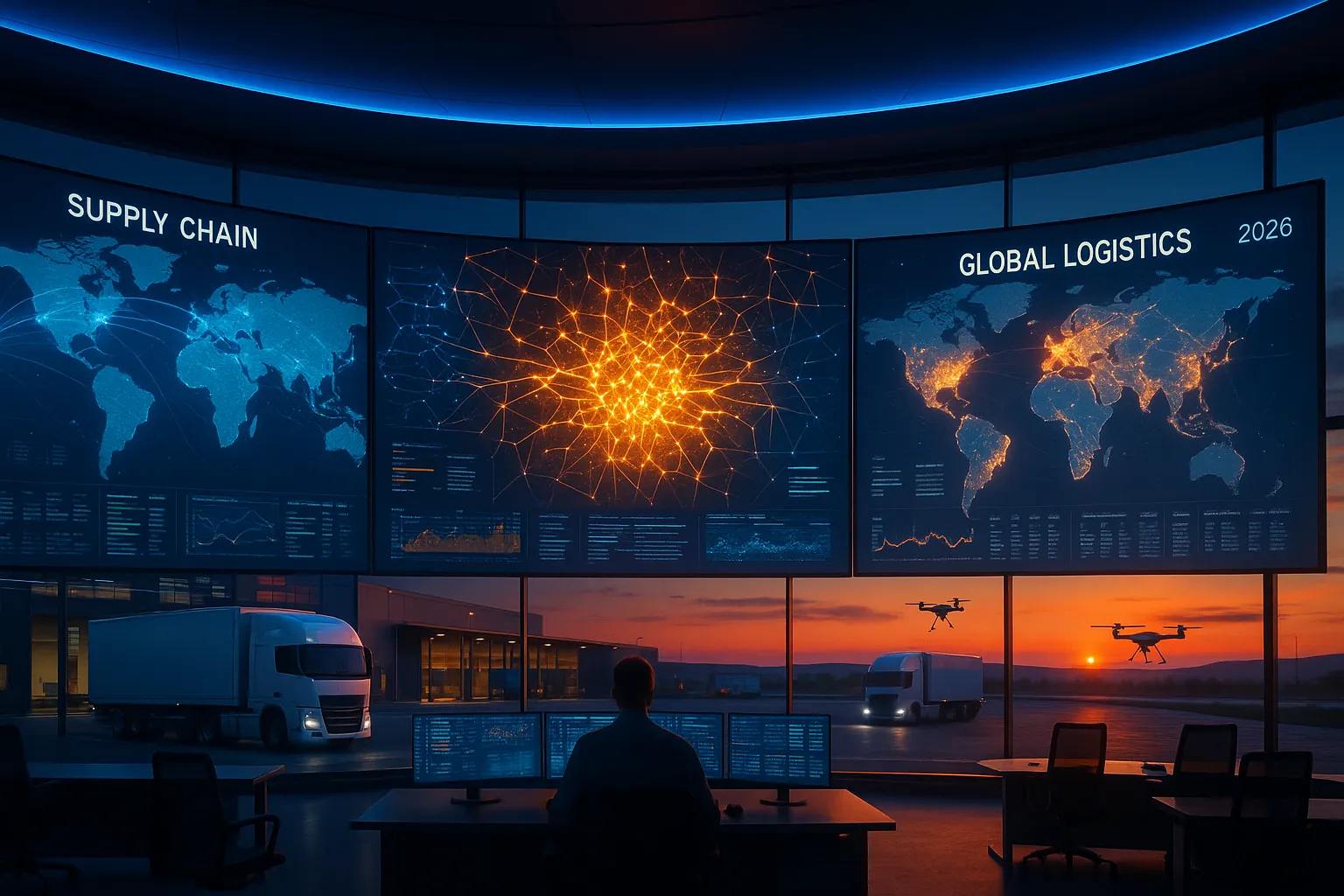
On March 3, 2026, Thoma Bravo — the world's largest technology-focused private equity firm — announced a definitive agreement to acquire WWEX Group and merge it with its existing portfolio company Auctane. The result: a combined $12 billion logistics and shipping technology platform that bridges the gap between physical freight brokerage and digital shipping software.
This isn't a routine acquisition. It's a signal that private equity sees the future of logistics not in trucks or warehouses, but in the data layer that connects them.
The Deal Structure: Software Meets Freight at Scale
WWEX Group operates a $5 billion freight brokerage platform with more than 2,300 sales professionals serving over 130,000 customers across 70 million-plus annual shipments. Its brand portfolio — Worldwide Express, GlobalTranz, Unishippers, JEAR Logistics, and BLX Logistics — spans parcel, LTL, truckload, and managed transportation services.
Auctane, on the other hand, is a cloud-native shipping software company. Thoma Bravo acquired Auctane (then known as Stamps.com) for $6.6 billion back in 2021. Today, Auctane's product suite includes ShipStation, Stamps.com, Metapack, and Packlink — tools that power intelligent shipping and fulfillment for e-commerce businesses globally.
The merger combines WWEX's commercial freight engine with Auctane's shipping automation and carrier connectivity software. As Thoma Bravo Partner Brian Jaffee put it, the combined entity will offer "the data, distribution and volume necessary to help customers drive smarter decision-making and superior execution across the logistics lifecycle."
The transaction is expected to close in Q2 2026, pending regulatory approval. CVC Capital Partners and other existing WWEX investors will retain a significant minority position through an equity rollover.
What Each Side Brings to the Table
Understanding why this merger matters requires looking at what each company does — and what it can't do alone.
WWEX Group has scale in physical freight. Its network moves massive volumes across every domestic mode, and its sales force has deep relationships with mid-market shippers who rely on 3PL expertise for rate negotiation, carrier selection, and shipment execution. But WWEX's technology stack has historically been built to support its brokerage model, not to serve as a standalone software platform.
Auctane has the opposite profile. Its software connects hundreds of thousands of e-commerce merchants to carrier networks through API-driven label generation, rate shopping, tracking, and returns management. ShipStation alone is one of the most widely adopted shipping platforms for small and mid-size e-commerce sellers. But Auctane lacks the commercial freight relationships and managed service capabilities that enterprise shippers demand.
Together, the combined platform will "seamlessly connect checkout to doorstep across parcel, LTL, truckload and global shipping," according to the joint announcement. That's the pitch: a single platform spanning the entire logistics lifecycle from shopping cart to loading dock.
The PE Consolidation Wave in Logistics Tech — Why Now
This merger doesn't exist in isolation. It's part of an accelerating wave of private equity-driven consolidation in logistics technology that's been building since 2025.
According to PwC's 2026 US Deals Outlook, dealmaking in transportation and logistics gained renewed traction in the second half of 2025 as buyers "prioritized strategic alignment over scale." PE firms are increasingly targeting technology-enabled logistics models — platforms that combine software, data, and network effects rather than simply adding more trucks or warehouses.
Lincoln International's January 2026 analysis echoes this trend, noting that "private equity interest will center on technology-enabled models and aggregator platforms" heading into 2026. The thesis is straightforward: logistics platforms that own both the software layer and the commercial relationships can capture margin across the entire value chain.
Several factors are driving this convergence:
- Falling interest rates are making large-scale PE acquisitions financially viable again after two years of elevated borrowing costs.
- AI-enabled logistics is no longer theoretical. Platforms with unified data across shipping modes can deploy AI for rate optimization, demand forecasting, and carrier matching in ways that siloed point solutions cannot.
- Margin pressure on shippers is pushing demand for integrated platforms that reduce the number of vendor relationships and technology integrations required to manage freight spend.
What This Means for Mid-Market Shippers and 3PL Competition
For shippers — particularly mid-market companies managing $5 million to $100 million in annual freight spend — this merger raises important strategic questions.
Vendor concentration risk increases. When your 3PL provider and your shipping software platform become the same company, switching costs rise dramatically. Shippers who currently use ShipStation for e-commerce fulfillment and a WWEX brand for freight brokerage may find themselves locked into a single ecosystem that prioritizes its own carrier relationships and pricing structures.
Data advantage shifts to the platform. The combined entity will have visibility across 70 million+ annual shipments spanning every mode. That data flywheel gives the merged platform a significant advantage in rate benchmarking, lane optimization, and carrier performance scoring — insights it may or may not share transparently with customers.
Competitive pressure on independent 3PLs. Smaller freight brokers and independent 3PLs that lack comparable technology platforms will face increasing pressure to differentiate. The merger raises the bar for what "technology-enabled 3PL" means: it's no longer enough to offer a TMS portal and a carrier network.
The buy vs. build decision intensifies. As PE-backed platforms consolidate, shippers face a critical question: do you rent logistics intelligence from a platform that also brokers your freight, or do you invest in your own technology stack that maintains competitive neutrality?
How Shippers Can Navigate Vendor Consolidation Risk
The WWEX-Auctane merger is a case study in why logistics technology independence matters. When your software vendor and your freight provider merge, their incentives align around maximizing revenue from your shipments — not necessarily minimizing your total cost of logistics.
Here's what proactive shippers should do now:
-
Audit your vendor dependencies. Map every touchpoint where WWEX brands or Auctane products handle your freight data, label generation, rate shopping, or carrier selection.
-
Benchmark independently. Don't rely on rate benchmarking from a platform that also brokers your freight. Use neutral tools to validate that you're getting competitive pricing.
-
Maintain multi-provider optionality. Ensure your TMS can integrate with multiple carrier networks and brokerage providers, not just the ones owned by a single PE-backed platform.
-
Protect your data. Understand who owns your shipment data, performance analytics, and carrier scorecards. In a consolidation scenario, that data becomes a competitive asset for the platform, not just a service feature.
Building Logistics Independence with CXTMS
At CXTMS, we believe shippers deserve technology that works for them — not for a freight broker's bottom line. Our platform provides carrier-neutral rate optimization, independent benchmarking, and full data ownership so you can make logistics decisions based on your interests, not a platform's.
As PE-driven consolidation reshapes the logistics technology landscape, the shippers who maintain technology independence will be the ones best positioned to control costs, preserve optionality, and adapt to whatever the next mega-merger brings.
Request a CXTMS demo → and see how carrier-neutral logistics intelligence protects your freight spend in an era of platform consolidation.