Warehouse Flexible Staffing Goes Platform-Based: How Digital Labor Marketplaces Are Replacing Traditional Temp Agencies in 2026


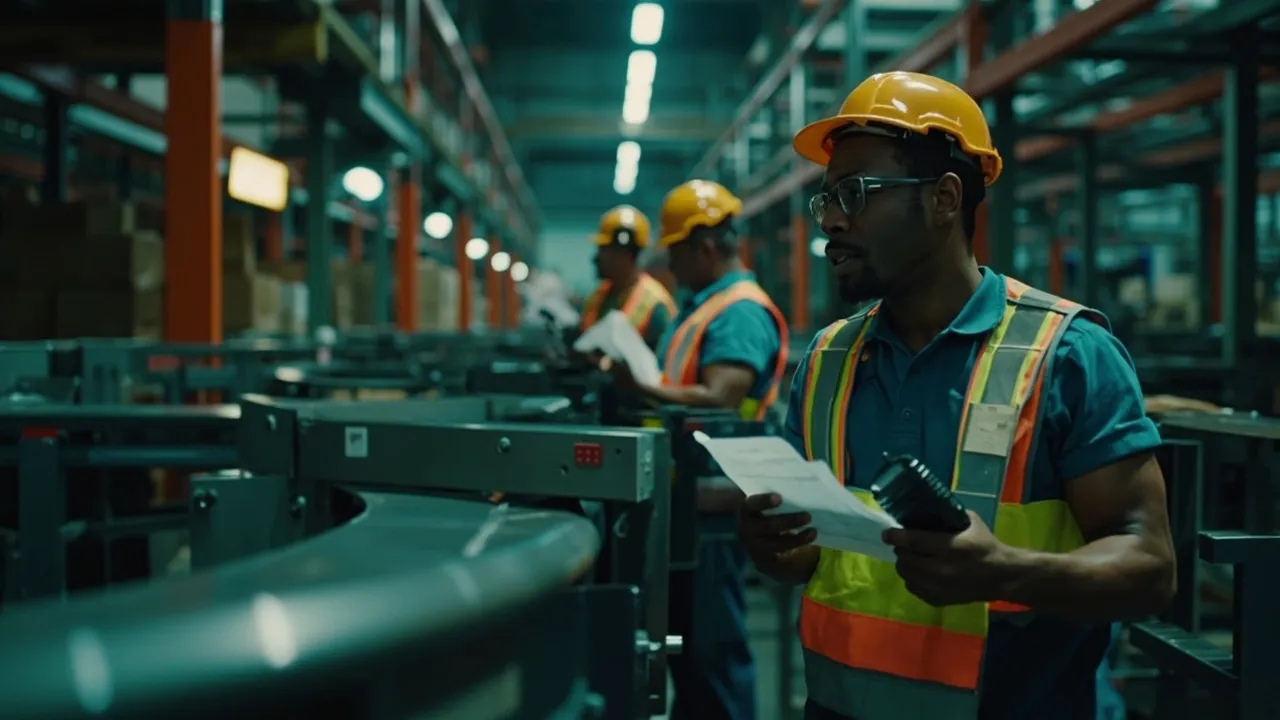
Finding reliable warehouse labor has never been harder — and the traditional temp agency model is buckling under the pressure. In 2026, a new category of digital labor marketplace platforms is fundamentally changing how warehouses fill shifts, manage peak seasons, and build flexible workforces. For logistics operators still relying on phone calls and spreadsheets to staff their facilities, the shift is both urgent and transformative.
The numbers tell the story clearly. Over half of warehouse operators now rank finding quality labor as their top operational challenge, while approximately 15% of all warehouse staffing comes from temporary labor — a figure that's climbing as e-commerce fulfillment volumes and peak-season volatility intensify. With annual warehouse turnover rates running between 30% and 60% depending on the facility type, the traditional staffing model of calling a temp agency, waiting for candidates, and hoping they show up is no longer viable at scale.
The Traditional Temp Agency Problem
For decades, warehouse operators have relied on traditional staffing agencies to fill temporary roles during peak periods and seasonal surges. The model was straightforward: call the agency, describe the roles, wait for workers to arrive. But this approach has fundamental limitations that are increasingly misaligned with modern warehouse operations.
Speed. Traditional agencies typically require 48 to 72 hours to fill a staffing request, sometimes longer for specialized roles. When an unexpected order surge hits or multiple workers call out on the same morning, that timeline is operationally devastating.
Visibility. Warehouse managers have little insight into who is coming, what their skill levels are, or whether they've worked in similar environments. Workers arrive as unknown quantities, requiring significant on-floor supervision during their first shifts.
Cost structure. Traditional temp agencies typically charge markups of 40% to 60% above base wages, reflecting their overhead of physical offices, account managers, recruiters, and administrative staff. For warehouse operators managing thin margins, these markups create significant cost pressure — particularly during extended peak seasons where temp labor usage can surge to 25–30% of total headcount.
Accountability gaps. When a temp worker doesn't perform or fails to show, the feedback loop back to the agency is slow and imprecise. There's no rating system, no performance data, and limited accountability for fill rates or worker quality.
The Platform-Based Staffing Revolution
Digital labor marketplace platforms — companies like Instawork, Wonolo, and Veryable — are attacking each of these pain points with technology-first approaches that mirror what ride-sharing did to traditional taxi dispatch.
These platforms operate on a fundamentally different model. Workers create profiles, complete certifications, and build performance histories on the platform. Warehouse operators post shifts — sometimes just hours before they need to be filled — and qualified workers claim them through mobile apps. Matching algorithms consider proximity, skill certifications, past performance ratings, and facility-specific experience to optimize fill rates.
The results are dramatic. Platform-based staffing solutions can fill shifts in as little as two to four hours, compared to days for traditional agencies. Digital platforms like Instawork now operate across more than 400 cities in the U.S. and Canada with access to over 7 million workers, creating a scale of labor liquidity that no regional temp agency can match.
Performance transparency is the other game-changer. Every shift generates data — arrival time, task completion rate, supervisor ratings, safety compliance. Workers build portable reputation scores that follow them across facilities. High performers get priority access to premium shifts and higher pay rates. Underperformers are naturally filtered out of the marketplace. This creates a self-reinforcing quality loop that traditional agencies simply cannot replicate.
The Reskilling Imperative
The platform shift arrives at a critical moment for warehouse workforce development. According to the MHI and Deloitte 2025 Annual Industry Report, 73% of supply chain organizations are accelerating automation investments driven by persistent labor shortages, while focus on workforce reskilling jumped from 25% of organizations in 2024 to 38% in 2025 — a 13-percentage-point increase that signals a fundamental strategic pivot.
Up to 50% of supply chain employees will need reskilling as automation adoption increases across warehouse operations. This creates a critical differentiator for platform-based staffing: the most competitive platforms are integrating training and certification programs directly into their worker ecosystems.
Workers on these platforms can complete safety certifications, forklift training modules, and WMS-specific orientation programs before they ever set foot in a facility. This pre-qualification dramatically reduces on-site training time — some warehouse operators report reducing new worker onboarding from two full days to half a day when using platform-certified workers compared to traditional temp agency placements.
The contract and temporary staffing services market is projected to reach $888 billion by 2035, growing at a 6.7% CAGR, with North America accounting for 40–45% of the market share. Within this massive market, the platform-based segment is growing significantly faster than traditional agency models, driven by the operational advantages that warehouse operators are increasingly demanding.
Cost Comparison: Platform vs. Traditional Agency
For a mid-size warehouse operation running 200 temporary shifts per week during peak season, the economics of platform-based staffing become compelling:
| Factor | Traditional Agency | Digital Platform |
|---|---|---|
| Markup over base wage | 40–60% | 20–35% |
| Time to fill | 48–72 hours | 2–4 hours |
| No-show rate | 15–25% | 5–10% |
| Onboarding time | 1–2 days | 2–4 hours |
| Performance data | Minimal | Shift-level metrics |
At $18/hour base wage with 200 weekly temp shifts, the markup savings alone can represent $30,000 to $50,000 per month — before accounting for the productivity gains from lower no-show rates, faster onboarding, and better worker-facility matching.
Compliance and Safety at Platform Scale
One legitimate concern with platform-based models is compliance — particularly around safety certifications, background checks, and labor law requirements that vary by jurisdiction. Leading platforms have addressed this by building compliance infrastructure into their core technology.
Workers are required to complete OSHA safety modules, pass background screenings, and maintain current certifications as prerequisites for claiming warehouse shifts. The platform handles I-9 verification, workers' compensation insurance, and payroll tax compliance centrally — removing administrative burden from warehouse operators while maintaining a robust compliance posture.
This is particularly critical as regulatory scrutiny of gig and flexible labor models intensifies. Platforms that proactively invest in compliance infrastructure — rather than treating workers as independent contractors — are positioning themselves for long-term viability in the warehouse labor market.
How CXTMS Integrates Labor Availability into Capacity Planning
Workforce availability is inseparable from warehouse capacity. A facility with 50 dock doors and automated sortation means nothing if you can't staff the receiving lines, pick faces, and loading operations that keep freight moving.
CXTMS connects labor planning with transportation execution by integrating workforce availability data into warehouse capacity models. When staffing platforms report shift fill rates and worker availability for your facilities, CXTMS factors that data into appointment scheduling, load planning, and carrier allocation decisions.
If a facility is running at 70% staffing on a given day, CXTMS can automatically adjust inbound appointment windows, redistribute loads across facilities with full staffing, or flag capacity constraints to procurement teams before they become service failures. This labor-aware logistics planning turns workforce data from an HR metric into an operational planning input that directly improves transportation efficiency.
The Future: Workforce-as-a-Service
The platform-based staffing model is evolving rapidly toward a true Workforce-as-a-Service paradigm — where warehouse operators don't manage headcount at all, but instead purchase staffed capacity by the shift, by the function, and by the performance level.
For logistics leaders, the message is clear: the companies that integrate digital workforce platforms into their operational planning today will have a structural cost and agility advantage over competitors still managing temp agency relationships manually. In an industry where labor represents 50–70% of warehouse operating costs, that advantage compounds with every shift.
Ready to connect workforce planning with transportation execution? Request a CXTMS demo to see how labor-aware capacity planning can optimize your entire logistics operation.