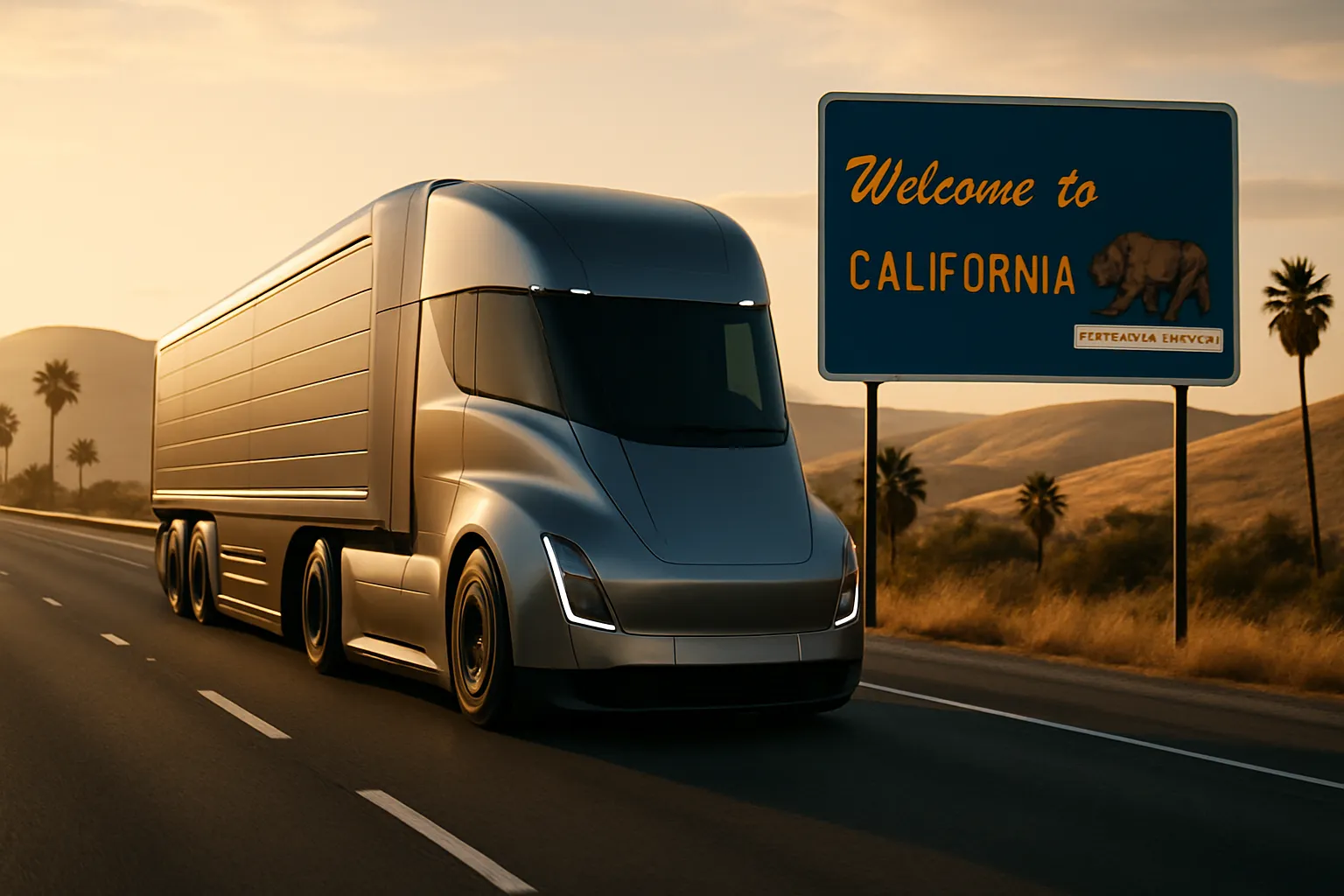
Driverless Commercial Trucking Goes Live: Aurora and Einride Launch on Texas Highways in March 2026

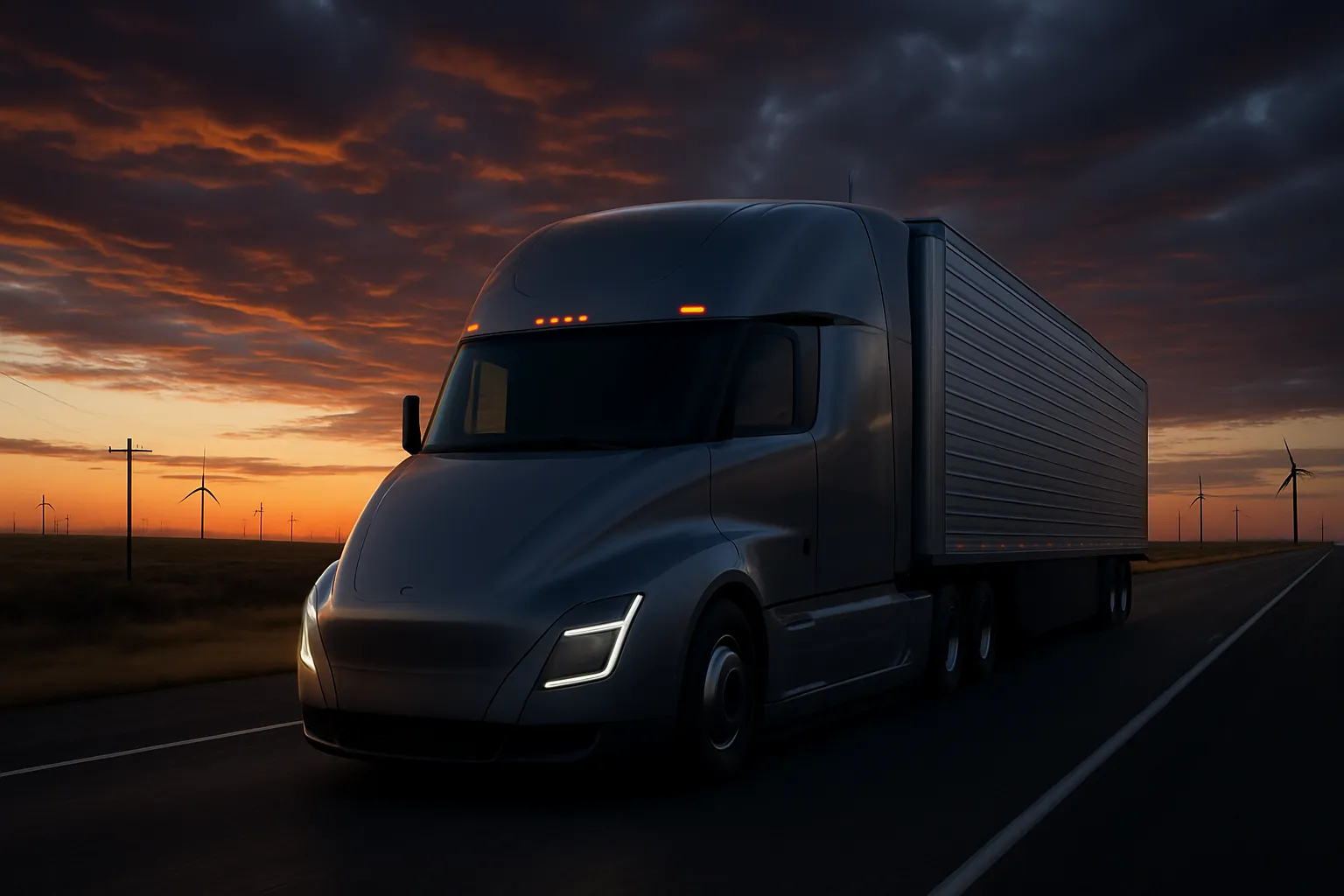
The autonomous trucking revolution is no longer a Silicon Valley pitch deck—it's rolling down Texas highways right now. In a pair of milestone announcements this week, Aurora Innovation surpassed 100,000 fully driverless commercial miles on Interstate 45 and expanded to a second route, while Einride signed a landmark partnership to deploy cabless electric autonomous trucks on the SH 130 toll corridor between Austin and San Antonio.
For shippers, carriers, and logistics operators, these aren't incremental test updates. They represent the moment autonomous trucking transitioned from "promising pilot" to "commercial freight reality."
Aurora's I-45 Dominance: Dallas to Houston and Beyond
Aurora Innovation (NASDAQ: AUR) has been quietly building the most impressive driverless trucking operation in the country. Since launching the first fully driverless commercial trucking service on U.S. public roads in May 2025, the company has:
- Completed over 100,000 driverless miles on public Texas highways
- Maintained a perfect on-time and safety record across all commercial deliveries
- Expanded from one route to two, adding the 600-mile Fort Worth-to-El Paso corridor in October 2025
- Deployed five driverless trucks running regular customer freight for Uber Freight, Hirschbach Motor Lines, and Russell Transport
The Fort Worth-to-El Paso route is particularly telling. It's a grueling 10-hour haul across flat, featureless West Texas terrain—exactly the kind of lane that's hardest to staff with human drivers. Aurora's trucks run it around the clock without mandated rest stops, fundamentally changing the economics of that corridor.
Looking ahead, Aurora plans to deploy hundreds of additional autonomous trucks in 2026, featuring next-generation hardware manufactured by Fabrinet. The new system includes upgraded FirstLight Lidar capable of detecting objects at 1,000 meters—twice the range of the previous generation—while cutting overall hardware costs by 50%.
Einride's Cabless Revolution on TX-130
While Aurora runs conventional cab-equipped trucks without drivers, Swedish company Einride is taking an even more radical approach: purpose-built cabless autonomous freight vehicles that were never designed for a human driver in the first place.
On March 17, 2026, Einride announced a Memorandum of Understanding with SH 130 Concession Company to establish the 41-mile southern section of the SH 130 toll road as a dedicated testbed for autonomous freight operations. The corridor connects Austin and San Antonio, serving as a strategic alternative to I-35—the main U.S. freight artery running from Mexico to Canada.
Key details of the Einride-SH 130 partnership include:
- Safety validation of autonomous highway operations on Segments 5 and 6 of SH 130
- First- and last-mile connectivity integration with adjacent frontage roads
- A next-generation rest stop blueprint designed specifically for electric autonomous trucks, incorporating high-capacity EV charging and specialized docking infrastructure
- AI-powered traffic management through integration of Einride's Saga AI platform with SH 130's digital ecosystem
Einride isn't a startup experimenting with a few test trucks. The company operates one of the world's largest electric heavy-duty fleets, serving over 25 enterprise customers across seven countries with approximately $65 million in expected annual recurring revenue from signed contracts.
Why Texas Is the Epicenter of Autonomous Freight
Texas isn't hosting these operations by accident. The state has deliberately positioned itself as the most AV-friendly jurisdiction in the country through a combination of:
Regulatory clarity: Texas allows driverless testing and commercial freight operations without the permitting bottlenecks that plague other states. As Governor Greg Abbott noted when welcoming Aurora's launch, "These new, autonomous semis on the I-45 corridor will efficiently move products, create jobs, and help make our roadways safer."
Infrastructure advantages: The state's vast highway network, flat terrain, and predictable weather patterns (at least on the western routes) create ideal conditions for early autonomous deployment. The SH 130 toll road's lower traffic density and modern infrastructure make it a natural testing corridor.
Freight volume: Texas is one of the largest freight markets in the country, with massive volumes flowing through the Dallas-Houston-San Antonio triangle and along the I-35 NAFTA corridor. Real commercial demand exists on every route where autonomous trucks are operating.
Federal Legislation Is Catching Up
The ground-level progress in Texas is now being matched by federal legislative momentum. The SELF DRIVE Act of 2026, introduced by Representatives Bob Latta (R-OH) and Debbie Dingell (D-MI), would create the first federal framework specifically addressing autonomous trucking.
The bill's key provisions for freight operators include:
- Preempting the state-by-state regulatory patchwork that currently forces AV companies to navigate different rules in every jurisdiction
- Allowing cabless truck designs by eliminating requirements for manually operated controls intended for human drivers
- Establishing a National Automated Vehicle Safety Data Repository requiring quarterly reporting of miles traveled and crash data, creating a transparent safety benchmark
This matters enormously for shippers. A unified federal framework would accelerate interstate autonomous operations, potentially opening up cross-border lanes that currently require human drivers to comply with varying state regulations.
What This Means for Shipper Lane Pricing
The economic implications are already becoming visible on Texas corridors. Autonomous trucks fundamentally change the cost structure of long-haul freight:
- No Hours of Service constraints: Autonomous trucks don't need 10-hour rest breaks, enabling 24/7 asset utilization
- Reduced driver turnover costs: The American Trucking Associations has long reported annual driver turnover rates exceeding 90% at large truckload carriers
- Lower insurance trajectories: As Aurora's perfect safety record extends, insurance costs on autonomous lanes should decline relative to human-operated routes
- Predictable capacity: Autonomous fleets don't call in sick, quit mid-route, or face CDL suspension
For shippers currently moving freight on the Dallas-Houston, Fort Worth-El Paso, or Austin-San Antonio corridors, autonomous capacity is transitioning from a curiosity to a real rate consideration. As hundreds of Aurora trucks hit the road through 2026, expect competitive pressure on lane pricing in these corridors.
The National Autonomous Freight Timeline
March 2026 marks an inflection point, not an endpoint. Here's what the next 12-18 months look like:
- Q2 2026: Aurora deploys next-generation hardware on International LT Series and Volvo VNL platforms without observers in the cab
- 2026: Aurora targets "hundreds" of additional autonomous trucks across Texas and Arizona
- 2026-2027: Einride pursues a public listing on the NYSE, bringing additional capital and visibility to the cabless approach
- 2026-2027: The SELF DRIVE Act could be folded into the highway bill reauthorization, creating a national regulatory framework
The convergence of proven commercial operations, next-gen hardware, infrastructure partnerships, and federal legislation suggests autonomous trucking will move from "Texas experiment" to "national freight strategy" faster than many shippers expect.
How CXTMS Helps You Navigate the Autonomous Freight Transition
As autonomous capacity becomes a real option on key freight corridors, shippers need visibility into how these new lanes compare against traditional carrier options. CXTMS provides the route intelligence and rate benchmarking tools to evaluate autonomous versus conventional capacity on a lane-by-lane basis.
Whether you're shipping Dallas-to-Houston today or planning your network around emerging autonomous corridors, CXTMS gives you the data to make informed decisions about when and where autonomous freight makes sense for your supply chain.
Ready to see how autonomous trucking fits into your freight strategy? Request a CXTMS demo today and get lane-level visibility into the corridors where driverless freight is already moving.