The Multi-Modal Visibility Market Hits $1.2 Billion: Why Fragmented Tracking Is Now a Competitive Risk


The market for end-to-end multimodal shipment visibility platforms crossed $1 billion in 2025 and is now on track to hit $1.2 billion in 2026, growing at a 13.7% CAGR through 2036, according to FutureMarketInsights. That's not a niche anymore. That's a market finding its stride — driven by shippers who've done the math and concluded that fragmented tracking is costing them more than the platforms do.
The Fragmentation Tax Is Real
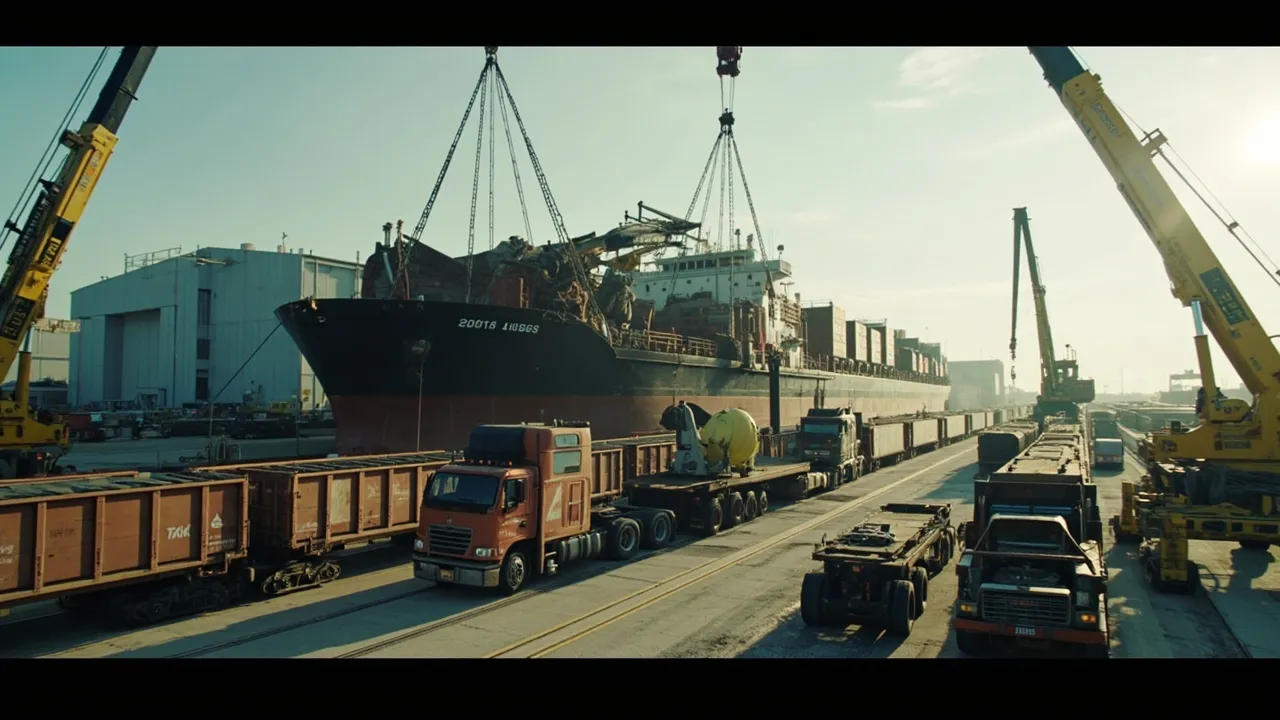
Here's the problem that every logistics leader eventually runs into: their supply chain isn't one thing. It's ocean containers moving through ports, truckloads hauling across interstate corridors, air freight clearing customs, and last-mile couriers finishing the loop. Each of those modes has historically required its own tracking layer — its own portal, its own data feed, its own team to manage it.
Supply Chain Management Review documented the operational reality in March 2026: many shippers are operating across five to 10 platforms simultaneously — TMS, WMS, carrier portals, rail tracking systems, and financial reconciliation tools. That's not a tech stack. That's a fragmentation problem with a budget.
The cost of that fragmentation isn't abstract. When your team is manually stitching together shipment status from five different systems to answer one customer email, that's paid labor hours. When a carrier exception happens in transit and nobody catches it until the receiver is calling to complain, that's a service level failure. When your finance team can't reconcile freight costs against actual delivery events without a week of spreadsheet work, that's a close cycle problem. None of those show up as "visibility platform costs" on a P&L — they show up as operational drag, customer friction, and finance overhead. Which is exactly why finance teams are now asking the hard questions.
What $1.2 Billion Buys You That Fragmentation Can't
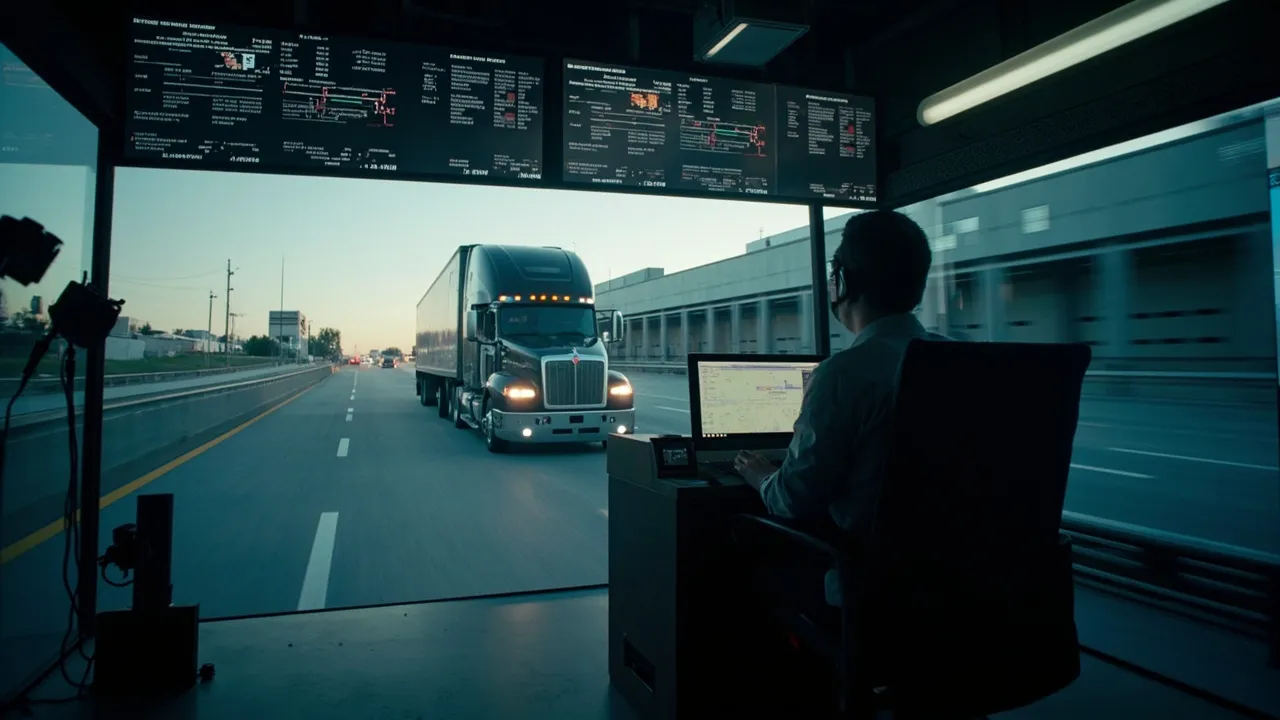
The visibility market's growth isn't just about tracking. It's about the layer that sits on top of raw tracking data and turns it into something actionable. Here's what modern multimodal visibility platforms are actually delivering:
Predictive ETA. Real-time location is table stakes. The differentiation is what happens when you layer in historical carrier performance, weather data, port congestion signals, and customs clearance patterns to predict arrival windows before delays actually happen. Leading platforms are now publishing ETA accuracy rates above 90% for domestic truckload within a four-hour window. That's the number that lets your warehouse team stage receiving — not guess at it.
Exception management workflows. A delayed shipment that triggers an alert at the point of disruption — with suggested carrier alternatives, pre-drafted customer notifications, and automated re-booking workflows — is fundamentally different from a delayed shipment your team discovers three hours later when the receiver calls. The operational and reputational difference between those two scenarios is significant, and it's where unified platforms generate ROI that fragmented tools simply cannot match.
Carrier integration depth. The more carriers a platform aggregates across modes — ocean, air, LTL, truckload, rail, last mile — the more complete your network picture becomes. For shippers running complex supply chains with multiple carrier relationships, integration breadth isn't a nice-to-have. It's the foundation of the whole value proposition.
Cross-modal inventory positioning. When you can see your inbound ocean containers alongside your domestic truckload movements alongside your air freight in one timeline, you can make better decisions about inventory positioning. Do you need safety stock at the DC, or can you run leaner because you trust your visibility into in-transit inventory? That's a working capital question as much as it's an operational one.
Evaluating Platforms: Beyond Tracking Accuracy
The visibility market is crowded. The pitch from every vendor is some version of "we track everything, everywhere, in real time." Shippers who've been through vendor evaluations know that the demo rarely matches production performance — particularly around data latency on ocean freight, API reliability for LTL carriers, and the depth of exception management workflow automation.
Here are the evaluation criteria that separate real operational value from a polished slide deck:
-
Mode coverage across your actual network. Don't evaluate a platform against its best-mode performance. Map your top 20 lane/mode combinations and ask for live demonstrations on those specific routes before you sign anything.
-
Exception workflow automation, not just alerting. The question isn't "does the platform tell me when something goes wrong?" It's "what can the platform do about it automatically?" Look for pre-built workflows for common exception types: carrier no-shows, customs holds, weather delays.
-
ERP/TMS integration depth. A visibility platform that lives outside your TMS is a reporting tool, not an operational platform. True value comes from visibility data flowing into planning and execution workflows —自动shipment updates, triggered replenishment signals, embedded cost accruals.
-
Data latency by mode. Ocean tracking via carrier APIs can have 4–24 hour latency depending on the line. Air freight tracking is typically more real-time. Rail visibility varies widely by carrier and region. Ask for their published latency SLA by mode and verify it with references who run your same lane types.
-
ROI framework. A credible vendor should be able to build a business case with you based on your actual freight profile. If they can't quantify the cost of your current fragmentation state, they're not sure what they're solving either.
The Convergence That's Reshaping the Market
The visibility market is undergoing a structural shift. Historically, specialized vendors dominated: one platform for ocean visibility, another for truckload, another for air. The past two years have seen aggressive convergence as platforms race to build the multimodal stack — not because it's technically easy, but because shippers have made it clear that managing five different visibility subscriptions to see one supply chain is absurd.
This convergence is good news for shippers: the market is being pulled toward integration by buyer demand, which means platforms are investing heavily in the cross-modal capabilities that matter most. The risk for shippers is timing — buying a specialized point solution today that becomes obsolete as the market converges. The counter-risk is waiting for the perfect unified platform that doesn't yet exist. The pragmatic answer is evaluating platforms on their roadmap toward multimodal unification, not just their current state.
The Visibility You Have vs. The Visibility You Need
The $1.2 billion market figure is a signal, not just a statistic. It tells you that thousands of logistics teams have crossed the threshold from "we know we have a fragmentation problem" to "we've decided to do something about it." The question is no longer whether visibility platforms have value. The question is whether your current approach to tracking — whatever patchwork of portals, spreadsheets, and manual checks that represents — is putting you at a competitive disadvantage against shippers who've already consolidated.
A TMS built for multimodal visibility — with integrated tracking, exception workflows, and carrier data unified in a single operational view — is infrastructure that makes the fragmented approach look increasingly expensive by comparison.
Ready to see what unified multimodal visibility looks like inside a modern TMS? Request a CXTMS demo and see how CXTMS consolidates your tracking, exception management, and carrier integration in one platform.