Tariff Shock 2026: How the New Trade War Is Reshaping Global Supply Chains

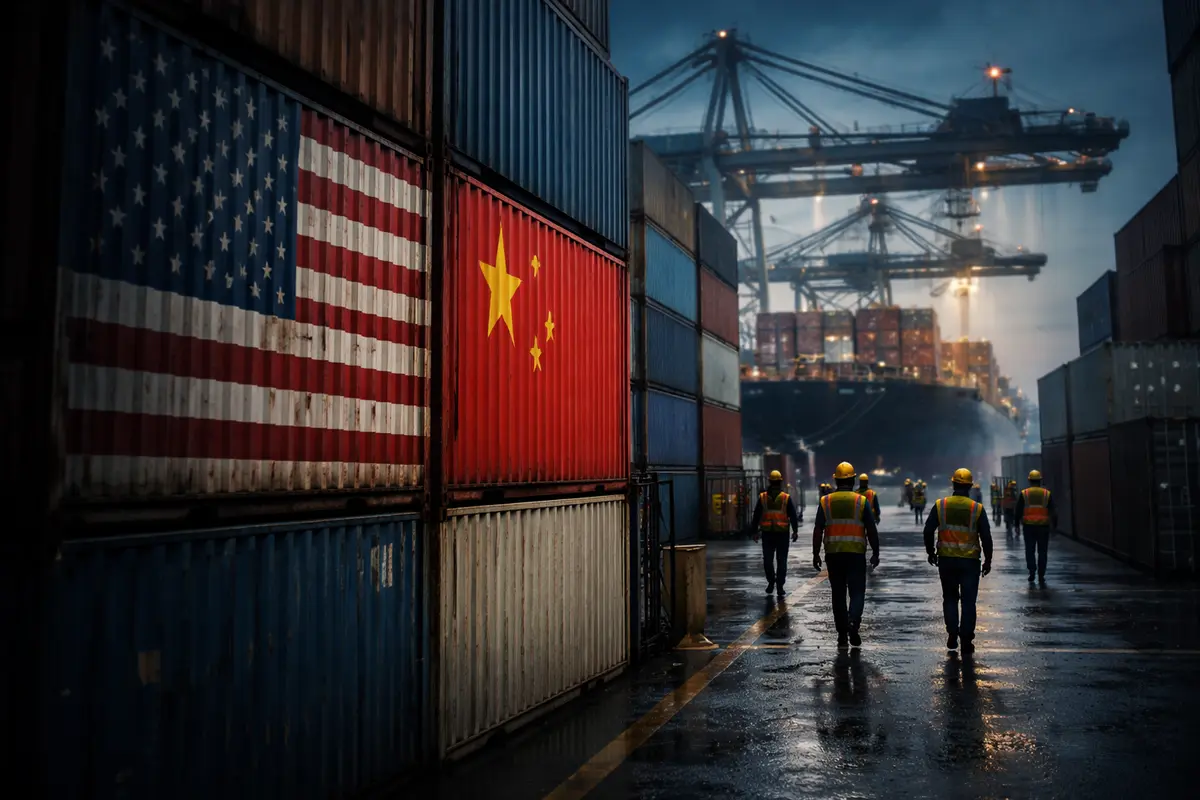
The numbers tell a stark story. In January 2025, the average effective U.S. tariff rate stood at 2.3%. By November, it had surged to 10.5% — a nearly fivefold increase that has sent shockwaves through every link of the global supply chain. For logistics professionals, 2026 isn't just another year of trade uncertainty. It's a structural inflection point.
The Scale of the Tariff Shock
According to the Penn Wharton Budget Model, the Trump administration's tariff policies generated $168.8 billion in customs revenue between January and November 2025 alone. China bears the heaviest burden, with effective tariff rates reaching 34.7% — nearly triple the aggregate average. Steel and aluminum products face the steepest duties at 39.8%, followed by automotive vehicles at 15.3%.
These aren't marginal adjustments. They represent a fundamental repricing of international trade that affects everything from raw material sourcing to final-mile delivery economics.
The Frontloading Mirage
One of the most deceptive dynamics of 2026 is what Sea-Intelligence CEO Alan Murphy calls the "frontloading mirage." As CNBC reported, global economic growth forecasts appear relatively optimistic — but much of the apparent trade volume strength is driven by companies rushing to import goods before anticipated tariff escalations take effect.
This creates a dangerous illusion. Container volumes look healthy. Port throughput seems strong. But strip away the panic buying, and the underlying demand picture is far less encouraging. For shippers planning 2026 capacity and inventory strategies, relying on frontloaded volume data could lead to serious overcommitment.
Chinese factories and ports are buzzing with pre-Lunar New Year activity in February 2026, but experts caution that this spike is partly driven by low-base effects and tariff-driven pull-forward rather than genuine demand growth.
Supply Chain Restructuring in Real Time
The trade war isn't just raising costs — it's redrawing the map of global commerce. Supply Chain Dive's 2026 outlook identifies tariff uncertainty as the dominant force shaping procurement, logistics, and operations management this year. Companies that spent 2025 scrambling to understand the new tariff landscape are now executing structural changes:
Nearshoring acceleration. Mexico has become the top U.S. trading partner, with companies leveraging USMCA exemptions to avoid tariff exposure. The share of Canadian and Mexican imports claiming USMCA exemptions surged to nearly 89% by November 2025, according to Penn Wharton's analysis.
China-plus-one becomes China-plus-many. Single-source diversification is no longer sufficient. Major retailers like Walmart are reportedly demanding 10% price cuts from remaining Chinese suppliers while simultaneously pivoting sourcing to India, Vietnam, and Indonesia. The goal: no single country representing more than 25% of import volume.
Bonded warehouse strategies. Forward-thinking shippers are using Foreign Trade Zones (FTZs) and bonded warehouses to defer or reduce duty payments. These facilities allow goods to be stored, assembled, or re-exported without triggering full tariff obligations — a critical tool when rates change quarterly.
The Customs Complexity Crisis
Higher tariffs don't just mean higher costs. They mean dramatically more complex customs compliance. Every tariff adjustment triggers a cascade of documentation requirements, classification reviews, and landed cost recalculations.
For logistics teams managing hundreds or thousands of SKUs across multiple origin countries, the compliance burden has become overwhelming. Harmonized System (HS) code classification — always important — is now mission-critical, since a single misclassification can mean the difference between a 10% and a 35% duty rate.
Country-of-origin rules have also tightened. With tariff rates varying dramatically by trading partner, accurately determining where goods were "substantially transformed" has become a high-stakes exercise that customs brokers and trade compliance teams struggle to manage at scale.
What Smart Shippers Are Doing Now
The companies navigating this environment most effectively share several common strategies:
1. Dynamic landed cost modeling. Static cost-per-unit calculations are obsolete when tariff rates shift quarterly. Leading shippers maintain real-time landed cost models that factor in duties, freight rates, insurance, and compliance costs across multiple sourcing scenarios.
2. Scenario-based procurement. Rather than committing to single-source contracts, procurement teams are maintaining active relationships with suppliers in three or more countries, with pre-negotiated terms that can activate quickly when trade policy shifts.
3. Inventory buffer optimization. The frontloading strategy works in the short term, but it ties up working capital and warehouse space. Sophisticated shippers are using demand forecasting tools to determine exactly how much safety stock to carry — enough to buffer against tariff escalations without drowning in excess inventory.
4. Automated compliance workflows. Manual customs documentation simply can't keep pace with the velocity of tariff changes. Companies investing in automated classification, screening, and documentation systems are processing shipments faster and with fewer costly errors.
The Technology Imperative
Managing supply chain operations in a volatile tariff environment requires a fundamentally different technology stack than what most shippers relied on five years ago. Legacy systems built for stable trade lanes and predictable duty rates simply cannot handle the complexity of multi-scenario planning, real-time tariff tracking, and automated compliance.
A modern Transportation Management System (TMS) must integrate customs data, tariff schedules, and trade compliance workflows directly into routing and procurement decisions. When a new tariff is announced, the system should automatically recalculate landed costs across all affected lanes, flag shipments that need reclassification, and recommend alternative sourcing or routing options.
This is exactly the approach CXTMS takes — unifying freight management, customs compliance, and landed cost analytics into a single platform that adapts in real time to trade policy changes. When tariff rates shift, shippers using CXTMS can immediately see the impact across their entire network and execute mitigation strategies without the delays of manual analysis.
Looking Ahead
The 2026 tariff landscape shows no signs of stabilizing. With effective rates already at levels not seen since the 1930s Smoot-Hawley era, and new sector-specific duties (including targeted AI chip tariffs) continuing to emerge, supply chain resilience has never been more dependent on agility, visibility, and intelligent automation.
The shippers who thrive won't be the ones who find ways to avoid tariffs entirely — that's increasingly impossible. They'll be the ones who build supply chains flexible enough to absorb policy shocks, diversified enough to shift sourcing quickly, and smart enough to optimize total landed cost across every scenario.
Navigating the tariff maze? Contact CXTMS for a demo of our customs compliance and landed cost analytics platform.