Warehouse Robotics Hit $11 Billion in 2026: Why Every Shipper Needs an Automation Strategy Now

The warehouse robotics market just crossed a milestone that should make every shipper pay attention. At $10.96 billion in 2026, the industry is growing at a blistering 17.5% CAGR and is on track to hit $24.55 billion by 2031, according to Mordor Intelligence. This isn't a technology experiment anymore — it's a full-blown industrial transformation, and shippers who don't have an automation strategy are already falling behind.
The Perfect Storm Driving Adoption
Three forces are converging to make warehouse robotics not just attractive but essential.
The labor crisis isn't going away. Warehouses across North America and Europe continue to face chronic staffing shortages. The MHI 2025 Annual Industry Report found that 55% of supply chain leaders are boosting investments in technology and innovation specifically to offset workforce challenges. Turnover rates in warehousing remain stubbornly above 40% annually, and the workers who do stay increasingly expect safer, less physically demanding roles — exactly what robotics enables.
E-commerce volumes keep climbing. Global parcel volumes are projected to exceed 260 billion shipments by 2027. Same-day and next-day delivery expectations have become table stakes, not differentiators. Manual picking and packing operations simply cannot keep pace with the throughput demands. Facilities processing 50,000+ orders per day are finding that human-only operations create bottlenecks that no amount of overtime can solve.
The technology has matured. Early warehouse robots were expensive, inflexible, and required massive infrastructure changes. Today's autonomous mobile robots (AMRs) can be deployed in weeks, navigate dynamic environments using AI and LiDAR, and integrate with existing warehouse management systems through standard APIs. The barrier to entry has dropped dramatically.
What's Actually Working: The Three Pillars of Warehouse Robotics
Not all automation is created equal. Here's where shippers are seeing the strongest returns.
Autonomous Mobile Robots (AMRs)
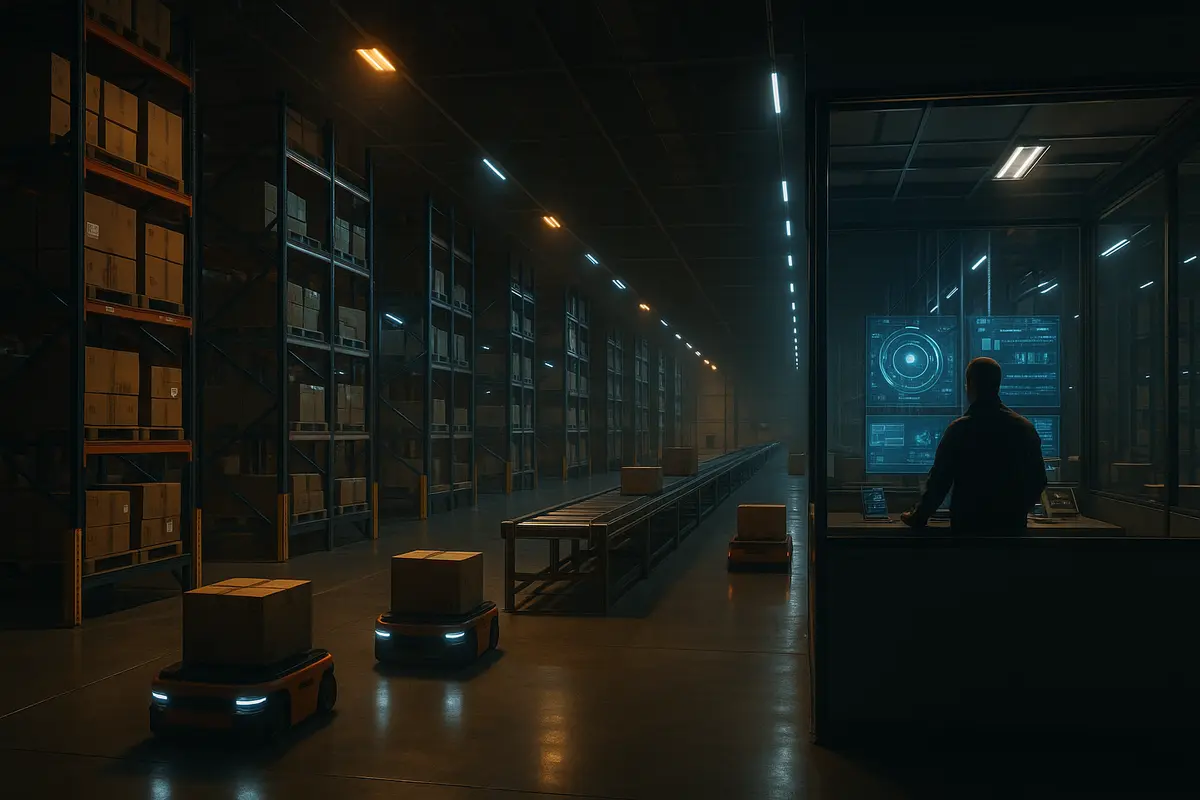
AMRs have become the workhorse of modern warehouse automation. Unlike their predecessors — automated guided vehicles (AGVs) that followed fixed magnetic strips — AMRs use onboard sensors and AI to navigate freely. The AMR market for logistics and warehousing alone is projected to reach $18.56 billion by 2032, driven by their flexibility and rapid deployment timelines.
AMRs excel at goods-to-person workflows, where robots bring inventory to stationary pickers instead of workers walking miles through aisles. Facilities report 2-3x productivity gains after AMR deployment, with some operations seeing picking rates increase from 60 units per hour to over 200.
Robotic Picking Systems
The holy grail of warehouse automation — the ability to pick individual items from bins — has finally become viable at scale. AI-powered vision systems can now identify and grasp thousands of different SKUs, handling everything from rigid boxes to flexible polybags. Error rates for robotic picking have dropped below 0.1% in many deployments, rivaling human accuracy.
Automated Sortation and Packaging
High-speed sortation systems using robotic arms and conveyor networks are transforming outbound operations. Modern systems can sort 10,000+ items per hour, with AI dynamically routing packages based on carrier, destination, and service level. Automated packaging systems that custom-fit boxes to product dimensions are reducing dimensional weight charges by 20-30%.
The ROI Reality Check
Let's talk numbers. The most common question from shippers evaluating robotics is: "When do I break even?"
For mid-size operations processing 10,000-50,000 orders per day, the typical deployment looks like this:
- Initial investment: $2-5 million for a comprehensive AMR + picking system
- Payback period: 18-24 months based on labor savings alone
- Ongoing savings: 30-50% reduction in per-unit fulfillment costs
- Additional benefits: 99.5%+ accuracy rates, 24/7 operational capability, and reduced workplace injury claims
The math gets even more compelling when you factor in the hidden costs of manual operations: hiring and training cycles, overtime during peak seasons, error-related returns, and workers' compensation claims. According to MHI's research, 85% of supply chain respondents expect to adopt AI technologies in their warehouses within the next five years — those who move first capture the cost advantages while competitors are still planning.
Why You Need a TMS That Speaks Robot
Here's what most automation vendors won't tell you: warehouse robotics only delivers full value when it's connected to your broader logistics ecosystem. A robot that picks orders faster doesn't help if your transportation planning can't keep up with the increased throughput.
This is where a modern TMS becomes critical. When your warehouse automation system communicates directly with your transportation management platform, you unlock capabilities that neither system can deliver alone:
- Dynamic wave planning that matches pick schedules to carrier pickup windows
- Real-time capacity balancing across automated and manual zones
- Predictive load building that starts optimizing trailer utilization before orders are even picked
- End-to-end visibility from robotic pick confirmation through final-mile delivery
CXTMS is built for exactly this integration layer. Our platform connects warehouse automation outputs — pick confirmations, pack completions, sortation events — directly into transportation execution workflows. The result is a seamless pipeline from order to delivery, with every handoff automated and every exception surfaced in real time.
The Bottom Line
The $11 billion warehouse robotics market isn't waiting for shippers to develop a strategy. Competitors who automate now are building structural cost advantages that will compound over the next decade. The question isn't whether to automate — it's how fast you can move.
Start by auditing your current fulfillment operations. Identify the bottlenecks: Is it picking speed? Accuracy? Throughput during peaks? Each pain point maps to a specific automation solution. Then ensure your TMS can integrate with whatever you deploy — because disconnected systems create new bottlenecks even as they solve old ones.
Ready to connect your warehouse automation with intelligent transportation management? Contact CXTMS for a demo and see how end-to-end visibility transforms your supply chain.