Target’s New Supply Chain Facility Model Points to the Next-Day Retail Network Race

Retailers still compete on store count, assortment, and price. But the sharper fight now happens between a purchase click and a delivery promise. Next-day retail fulfillment is becoming a network-design problem, and Target’s newest supply chain facility shows how serious that race has become.
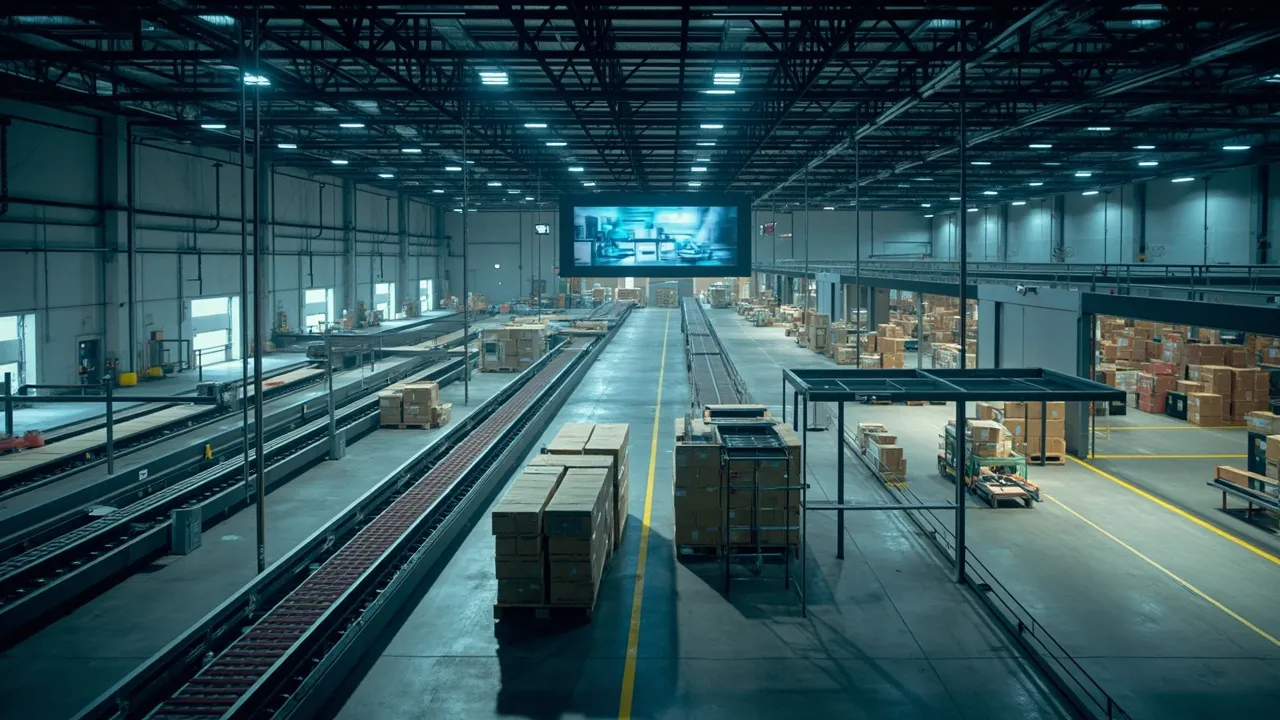
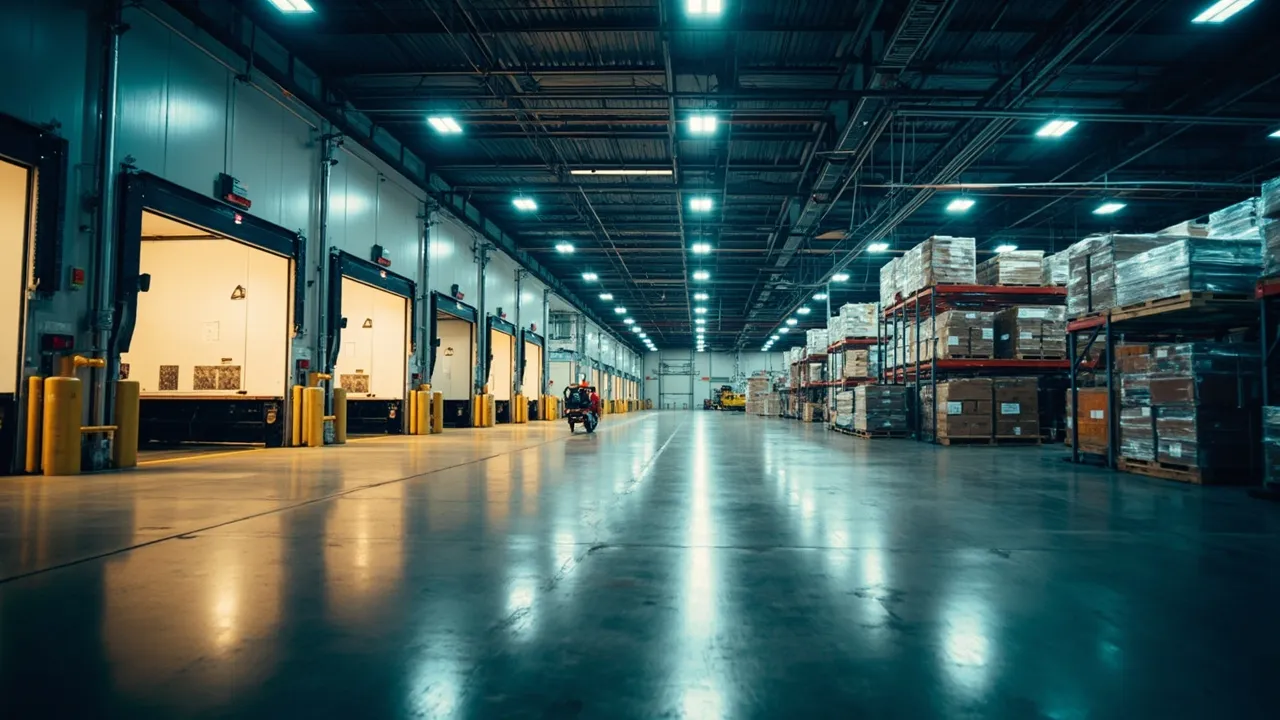
Supply Chain Dive reported that Target opened a $265 million Receive Center in Houston, the first facility of its kind for the retailer. The building sits between import warehouses and downstream facilities, adding regional inventory-holding capacity before products move to six regional distribution centers and a flow center.
That distinction matters. The facility receives and holds vendor inventory until downstream replenishment is needed. Target says the regional capacity helps get products to the right place faster and at lower cost because freight travels shorter distances. The Houston site is 1.2 million square feet, employs 185 people, and can hold roughly 3 million to 3.5 million cubic feet of product.
This is what the next-day retail race looks like: not one giant warehouse, not every store doing everything, not a pure last-mile play. It is a layered network where inventory is staged close enough to demand to protect speed, but not so scattered that the retailer loses control of cost and availability.
Next-day delivery starts before the order exists
The popular view of next-day delivery focuses on the final mile. That is understandable; it is the part customers see. But next-day service is usually won or lost before the order is placed. The hard questions are upstream: which inventory should sit close to which markets, how often it should transfer, which nodes should fulfill digital volume, and when parcel capacity should enter the network.
Target’s Receive Center addresses one of retail’s hardest tradeoffs. Too much inventory in stores and distribution centers creates congestion, labor pressure, and markdown risk. Holding inventory too far upstream weakens speed and availability. A receive center gives the retailer another pause point: inventory can be owned and available without being prematurely forced into every downstream node.
That flexibility is especially important for seasonal, bulky, hard-to-forecast, or long-lead-time products. Those categories clog store backrooms and DCs if they arrive too early, but create service failures if they arrive too late. A regional holding layer lets planners respond without turning every forecast miss into an expedite.
Stores are powerful, but not enough by themselves
Target is not abandoning store-based fulfillment. In a separate Supply Chain Dive report, the company said it planned to expand next-day delivery to 20 new U.S. metro areas in spring 2026. The same report noted that 75% of the U.S. population is within 10 miles of a Target location, and that Target has about 2,000 stores positioned to support digital fulfillment.
Those numbers explain why stores remain central to retail logistics. A dense store base puts inventory close to households, shortens local delivery routes, and gives customers pickup and drive-up options that pure e-commerce networks cannot easily replicate.
But store proximity does not automatically produce efficient next-day delivery. Stores are built for shoppers, not only for pick waves, parcel cutoffs, trailer appointments, and replenishment volatility. If every store is treated as an equal fulfillment node, the network can fragment quickly. Labor planning gets harder. Inventory accuracy matters more. Parcel handoffs multiply. Transportation teams may end up paying for speed that better inventory positioning could have provided more cheaply.
That is why Target’s approach is notable. The company has been concentrating some digital fulfillment volume in stores better equipped to handle it while also investing in new facility types. The question is not “store fulfillment or distribution center fulfillment?” It is “which node should handle this order, in this market, for this service promise, at this cost?”
The broader e-commerce network is moving the same way
Target’s strategy fits a wider shift in parcel and e-commerce logistics. Launch Fulfillment’s shipping-zone guide explains the operating logic clearly: when inventory sits in one central hub, distant orders absorb higher-zone costs; when inventory is closer to demand density, shipping costs fall and service promises get easier to protect. That is the same network pressure pushing retailers toward more flexible, data-driven models.
That is the practical heart of next-day fulfillment. Faster does not always mean premium transportation. Often, it means starting closer. A shipment that begins near the customer can move on a cheaper service level and still arrive quickly. A shipment that starts too far away forces the retailer into expensive parcel upgrades, missed promises, or customer disappointment.
The risk is overdistribution. If too many SKUs are pushed into too many nodes, slow movers take up space, transfers increase, and planners lose visibility. The strongest retail networks will distinguish between products that must be forward deployed and products that can stay upstream until demand is clearer.
TMS and WMS coordination is where speed becomes sustainable
A receive center, flow center, store, sortation center, and parcel carrier can each work well alone and still produce a messy customer experience if they are not coordinated. Next-day delivery depends on handoffs. The more handoffs a network uses, the more important the operating system becomes.
Four capabilities matter most. First, inventory visibility has to be trustworthy. A next-day promise built on stale data is just a future apology. Teams need to know what is available, what is allocated, and whether a node can ship before cutoff.
Second, transfer planning has to be frequent but disciplined. Regional inventory only helps if it moves at the right time. Too few transfers starve downstream nodes. Too many create handling, dock congestion, and transportation cost.
Third, labor and transportation planning need to be linked. More digital volume requires labor to pick, pack, stage, and hand off orders. Parcel injection also has to match pickup schedules, sortation windows, and service commitments.
Fourth, exception management has to be fast. A delayed trailer, stockout, carrier miss, or failed sortation line can break next-day performance. The network needs rules for when to reroute, split an order, change carrier, shift volume, or downgrade the promise.
The lesson for retailers and freight teams
Target’s Houston Receive Center is not just a real estate announcement. It is a signal that retail fulfillment networks are becoming more specialized. The old model of pushing product through a standard replenishment pipeline is not enough when customers expect store availability, pickup, same-day options, and next-day delivery at the same time.
For freight forwarders, 3PLs, and retail logistics teams, the implication is clear: speed has to be designed into the network before it is sold at checkout. That means matching inventory placement to demand, choosing the right fulfillment nodes, coordinating parcel options, and keeping transportation decisions connected to warehouse capacity.
CXTMS helps logistics teams manage that coordination. With connected shipment planning, carrier selection, inventory-aware execution workflows, and exception visibility, teams can support faster retail promises without letting the network fragment into costly one-off decisions.
Next-day retail is not won by moving every shipment faster. It is won by positioning the right inventory, in the right node, with the right transportation plan before the order ever appears. Request a CXTMS demo to see how freight execution can keep speed, cost, and service working together.