A Sugar Strike Shutting Ports Shows Why Commodity Flows Need Labor-Event Milestones

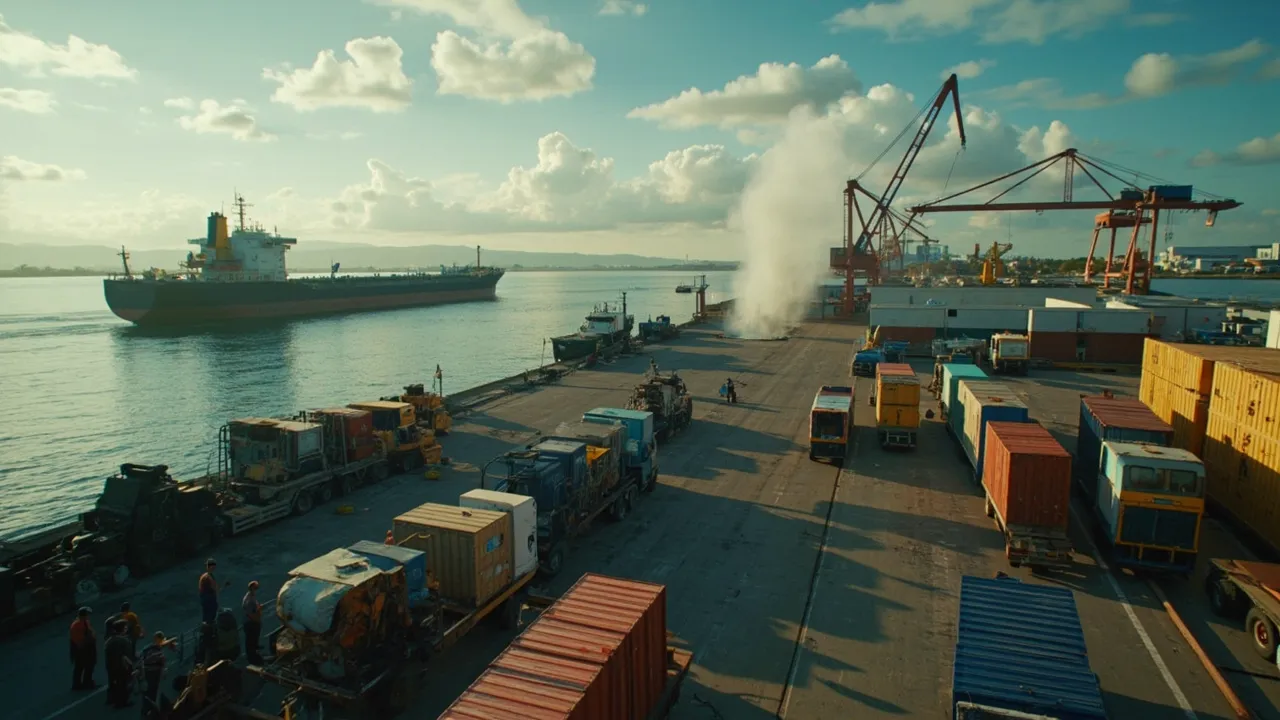
A labor agreement does not instantly restore a supply chain. It changes the disruption from an active shutdown into a recovery operation—and that recovery can still fail if planners treat “workers returning” as the finish line.
That distinction became unusually clear in California this summer. According to FreightWaves, International Longshore and Warehouse Union members ended a 42-day strike against C&H Sugar after the dispute prompted sympathy walkouts at three ports. The event shows how a dispute at one commodity facility can propagate into vessel, terminal, trucking, inventory, and production schedules far beyond the original bargaining table.
For logistics teams, the lesson is practical: manage labor disruptions with explicit milestones, ownership, and operational evidence. A press release is context. It is not a reliable shipment status.
Why commodity flows are especially exposed
Commodity networks concentrate large volumes in a small number of specialized nodes. Sugar may move through a particular berth, conveyor, warehouse, refinery, or food-grade handling process. Unlike a container that can sometimes shift terminals, a bulk or breakbulk flow may not have a quick substitute.
The disruption also develops in stages. Negotiations can continue while work remains stopped. A return-to-work decision can occur while berth labor, pilots, equipment, inspectors, or inland carriers are unavailable. A berth can reopen while the vessel queue and warehouse inventory remain abnormal.
Those gaps explain why “strike over” and “freight normalized” need separate statuses. In an earlier U.S. port stoppage, Reuters reported that at least 54 container ships had queued outside affected ports before work resumed. Different cargo and geography, same operating principle: reopening releases accumulated demand into a system with finite capacity.
Build four milestones into the disruption plan
The recovery clock should have at least four independently verified milestones.
1. Negotiations resume
Record when both parties return to bargaining, the duration of any truce, and the next decision deadline. This is an early signal, not authorization to restore confirmed arrival dates. Planners should keep alternate routing and inventory protections active until work status changes.
2. Return to work
Confirm the effective shift, covered facilities, represented work groups, and staffing level. A sympathy action can widen or narrow independently of the original dispute, so a network-wide “green” status is too coarse. Each affected terminal, warehouse, gate, and berth needs its own readiness field.
3. Berth and gate reopening
Require operational evidence: first vessel alongside, first gang dispatched, first cargo transfer, truck-gate appointment availability, and warehouse receiving capacity. Equipment inspections or cargo-handling constraints can delay physical operations after labor returns.
4. Backlog cleared
Normalization should be numerical. Track vessels at anchor, berth waiting hours, tons discharged per shift, warehouse dwell, truck turn time, appointment availability, and inland pickup completion. FreightWaves’ reporting on Canada’s post-disruption recovery illustrates the value of throughput measures: daily rail production reached 54,000 feet, close to the pre-disruption level of 57,000 feet, while on-dock rail inventory still totaled 221,846 feet. Output recovery and accumulated inventory are related, but they are not the same metric.
Prioritize cargo with business consequences, not arrival order
Once capacity returns, serving every shipment first is impossible. A defensible priority score should combine demurrage exposure, inventory cover, production criticality, product condition, customer commitment, and the feasibility of inland pickup.
Demurrage identifies cargo accumulating direct cost, but cost alone should not dominate. A shipment feeding a refinery or food-production line with less than two days of inventory cover may deserve priority over a larger shipment with five days of free time. Likewise, unloading cargo without a confirmed truck, rail slot, or warehouse position merely transfers congestion from vessel to terminal.
CXTMS users can represent this logic through shipment-level events and exception rules. For example, a planner can flag cargo when inventory cover falls below a threshold, a vessel misses its revised berth window, or a pickup appointment remains unconfirmed within 12 hours of discharge. The result is a queue that updates with conditions instead of a static spreadsheet assembled during the crisis.
Design a dashboard that cannot declare victory early
A useful post-strike dashboard should separate capacity, backlog, and service outcomes.
Capacity indicators include available gangs, operating berths, gate hours, handling rate, truck appointments, and rail slots. Backlog indicators include waiting vessels, anchored tonnage, terminal inventory, overdue pickups, and unprocessed orders. Service indicators include revised ETA accuracy, production risks, demurrage accrued, and customer commitments recovered.
Set recovery thresholds before the disruption ends. A port node might move from red to amber when labor and a berth are available, then to green only when waiting time and inventory remain within normal bands for three consecutive shifts. That persistence test prevents one strong shift from masking an unstable recovery.
The dashboard should also show the timestamp and source for each event. Labor status may come from an official notice; berth activity from a terminal or vessel event; pickup readiness from an appointment system; and downstream risk from customer inventory. When sources disagree, the exception belongs with a named owner and a deadline.
Turn the next labor event into a controlled workflow
The sugar dispute demonstrates that labor risk is not confined to a port-wide contract negotiation. A facility-level dispute can trigger solidarity actions across connected nodes, and the operational consequences can outlast the stoppage itself.
Freight teams should map those dependencies before the next event, define recovery milestones in their TMS, and rank shipments using cost and continuity data. The goal is not to predict every labor action. It is to recognize the transition from negotiation to restart to true normalization—and make a better decision at each stage.
Ready to manage disruptions with shipment-level milestones, live exceptions, and prioritized recovery workflows? Request a CXTMS demo and see how your team can coordinate the next recovery from one operational view.