Smart Locker Return Networks: How Consolidated Drop-Off Hubs Are Slashing Last-Mile Reverse Logistics Costs

The e-commerce return crisis has hit a tipping point. With the National Retail Federation reporting $890 billion in U.S. retail returns in 2024 — a 16.9% return rate — and projecting $849.9 billion for 2025, retailers and logistics providers are scrambling for solutions that don't simply absorb escalating reverse logistics costs. The answer increasingly lies not in better carrier pickups or prepaid labels, but in an entirely different physical infrastructure: smart locker return networks that consolidate individual returns into high-density drop-off hubs.
This shift from scattered residential pickups to centralized locker-based collection is proving to be one of the most impactful reverse logistics innovations of 2026 — cutting last-mile return costs by up to 40% while dramatically improving route density and return processing speed.
Why Carrier Pickup Returns Are Economically Broken
The traditional return model — customer prints a label, schedules a pickup or visits a post office, and a carrier collects a single parcel from a residential address — was never designed for the volume of returns modern e-commerce generates. Every individual pickup creates a unique stop on a carrier route, often for a single lightweight item that costs more to collect than the product is worth.
Industry data consistently shows that carrier pickup returns cost two to three times more than consolidated drop-off models on a per-unit basis. The math is straightforward: a delivery van making 15 residential pickup stops to collect 15 return parcels burns fuel, driver time, and route capacity that could instead be replaced by a single stop at a locker hub holding those same 15 packages.
DHL's 2026 reverse logistics report revealed that consumers themselves increasingly prefer this model. The company now operates nearly 170,000 access points across Europe for parcel drop-off and returns, with labelless digital returns preferred by 32% of Gen Z shoppers. The convenience factor cuts both ways — customers avoid waiting for pickup windows, and carriers avoid the unpredictable routing of residential collection.
How Smart Locker Networks Actually Work
Smart locker return networks operate on a deceptively simple principle: instead of dispatching carriers to thousands of individual addresses, retailers direct customers to nearby locker hubs where returns are deposited, aggregated, and collected in bulk.
The process typically follows this flow:
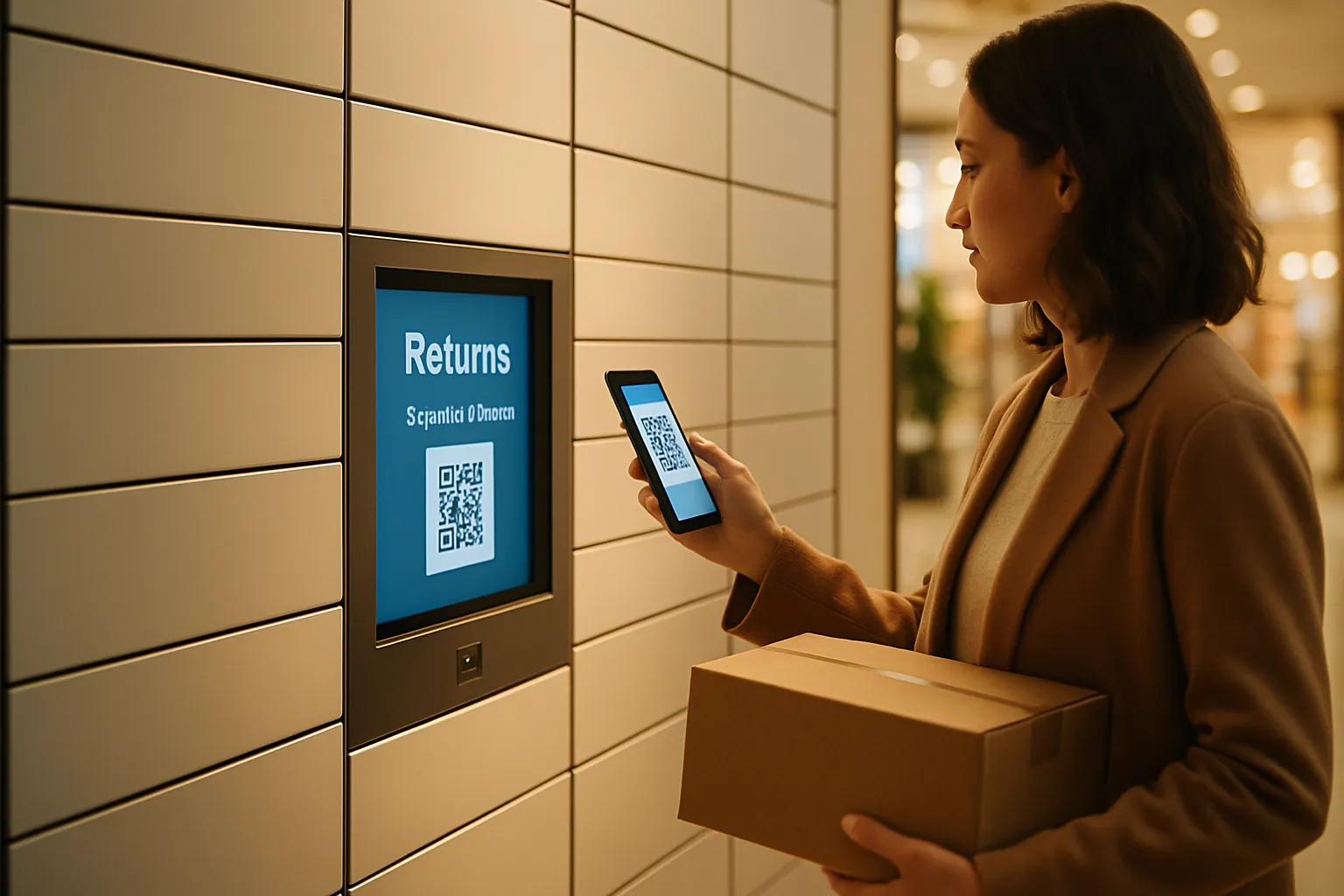
- Customer initiates return via retailer app or website, receiving a QR code or PIN
- Customer visits nearest locker hub — often in a retail store, transit station, or shopping center — and scans the code to open an available compartment
- Automated triage begins at the locker level: weight sensors, dimension scanners, and in some advanced systems, camera-based condition assessment categorize the return before a human ever touches it
- Bulk collection occurs on optimized routes — a single truck collects hundreds of returns from a cluster of locker locations, achieving full or near-full reverse loads
- AI-driven disposition routing directs each item to its optimal endpoint: restock, resale marketplace, refurbishment center, or recycling facility
According to McKinsey's 2026 analysis of AI-driven reverse logistics, retailers can convert $200 billion in annual return costs into recoverable business value by adopting AI-driven return policies and real-time dispositioning — and smart lockers are a critical physical layer enabling that transformation.
The Route Density Multiplier
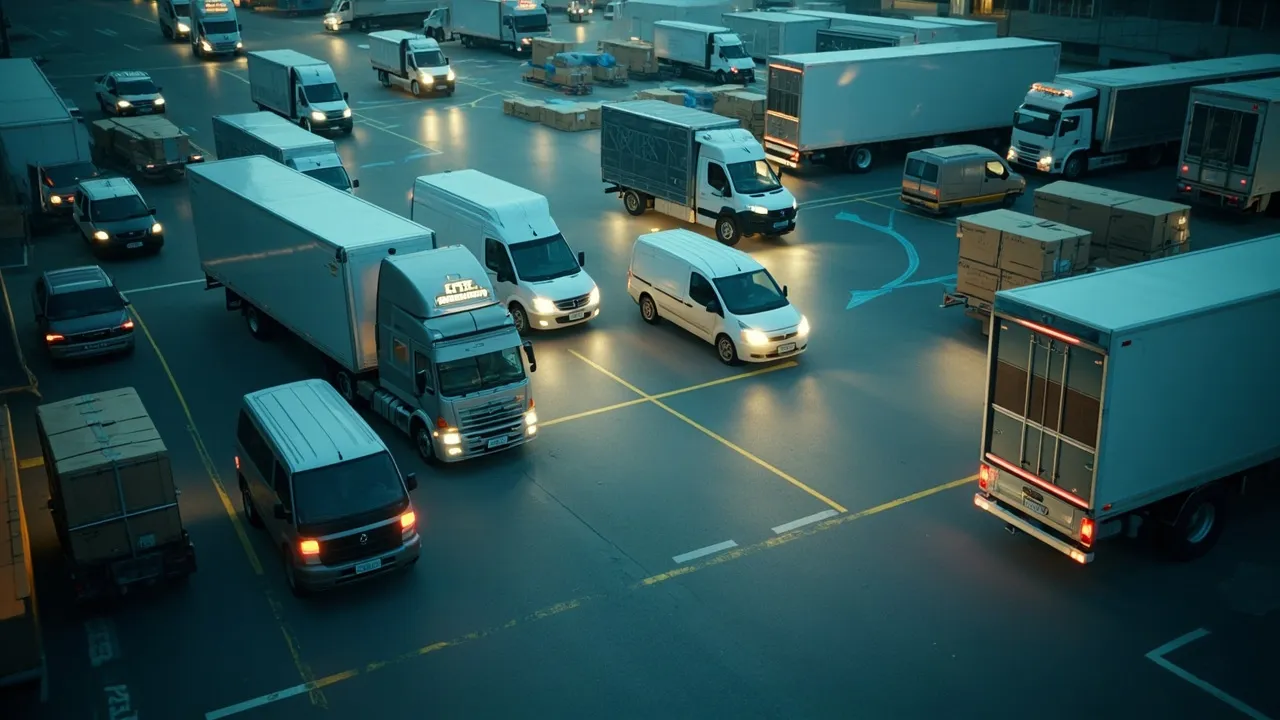
The single biggest cost advantage of locker-based returns is route density improvement. In traditional reverse logistics, a carrier might collect 8-12 individual returns across a 50-mile residential route. With consolidated locker hubs, that same truck collects 200-400 returns across 5-8 hub stops covering the same geographic area.
This density improvement cascades through the entire reverse supply chain:
- Transportation cost per unit drops 30-40% as trucks run fuller and routes become shorter
- Processing speed increases because returns arrive pre-sorted by locker location and initial triage data
- Carbon footprint per return decreases significantly — fewer truck miles per parcel means measurably lower emissions
- Predictability improves since locker fill rates can be monitored in real time, enabling dynamic collection scheduling
The SupplyChainBrain 2026 predictions report reinforces this trajectory, noting that reverse logistics is evolving from "an overflow process" to "core capacity" — and that the companies treating return flow with the same operational discipline as outbound logistics are pulling ahead on both margin and customer experience.
AI Condition Grading at the Locker
One of the most promising developments in smart locker technology is automated condition assessment at the point of deposit. Advanced locker systems now integrate:
- Weight verification that confirms the returned item matches the expected product, flagging potential fraud immediately
- Dimensional scanning that detects whether items are in original packaging or have been repackaged
- Computer vision that performs preliminary condition grading through compartment-mounted cameras, identifying visible damage, missing components, or opened seals
This locker-level triage reduces downstream processing time by up to 60% at return centers, because items arrive with disposition recommendations already attached. A returned electronics product flagged as "sealed, original packaging, weight verified" can be fast-tracked to restock, while one flagged as "opened, weight discrepancy" routes to manual inspection.
The result is that return centers shift from inspecting every item to managing by exception — handling only the flagged returns that require human judgment.
Retailer Adoption Economics
The economics of participating in a shared smart locker network are increasingly favorable. Rather than building proprietary infrastructure, most retailers join existing networks operated by carriers or third-party providers:
- Amazon Hub Lockers now handle both delivery and returns across thousands of U.S. locations
- UPS Access Points provide drop-off capability at over 40,000 locations nationwide
- Narvar's concierge model enables boxless, labelless returns at partner retail locations
For mid-size retailers, the breakeven calculation typically favors locker network participation when return volumes exceed 5,000 units per month. At that threshold, the per-unit cost savings versus individual carrier pickup — typically $2-4 per return — more than offset network participation fees.
Analysts project that nearly 30% of urban deliveries will rely on some form of locker or collection hub by late 2026, a figure that reflects both forward delivery and reverse return flows converging on the same physical infrastructure.
The Resale and Re-Commerce Connection
Smart locker networks don't just reduce return transportation costs — they accelerate the growing re-commerce economy. The global resale market is growing 2.7 times faster than the overall apparel market, according to U.S. Chamber of Commerce data. But resale velocity depends on how quickly returned items can be graded, listed, and reshipped.
When locker networks pre-sort and pre-grade returns before they reach processing centers, the time from customer return to resale listing compresses from days to hours. This speed advantage is critical for fashion and consumer electronics, where product value depreciates rapidly after return.
McKinsey's research emphasizes that circular models only work when resale, returns, and re-commerce data are unified. Smart locker networks provide a physical data capture layer — every locker interaction generates structured data about return timing, condition, and customer behavior — that feeds directly into AI disposition engines.
What This Means for Shippers and 3PLs
For logistics professionals managing reverse flows, smart locker networks represent a fundamental shift in how return volume enters the supply chain. Instead of managing thousands of unpredictable individual pickups, the return stream becomes a manageable series of bulk collections from known locations with pre-classified inventory.
This shift requires new capabilities:
- Reverse route optimization that treats locker hubs as collection nodes rather than individual addresses
- Dynamic collection scheduling based on real-time locker fill rates and item priority
- Integrated disposition planning that routes returns to optimal endpoints before they leave the locker
- Unified data platforms that connect locker triage data with warehouse management and resale systems
How CXTMS Supports Reverse Logistics Optimization
CXTMS provides the transportation management foundation that makes consolidated return networks operationally viable. Our platform enables shippers and 3PLs to model reverse logistics costs across multiple collection strategies — comparing individual carrier pickup costs against locker network consolidation economics for any geographic footprint.
With CXTMS reverse logistics tools, teams can optimize collection routes across locker hub networks, integrate return volume forecasting with forward logistics capacity planning, and track per-unit reverse logistics costs from customer drop-off through final disposition. As smart locker networks expand throughout 2026, having a TMS that treats reverse flow as a first-class logistics operation — not an afterthought — becomes a competitive necessity.
Ready to transform your reverse logistics from cost center to competitive advantage? Request a CXTMS demo today and see how our platform optimizes both forward and reverse supply chain operations.