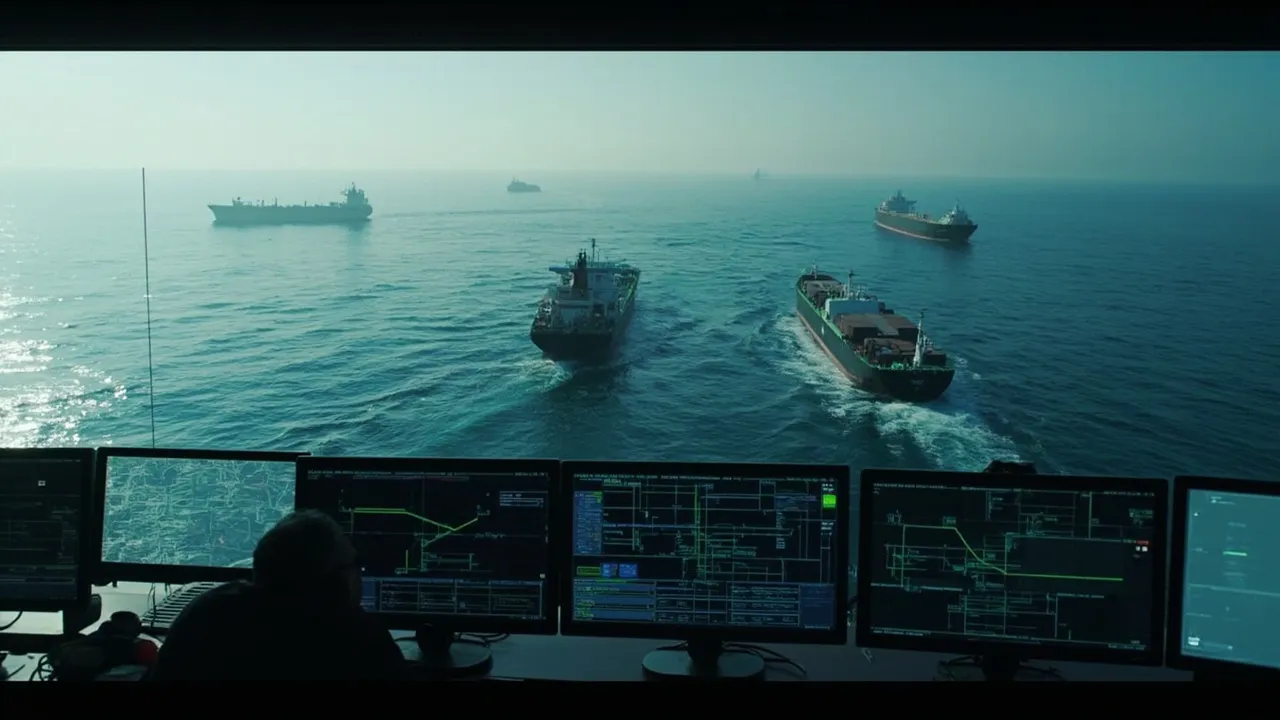
Saudi Arabia’s East–West Pipeline Shutdown Removes a Shipping Backup Shippers Counted On

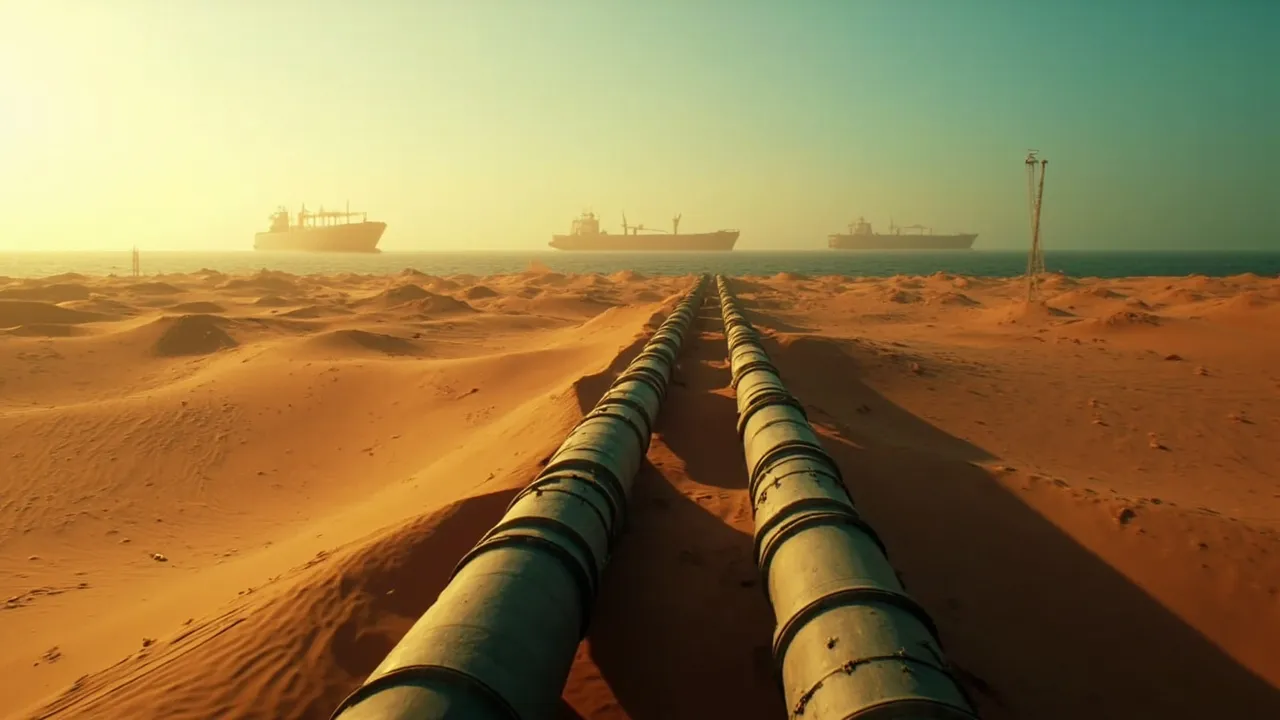
Saudi Arabia's East–West crude oil pipeline has long offered something supply chains value almost as much as capacity: optionality. By moving crude from production areas in the east to Yanbu on the Red Sea, the system can reduce dependence on export terminals reached through the Strait of Hormuz. Its precautionary shutdown therefore matters beyond the energy market. It removes a physical bypass just as risk is also increasing along the alternative maritime corridor.
For shippers, the lesson is not to predict the next attack or reopening date. It is to recognize that two supposedly independent contingency routes can fail together—and to adjust transit, inventory, surcharge, and mode decisions before that correlation becomes expensive.
A backup route is no longer a live route
The East–West pipeline connects Saudi Arabia's oil-producing east with Red Sea export infrastructure at Yanbu. In normal contingency planning, that creates a useful choice: crude can move west across the peninsula and reach international markets without first passing through Hormuz.
Saudi Arabia's energy ministry said the pipeline was closed as a precaution after multiple attacks around Riyadh and Medina on September 10. At nearly the same time, Houthi forces expanded their position along Yemen's western coast and reportedly seized Perim Island at the mouth of the Bab al-Mandab Strait. SupplyChainBrain reports that the combined disruption around the waterways on both sides of the Arabian Peninsula could affect up to 37% of global seaborne trade.
That combination changes the planning problem. Moving barrels to Yanbu is useful only if the pipeline is operating, terminal capacity is available, and ships can safely use the Red Sea. When the land bridge and its maritime outlet are both constrained, a nominal alternative on a network map is not operational capacity.
Fuel availability and freight exposure travel together
The immediate cargo is crude oil, but the effects can spread through transportation budgets. A constrained export network can alter regional crude flows, refinery inputs, product-tanker demand, and bunker-fuel availability. Longer voyages also consume more fuel and occupy vessels for more days, tightening effective capacity even if the global fleet does not shrink.
Historical Red Sea disruption provides a useful stress benchmark. FreightWaves reported that more than 106 tankers changed routes after strikes began in early 2024. Red Sea tanker transits fell 20%, crude-tanker passages through Bab al-Mandab dropped about 40% in one week, and Suez Canal transits were 51% below the same period a year earlier. Meanwhile, Cape of Good Hope transits reached 628 for the measured week, up 65% year over year.
Those figures are not a forecast for September 2026. They show how quickly route avoidance can reallocate vessel-days. Procurement teams should therefore resist treating a bunker adjustment factor, war-risk premium, or emergency routing fee as an isolated carrier issue. All three may be different expressions of the same underlying constraint.
Use a scenario matrix instead of one revised ETA
A single “most likely” transit estimate hides the decisions that matter. Shippers should maintain at least three operating cases:
| Scenario | Transit assumption | Inventory response | Commercial response | Mode decision |
|---|---|---|---|---|
| Controlled reopening | Pipeline restarts and Red Sea traffic remains selective | Add a modest buffer to exposed lanes | Validate temporary surcharges against actual routing | Keep ocean as default |
| Partial constraint | Pipeline or terminal capacity is limited while vessel screening rises | Prioritize safety stock for production-critical materials | Lock surcharge validity periods and evidence requirements | Move only urgent, high-value cargo to air |
| Dual-route disruption | Pipeline remains closed and Bab al-Mandab risk drives broad diversion | Recalculate reorder points using Cape transit times | Rebid affected lanes and separate fuel, security, and capacity charges | Use air, rail, or alternate sourcing selectively |
The matrix should live in the transportation workflow, not in a presentation. Each shipment needs a visible scenario assignment, its assumed route, the inventory consequence, and the party authorized to approve a costlier alternative.
Evidence thresholds should govern restoration
Reopening headlines are necessary but insufficient. Before planners restore the Saudi bypass to a live routing plan, they should require evidence across four layers.
First, confirm sustained pipeline operations—not simply an announcement that repairs or inspections are complete. Second, verify that Yanbu nominations and terminal loadings are actually being accepted at useful volumes. Third, obtain current carrier routing, war-risk insurance, and crew-policy confirmation for the Red Sea and Bab al-Mandab. Fourth, look for completed voyages over several days, rather than relying on scheduled departures.
These thresholds prevent a common failure mode: removing inventory buffers and releasing deferred orders after the first positive signal, only to reintroduce emergency measures when physical flows lag the announcement.
What logistics teams should do now
Energy and transportation teams should connect their data immediately. Identify lanes whose fuel assumptions, vessel availability, or delivery promises depend on Gulf and Red Sea stability. Ask carriers to disclose the route and validity window behind each quote. Separate war-risk, bunker, and congestion charges so that each can be audited and retired when its trigger disappears.
Then map critical inventory to time rather than distance. A shipment that travels only slightly farther on a chart may require substantially more vessel-days when it rounds the Cape, misses a connection, or encounters a changed bunkering plan. Escalation rules should be tied to projected stockout dates and customer commitments, not to geopolitical headlines alone.
The East–West shutdown is a reminder that redundancy must be tested end to end. A pipeline, port, strait, vessel, insurer, and downstream connection collectively form the route. If one link exists only on paper, the backup does too.
Build disruption scenarios into daily execution. Request a CXTMS demo to see how one transportation workspace can connect routing assumptions, shipment exceptions, costs, and customer commitments.