Predictive Fleet Maintenance: How IoT and AI Are Ending Unplanned Breakdowns in 2026

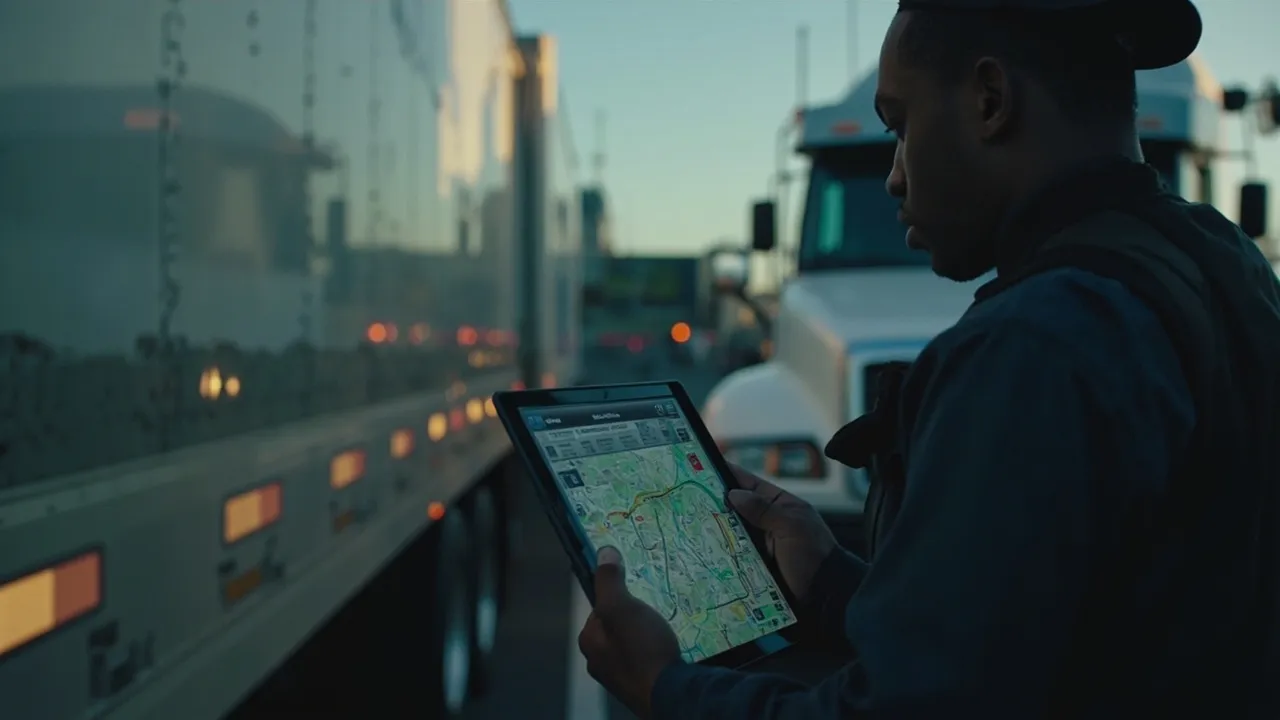
Every fleet manager knows the dread: a truck breaks down on I-80, a load of time-sensitive freight sits stranded, and the cascade of costs begins—emergency towing, expedited repairs, missed delivery windows, and an angry customer who won't forget. Unplanned vehicle downtime costs the transportation industry an estimated $3.3 billion annually, and a single roadside breakdown can run $500 to $2,000 before you even factor in lost revenue.
But in 2026, the era of "run it until it breaks" is ending. Predictive maintenance—powered by IoT sensor networks and AI-driven diagnostics—is becoming the new standard for fleets that refuse to leave uptime to chance.
From Reactive to Predictive: The Maintenance Evolution
Fleet maintenance has historically followed a familiar arc. Reactive maintenance means fixing things after they fail—the most expensive and disruptive approach. Preventive maintenance improves on this with scheduled service intervals, but it's inherently wasteful: replacing components on a calendar rather than based on actual wear means you're either too early (wasting parts and labor) or too late (breakdowns between intervals).
Predictive maintenance changes the equation entirely. As FreightWaves reports, the industry is shifting toward condition-based, data-driven strategies that forecast failures before they happen. Instead of asking "when was this last serviced?" the question becomes "what does the data say about this component's remaining useful life?"
The difference isn't academic—it's existential for fleet profitability.
The IoT Sensor Revolution
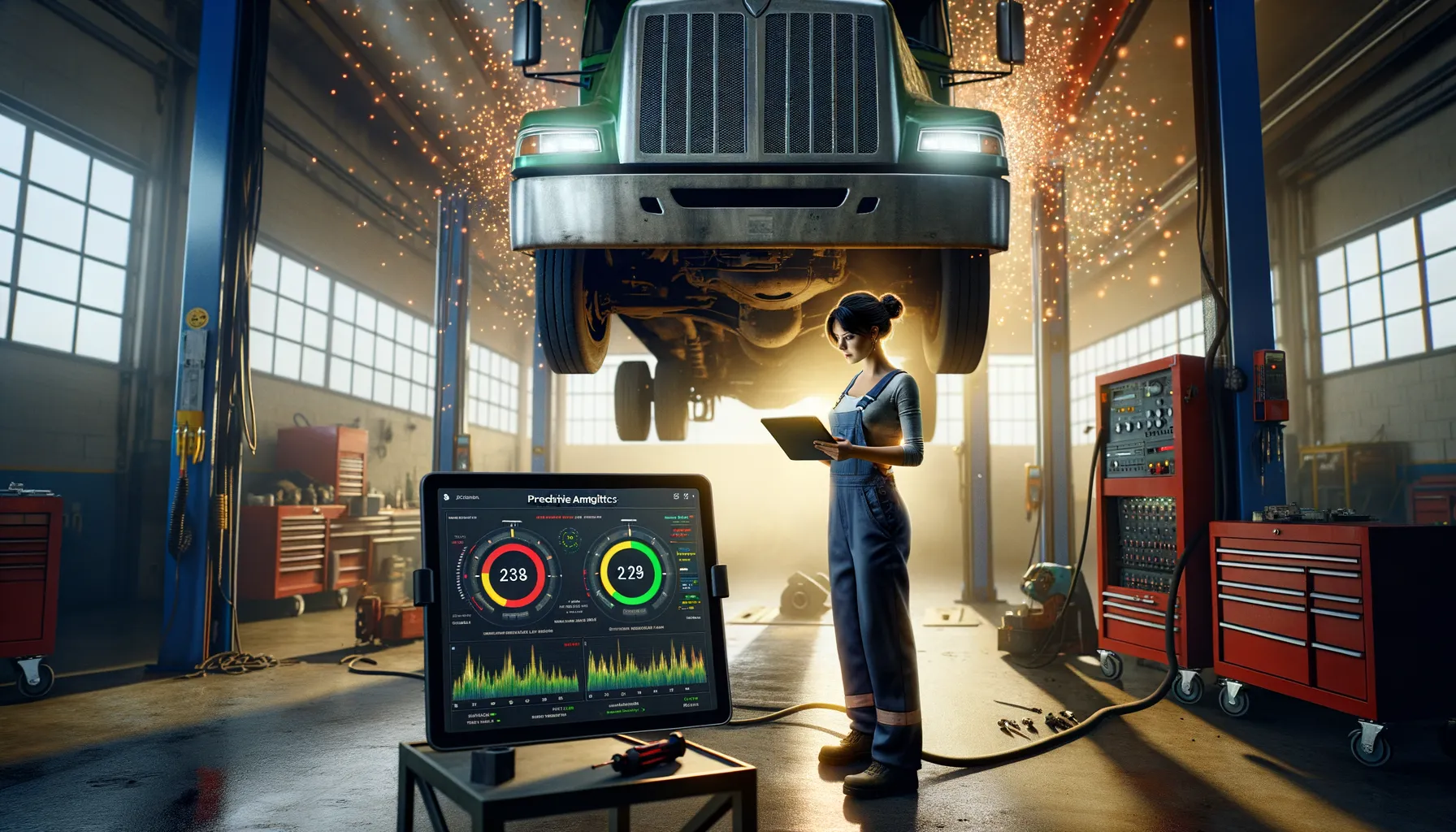
Modern commercial vehicles are rolling data centers. IoT sensors embedded across engine systems, brakes, tires, transmissions, and cooling systems generate continuous streams of telemetry data. These sensors monitor:
- Engine temperature and oil pressure — detecting degradation patterns weeks before failure
- Brake pad thickness and rotor wear — predicting replacement windows with precision
- Tire pressure and tread depth — flagging uneven wear that signals alignment issues
- Battery voltage and charging cycles — anticipating electrical system failures
- Vibration patterns — identifying bearing wear, misalignment, or loose components
This data flows in real time to fleet management platforms, creating a living digital twin of every vehicle in the fleet. According to Logistics Management, the convergence of cheaper sensors, 5G connectivity, and cloud computing has made continuous vehicle health monitoring economically viable even for mid-size fleets.
AI Turns Data into Decisions
Raw sensor data alone isn't enough. The breakthrough is AI and machine learning algorithms that analyze millions of data points across entire fleets to identify failure signatures invisible to human technicians.
These AI models learn from historical patterns: a specific combination of rising coolant temperature, subtle vibration frequency changes, and oil pressure fluctuations might predict a water pump failure 3–4 weeks before it happens. The system generates a maintenance alert, the shop schedules the repair during planned downtime, and what would have been a $5,000 roadside emergency becomes a $400 shop repair.
The numbers back this up. According to Deloitte, predictive maintenance can reduce unplanned downtime by up to 50% and cut overall maintenance costs by 10–40%. The global predictive maintenance market, valued at $7.85 billion in 2022, is projected to reach $60 billion by 2030—a 29.5% compound annual growth rate that reflects how rapidly fleets are adopting these technologies.
Real-World Impact: What Fleets Are Seeing
Early adopters aren't just trimming costs—they're fundamentally changing how maintenance operations work:
Reduced roadside breakdowns. Fleets using predictive analytics report 30–50% fewer unplanned roadside events. Each prevented breakdown saves an average of $1,200 in direct costs plus hours of driver downtime.
Extended component life. Rather than replacing parts on fixed schedules, components run to their actual useful life. Brake systems, for example, might get an additional 15–20% more miles before replacement when monitored condition-based.
Optimized parts inventory. AI forecasting helps maintenance shops stock the right parts at the right time, reducing both emergency expediting costs and excess inventory carrying costs.
Better CSA scores. Fewer roadside violations and out-of-service events translate directly to improved FMCSA Compliance, Safety, Accountability scores—which affect insurance premiums, broker relationships, and shipper confidence.
Integrating Maintenance with Dispatch Intelligence
Here's where predictive maintenance becomes truly powerful: when it connects to your transportation management system. A standalone maintenance alert is useful. A maintenance alert that automatically factors into dispatch planning is transformative.
Consider the scenario: your AI system predicts a turbocharger issue on Truck 247 within the next 500 miles. Instead of waiting for the breakdown, the TMS automatically:
- Reassigns Truck 247's upcoming loads to other available vehicles
- Routes Truck 247 to the nearest qualified shop on its current trajectory
- Adjusts delivery ETAs for affected shipments and notifies customers proactively
- Schedules the repair during the lowest-impact window for fleet capacity
CXTMS fleet management integration does exactly this—bridging the gap between maintenance intelligence and operational planning so that predicted failures never become customer-facing disruptions.
The ROI Case for 2026
For fleet operators still weighing the investment, the math is straightforward:
| Metric | Before Predictive | After Predictive |
|---|---|---|
| Unplanned downtime | 15–20% of fleet hours | 7–10% of fleet hours |
| Average repair cost per event | $2,500 (emergency) | $800 (planned) |
| Annual maintenance spend | Baseline | 10–25% reduction |
| Vehicle useful life | Standard | Extended 15–20% |
| CSA violation rate | Industry average | 30%+ improvement |
The payback period for IoT sensor deployment and AI analytics platforms typically runs 8–14 months for fleets of 50+ vehicles. For larger operations, ROI can materialize within a single quarter.
Getting Started: A Practical Roadmap
The shift to predictive maintenance doesn't require ripping out existing systems overnight:
-
Start with telematics. If you're already running ELDs and GPS tracking, you have a data foundation. Many telematics providers now offer predictive maintenance modules as add-ons.
-
Prioritize high-impact components. Begin with engines, brakes, and tires—the systems most likely to cause roadside failures and DOT violations.
-
Integrate with your TMS. Connect maintenance alerts to dispatch and route planning. This is where isolated data becomes operational intelligence.
-
Build a feedback loop. Every predicted failure—whether accurate or a false positive—trains the AI to be more precise. The system gets smarter with every maintenance event.
The Bottom Line
Unplanned breakdowns are not an inevitable cost of running a fleet—they're a failure of information. IoT sensors provide the data. AI provides the insight. And integration with your TMS ensures that insight translates into action before a driver is ever stranded on the shoulder.
In 2026, the fleets that thrive won't be the ones with the newest trucks. They'll be the ones that know exactly what every truck needs, exactly when it needs it.
Ready to connect fleet health intelligence with your logistics operations? Contact CXTMS for a demo of our integrated fleet management and TMS platform.