Cold Chain 2026: IoT Sensors, AI Monitoring, and the $600 Billion Temperature-Controlled Revolution

The global cold chain logistics market was valued at $341 billion in 2024 and is projected to exceed $1.6 trillion by 2033, growing at a staggering 20.5% CAGR. Behind that explosive growth is a simple truth: the world's appetite for temperature-sensitive goods—fresh food, biologics, vaccines, and specialty chemicals—has outpaced the infrastructure designed to move them safely.
The Scale of the Cold Chain Challenge
Every year, roughly 1.3 billion tons of food is wasted globally, and University of Michigan research suggests that improved refrigeration alone could save nearly half of it. That's not a minor inefficiency—it's a systemic failure costing hundreds of billions of dollars and contributing significantly to greenhouse gas emissions.
The pharmaceutical side is equally critical. Over half of new medicines launching in the coming years require temperature-controlled logistics, from mRNA vaccines stored at -70°C to biologics that degrade within hours outside a narrow 2-8°C window. A single temperature excursion can destroy an entire shipment worth millions.
Despite these stakes, an estimated 75% of cold chain shipments still rely on Styrofoam and ice—technology that hasn't fundamentally changed in decades. That's finally shifting in 2026.
IoT Sensors: From Blind Spots to Real-Time Visibility
The first revolution is visibility. Modern IoT sensors now provide continuous, real-time temperature monitoring at every stage of the cold chain—from warehouse cold rooms to last-mile delivery vans. These aren't the simple data loggers of the past that recorded readings for post-delivery review. Today's sensors transmit live data via cellular, Bluetooth, and satellite networks, triggering instant alerts when temperatures drift outside acceptable ranges.
The cold chain monitoring market alone is projected to reach $15 billion by 2030, driven by regulatory mandates and the falling cost of sensor hardware. A single IoT tag that cost $50 five years ago now costs under $5, making it economically viable to monitor every pallet—not just every truckload.
This granular visibility transforms compliance from a paperwork exercise into an automated process. FSMA 204, which the FDA began enforcing in late 2025, requires detailed traceability records for food shipments. IoT sensors generate these records automatically, creating an immutable audit trail that proves chain-of-custody and temperature compliance at every handoff.
AI-Powered Predictive Monitoring
Raw sensor data is only as useful as your ability to act on it. This is where AI transforms cold chain management from reactive to predictive.
Modern AI monitoring platforms analyze sensor data streams alongside external variables—weather forecasts, traffic conditions, equipment age, historical failure patterns—to predict temperature excursions before they happen. If a refrigeration unit's compressor is showing early signs of strain during a summer heat wave, AI can flag the risk hours before an actual failure, giving dispatchers time to reroute or swap equipment.
AI also optimizes energy consumption. Smart HVAC controllers adjust refrigeration output based on real-time conditions: cargo thermal mass, ambient temperature, door-open frequency, and delivery schedule. This dynamic adjustment reduces energy costs by 15-25% compared to fixed-setpoint systems while maintaining tighter temperature control.
Solid-State Cooling and the End of Ice
Perhaps the most exciting development is the emergence of solid-state refrigeration technology. Companies like Peltier Technology and Ember LifeSciences are deploying semiconductor-based cooling systems that replace traditional compressor-based refrigeration with thermoelectric modules.
The Active Ember Cube, for example, uses Peltier-effect cooling to maintain precise temperatures without refrigerants, moving parts, or ice packs. These systems are lighter, more reliable, and infinitely adjustable—dialing temperature to within 0.1°C accuracy. For pharmaceutical shipments where a 2-degree deviation can invalidate a $500,000 biologic payload, this precision is transformative.
As Inbound Logistics reports, the cold chain industry recognizes that each handoff—freezer to truck, truck to van, van to store—represents a break point where temperature control can fail. Solid-state technology eliminates the most common failure mode: ice melting or dry ice sublimating before delivery completes.
Blockchain Verification and End-to-End Trust
IoT data is only trustworthy if it can't be tampered with. Blockchain-based verification platforms now provide immutable records of temperature readings throughout the supply chain, creating an auditable chain of evidence that satisfies both regulators and insurance underwriters.
This is particularly critical for pharmaceutical Good Distribution Practice (GDP) compliance, where regulators require proof that products were stored and transported within specification at every point. Blockchain verification reduces compliance audit times from weeks to hours and provides instant proof of conformity for customs clearance at international borders.
How CXTMS Enables Cold Chain Excellence
Managing temperature-controlled logistics requires more than sensors and algorithms—it requires a transportation management platform that integrates these technologies into unified shipment workflows.
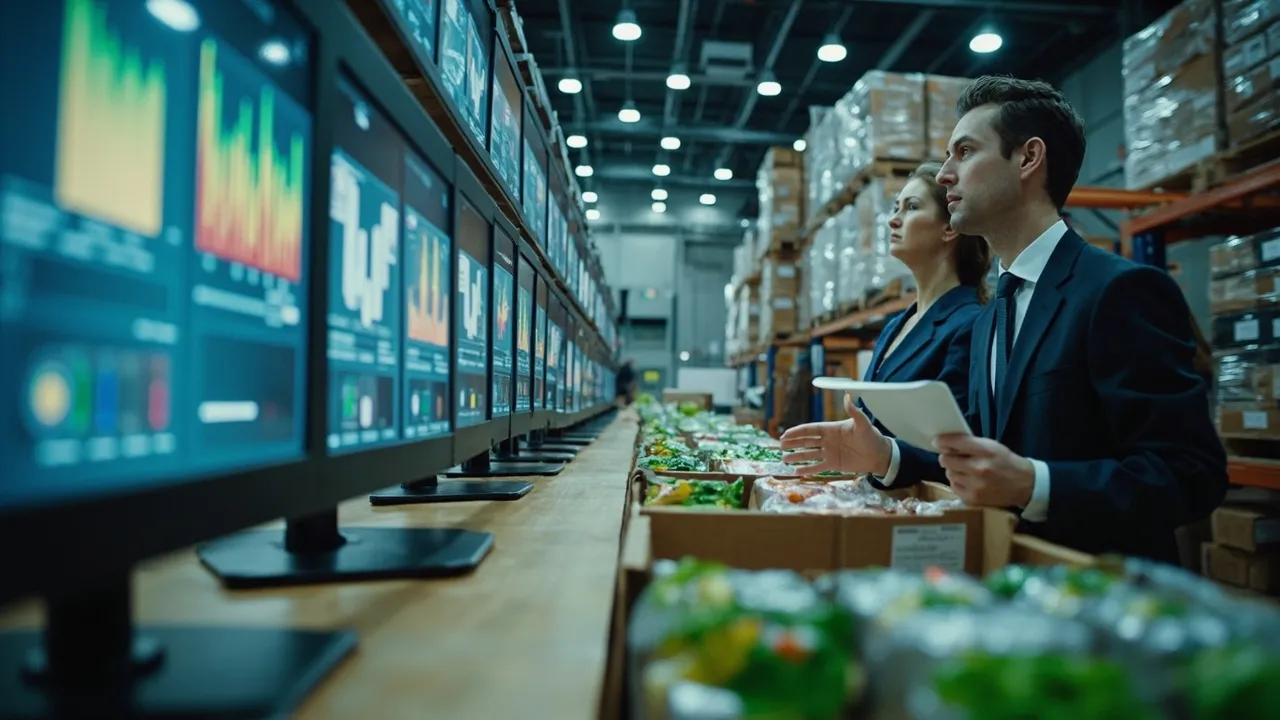
CXTMS provides real-time temperature monitoring integration directly within shipment tracking, allowing logistics teams to view temperature data alongside location, ETA, and carrier performance metrics in a single dashboard. Automated alerts trigger when readings approach threshold limits, not just when they're breached.
Route optimization accounts for temperature sensitivity, prioritizing faster lanes and climate-controlled transfer points for perishable cargo. Carrier selection automatically filters for cold chain certification and equipment type, ensuring every tender goes to qualified providers.
For FSMA 204 and GDP compliance, CXTMS generates comprehensive temperature documentation packages that travel with each shipment, eliminating the manual paperwork that causes clearance delays and audit failures.
The Cold Chain Imperative
The $600 billion cold chain revolution isn't optional—it's driven by consumer demand for fresh food, regulatory mandates for pharmaceutical safety, and the economic reality that spoilage destroys margins. Companies that invest in IoT monitoring, AI-driven predictive systems, and integrated TMS platforms will capture the growth. Those clinging to Styrofoam and hope will watch their margins melt away.
Ready to bring real-time temperature intelligence to your cold chain operations? Contact CXTMS for a demo and see how integrated monitoring transforms perishable logistics.