Plastic Resin’s Stop-Start Recovery Requires Allocation Rules at the SKU Level

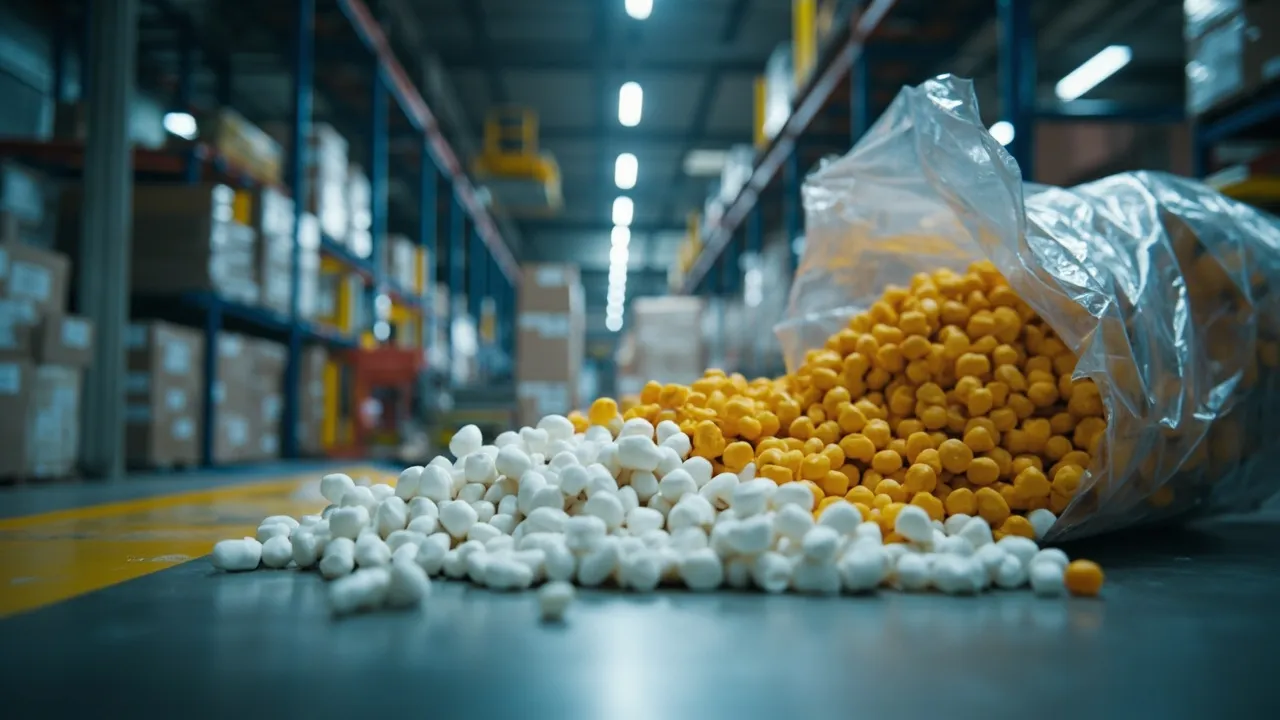
Plastic resin supply is not recovering in a straight line. A brief improvement in shipping or feedstock availability can release material into the market, only for renewed disruption to stop the flow again. For manufacturers, packaging converters, and distributors, that pattern creates a planning problem more complex than a conventional shortage.
The wrong response is to place every polyethylene or polypropylene item under one broad “resin constrained” alert. Availability varies by grade, plant, supplier, contract, and lane. The right response is to translate upstream volatility into allocation rules for each finished SKU.
Why the resin disruption reaches far beyond resin buyers
Polyolefins sit inside an enormous range of products. Polyethylene is used in flexible films, bottles, caps, protective packaging, and industrial components. Polypropylene appears in rigid packaging, automotive parts, fibers, medical products, and consumer goods. A disruption at the feedstock or polymer plant level therefore propagates into production schedules, packaging availability, freight plans, and customer service.
The current numbers show the scale of the pressure. Supply Chain Dive reports that North American polyethylene exports fell by 9.1 million metric tons on an annualized basis—equivalent to the output of 18 global-scale plants. Polypropylene lost roughly 3 million metric tons of production. Dow also reported a 30% year-over-year local price increase in its Packaging & Specialty Plastics division, even as volumes declined 4%.
The disruption is not limited to material cost. SupplyChainBrain reports that ocean freight costs have risen 150% and air cargo costs 40%, while supplier delivery performance is at its weakest level since 2022. A resin purchase that looks available in a procurement system may still arrive too late—or at too high a landed cost—to protect the production plan.
Industry experts now expect normalization to extend into 2027, with prices settling above pre-conflict floors. That makes this an operating-model issue, not a short-lived procurement exception.
Replace the commodity alert with a material-to-SKU map
A single warning for “PE shortage” cannot answer the question that matters: which customer orders are at risk?
Planners need a live relationship between four levels of detail:
- Material grade and specification, including regulatory or performance requirements
- Approved supplier and producing plant
- Production line, bill of material, and finished SKU
- Customer order, promised date, and service priority
This map exposes differences hidden by the commodity label. A food-contact film may require a particular resin certification, while a secondary transport wrap may accept recycled content or a different gauge. Two suppliers may sell the same nominal grade, but only one may be qualified for a regulated product. Material may be physically available at one plant while the associated inbound shipment is delayed at a port.
The result should be an exception view that shows projected days of supply and inbound confidence for every constrained material, then identifies the SKUs and orders that consume it. Without that connection, teams allocate resin according to who asks first or shouts loudest.
Establish a clear allocation sequence
When confirmed supply cannot cover planned demand, allocation should follow predefined business rules. A practical sequence is:
- Protect safety, regulatory, and contractual obligations.
- Reserve material for strategic customers and high-service commitments.
- Prioritize SKUs with no approved substitute or alternate production path.
- Consider contribution margin, but calculate it using current material and freight costs.
- Allocate the remainder to orders with the lowest service and switching consequences.
These rules should operate against a time-phased production schedule. Assigning scarce resin to a high-priority SKU is pointless if another component, production line, or carrier capacity will prevent shipment. Conversely, a lower-priority order may be completed with an approved alternate material and require no scarce resin at all.
Every allocation decision also needs an owner, timestamp, quantity, and reason code. That audit trail prevents teams from repeatedly reopening settled decisions and helps leadership see whether shortages are being managed consistently.
Put substitution behind controlled triggers
Virgin-to-recycled substitution can reduce exposure, but it is not a universal switch. Supply Chain Dive notes that recycled PET markets are more mature than recycled polyolefin markets, while U.S. converters often continue to favor consistency and reliability. Substitution must account for food-contact rules, color, odor, strength, processing behavior, customer specifications, and recycling claims.
Create an approved substitution matrix before the next shortage. For each SKU, record the alternate resin, maximum blend percentage, qualified supplier, necessary line settings, required customer approval, and quality tests.
Then define objective release triggers. For example, an alternate may be activated when projected virgin-resin coverage falls below 14 production days and no confirmed replenishment will arrive inside that window. A customer-specific approval workflow should begin early enough to avoid holding finished goods after production.
The same discipline applies to packaging redesign. Reducing film gauge or changing a rigid container may conserve resin, but engineering, quality, procurement, and commercial teams must evaluate the total effect before release.
Link freight escalation to the customer promise
Expedited transportation should not be the automatic answer to every shortage. It should be approved only when the recovered margin, avoided penalty, or protected strategic value exceeds the premium.
A useful escalation rule compares three scenarios:
- Keep the current inbound mode and move the customer promise date
- Expedite resin or packaging to preserve the production slot
- Reallocate existing material from a lower-priority SKU
The decision requires reliable inbound milestones. Purchase-order dates alone are insufficient; planners need supplier readiness, booking status, port departure, transshipment, customs, and final delivery estimates. When a shipment milestone slips beyond a defined threshold, the system should recalculate available-to-promise dates and surface affected orders immediately.
Customer communication should follow the same trigger logic. Waiting until a production order misses its start date leaves sales teams no credible options. If material coverage and confirmed inbound supply fall below the order requirement, the revised promise or substitution request should be prepared at once.
Manage the recovery in quarters, not weeks
Stop-start supply creates false confidence. A price dip or a few released shipments may look like normalization, but stranded inventory, damaged production capacity, and congested trade lanes take months to unwind. Teams should maintain their SKU-level controls until service, lead-time, and price indicators remain stable across multiple planning cycles.
CXTMS connects inbound freight status with order priorities and operational exceptions, helping logistics teams act before material delays become missed customer commitments. Request a CXTMS demo to see how coordinated transportation visibility can strengthen your allocation and fulfillment decisions.