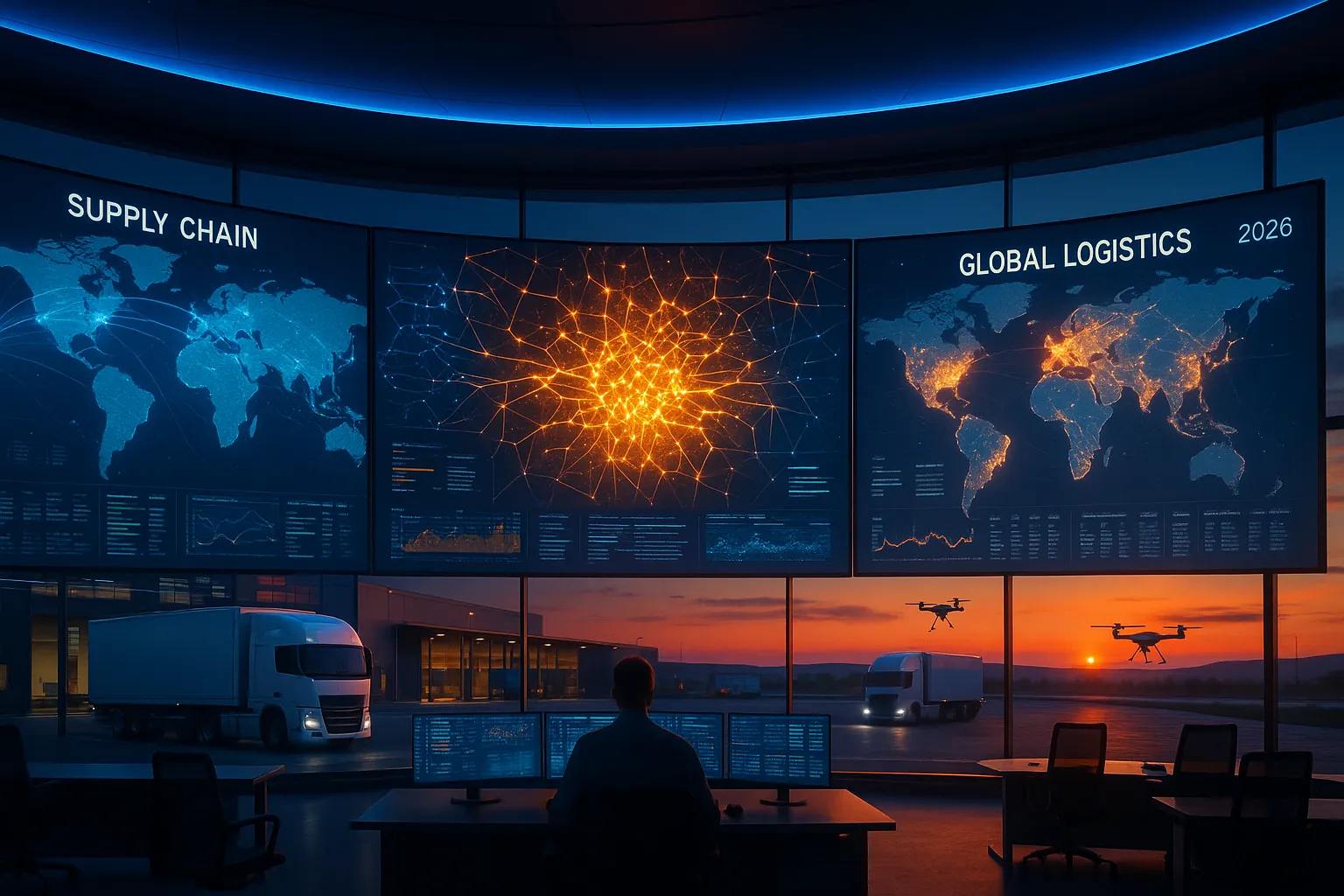
Why Supply Chain AI Scaling Fails Without Warehouse Modernization

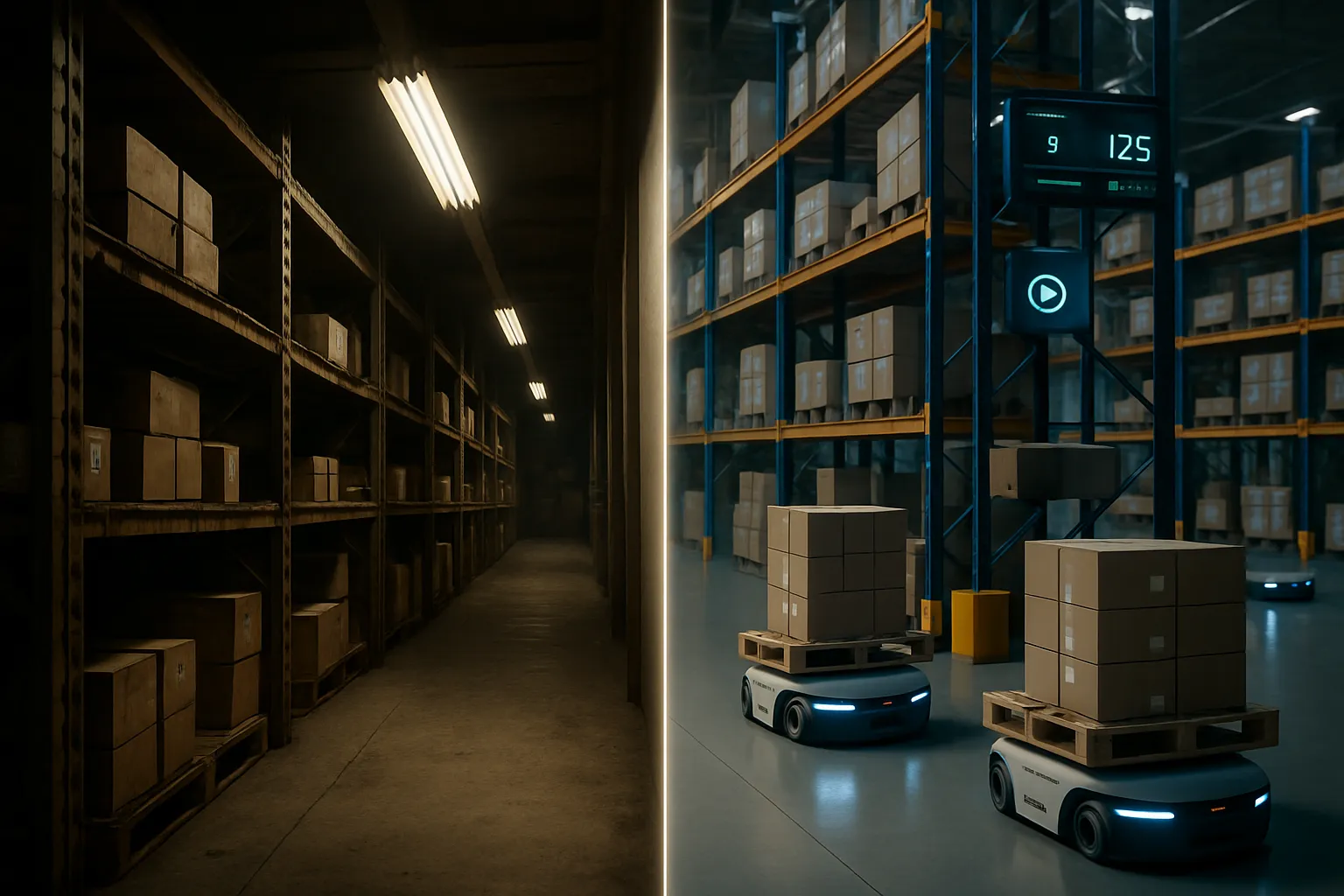
The supply chain industry is pouring billions into artificial intelligence. Predictive demand planning, agentic procurement workflows, autonomous carrier selection — the software ambitions are extraordinary. But there's a problem hiding in plain sight: the physical warehouses where these AI systems need to operate are running on infrastructure that was never designed to support them.
A new study from Lucas Systems and Wakefield Research reveals just how wide this gap has become. 77% of U.S. supply chain executives admit that at least half of their hardware or software systems are too rigid to respond to unplanned disruptions. More alarming: 51% say their automation systems are flatly unprepared to handle unforeseen changes.
This isn't a software problem. It's a concrete-and-steel problem.
The Billion-Dollar Disconnect
Companies are investing heavily in AI-powered supply chain platforms while their warehouses still operate with 15- to 20-year-old conveyor systems, manual racking configurations, and fragmented sensor networks that can't feed real-time data to the algorithms making decisions.
The financial penalty is severe. According to the Lucas Systems study, 60% of supply chain executives who reported rigid systems say they've incurred 11% to 25% in additional operating costs when disruptions hit — from system downtime and equipment failure to labor shortages and unexpected demand spikes.
And disruptions aren't slowing down. 85% of respondents experienced up to 10 significant unplanned disruptions in the past year alone, with another 7% dealing with more than 10. Over half report more unplanned operational disruptions than three years ago.
Why AI Models Underperform in Legacy Facilities
AI doesn't operate in a vacuum. Every machine learning model, every predictive algorithm, every agentic workflow depends on data — and data depends on physical infrastructure that can capture, transmit, and act on information in real time.
Here's what AI needs from a warehouse that most legacy facilities can't provide:
Sensor density and connectivity. AI-driven inventory optimization requires RFID readers, computer vision cameras, IoT weight sensors, and environmental monitors throughout the facility. Most older warehouses have connectivity dead zones and sensor coverage gaps that create blind spots in the data foundation.
Layout flexibility. AI excels at dynamic slotting — continuously repositioning SKUs based on demand patterns, pick frequency, and seasonal shifts. But warehouses with fixed racking, narrow aisles designed for specific equipment, and rigid material flow paths can't physically execute what the algorithms recommend.
Power and compute infrastructure. Edge computing devices, autonomous mobile robots (AMRs), and real-time processing nodes require power density and network bandwidth that older facilities weren't built to deliver. Running extension cords to power AI edge devices isn't a modernization strategy.
Data integration layers. As Supply Chain Management Review reports, most shippers operate with five to ten core systems — TMS, WMS, carrier portals, rail platforms, financial tools — each containing its own version of truth. Without harmonized data flowing from the physical environment, AI layers accelerate flawed decisions rather than improving them.
The Gartner Wake-Up Call
The infrastructure gap isn't just an operational nuisance — it's a strategic liability. Gartner's research found that only 23% of supply chain organizations have a formal AI strategy. The rest are taking a project-by-project approach that often results in what Gartner calls "franken-systems" — complex, layered architectures that hinder scalability and extend the payback period for AI investments.
Without a modernization roadmap that addresses physical infrastructure alongside software deployments, companies risk building sophisticated AI systems on foundations that can't support them.
The Modernization Roadmap: Infrastructure First, AI Second
Warehouse modernization doesn't mean ripping out everything and starting over. It means sequencing investments so that each upgrade unlocks the next layer of AI capability.
Phase 1: Connectivity and Visibility Foundation
Deploy facility-wide Wi-Fi 6E or private 5G networks. Install IoT sensors at critical workflow points — dock doors, pick zones, packing stations, and staging areas. This creates the data backbone that AI requires.
Phase 2: Flexible Material Handling
Replace fixed conveyor systems with modular, reconfigurable automation. Introduce AMRs that can adapt to changing facility layouts. Design storage systems that allow dynamic slotting without physical reconfiguration.
Phase 3: Edge Computing and Real-Time Processing
Install edge computing nodes that process data locally for time-sensitive decisions — quality inspections, pick path optimization, and real-time inventory adjustments. Ensure power infrastructure can support distributed computing loads.
Phase 4: Integrated AI Orchestration
Only after the physical foundation is in place should organizations deploy enterprise AI layers — demand-responsive labor allocation, predictive maintenance systems, and autonomous warehouse orchestration that can actually execute its recommendations.
What High-Performing Warehouses Do Differently
The Inbound Logistics 2026 AI outlook captures the divide well. Industry leaders rate AI's expected usefulness at 8 out of 10 on average — but with a critical caveat. As DHL Supply Chain's VP of Analytics Eric Walters noted, "AI will be a 10, but that score will vary based on the organization's AI readiness."
That readiness isn't just about data science teams and software budgets. It's about whether the physical environment can generate clean data, execute AI-driven decisions, and adapt when conditions change.
The organizations seeing the highest AI ROI in logistics aren't the ones with the most sophisticated algorithms. They're the ones that invested in modernizing the physical infrastructure first, creating an environment where AI can actually perform.
Bridging the Infrastructure Gap
The path forward requires honest assessment. Before committing to the next AI platform purchase, supply chain leaders should audit their physical readiness:
- What percentage of your warehouse floor has real-time sensor coverage?
- Can your material handling systems execute dynamic slotting changes within hours, not weeks?
- Does your facility have the network bandwidth and power capacity for edge computing?
- Are your data systems harmonized enough to provide AI with a single source of truth?
If the answer to most of these is no, the priority should be infrastructure modernization — not another AI pilot.
CXTMS helps shippers bridge the gap between legacy warehouse infrastructure and modern AI-driven decision-making. Our platform integrates with existing systems to harmonize data across fragmented environments, providing the unified visibility layer that AI requires — even when physical infrastructure is still being modernized. Request a demo to see how CXTMS can accelerate your warehouse intelligence strategy without waiting for a full facility overhaul.