Pallet Sourcing Is Turning Into a Cross-Border Continuity Risk

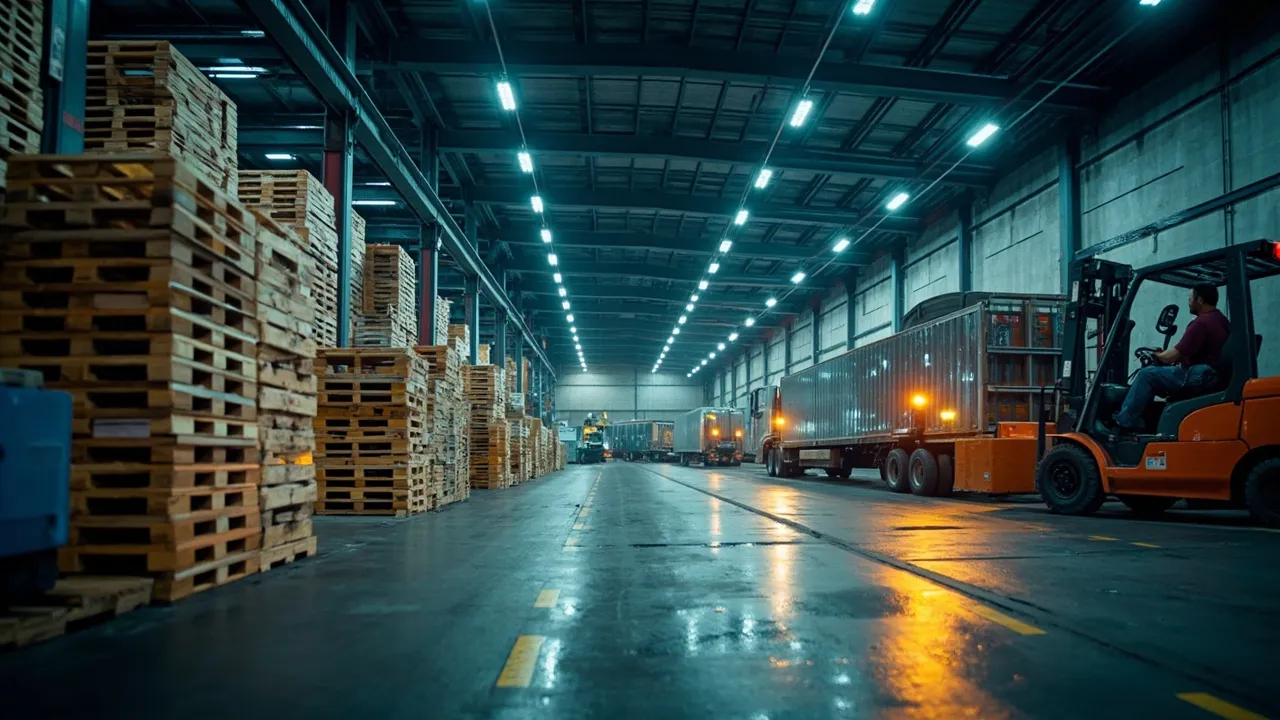
Pallet sourcing used to feel like warehouse housekeeping. Keep enough wood on hand, call a local supplier when stacks run low, repair what can be repaired, and complain about prices when demand spikes. That casual model is breaking down. Pallets are now part of freight continuity.
Modern Materials Handling recently reported that PalletTrader is expanding its managed pallet sourcing and supply program into Canada, bringing PalletTrader+ and its digital marketplace model to Canadian shippers. The move matters because North American pallet supply is highly fragmented and cross-border freight is unforgiving. If the right pallet is not available, compliant, and visible at the right node, a shipment can miss the dock appointment, export cutoff, customer promise date, or carrier capacity window.
The numbers show why this is not a niche procurement issue. MMH cites industry estimates that the addressable market for white wood pallets is about $7 billion, with more than 500 million one-way white wood pallets circulating in North America. It also notes more than 1,500 pallet depots, mostly independent businesses, serving customers whose needs range from emergency spot loads to full network coverage. A white-wood pallet can cost anywhere from $3 to $25 depending on demand, condition, size, and material cost.
A pallet is cheap until it is the missing item that stops a finished load from leaving.
Cross-border freight exposes pallet weak spots
Cross-border operations turn pallet sourcing from a local purchasing task into a network risk. A shipper moving between the United States and Canada has to coordinate suppliers, depots, repair loops, customer requirements, carrier appointments, warehouse labor, and wood-packaging compliance expectations. When those pieces are handled manually, the weak point usually appears late: during staging, loading, inspection, or customer receipt.
By then, the freight plan is already built around assumptions about pallet count, pallet type, load height, trailer cube, dock timing, and receiver capability. If the warehouse has the wrong pallet spec or repairable stock is not ready, transportation absorbs the failure.
The consequences are operational. Dock throughput slows when teams rebuild loads or wait for usable pallets. Export moves become harder when packaging documentation is unclear. Load stability suffers when teams substitute whatever is available. Carrier dwell rises when appointments are missed because the load is physically present but not shipment-ready. Customer service gets the call, but the root cause began in packaging availability.
Spot buying is not a strategy
Many companies still treat pallets like a spot market problem: buy what is available when inventory dips. That can work for simple domestic flows with predictable volume and forgiving customers. It does not work well for cross-border, seasonal, multi-node networks.
Managed pallet sourcing changes the operating model. Instead of asking, “Who can sell us pallets this week?” the better question is, “Where will each lane, facility, customer, and seasonal peak need pallet capacity before the freight plan locks?” That requires visibility into demand forecasts, inbound packaging returns, repair cycles, supplier coverage, depot location, customer-specific pallet rules, and reusable asset position.
PalletTrader’s Canada expansion is notable because the company is not only pushing an open marketplace. MMH reports that its managed-service program uses dedicated personnel and market knowledge to bring structure and visibility to pallet programs, with full intra-Canada coverage and Canadian-dollar transactions. The open marketplace will let sellers post inventories, pricing, and delivery timelines. That kind of visibility is exactly what pallet programs need if they are going to support transportation execution instead of surprising it.
Unitizing is changing too
The pallet supply question is getting harder because unit loads are changing. In a separate Modern Materials Handling discussion on unitizing, Orion Stretch Wrappers’ Pat Pownall points to smaller products, changing case configurations, thinner films, labor shortages, and faster automated lines as forces reshaping how warehouses build and secure pallet loads.
The details matter. Operations that once ran 60-gauge or 80-gauge stretch film may now run 43-gauge film while still expecting the same line speeds. Automated lines also leave less room for packaging interruptions. Pownall notes that with zoned emergency-stop designs, a film change that may take 30 seconds no longer has to stop the entire line before and after the wrapper.
That is a packaging example, but the transportation lesson is clear: small packaging disruptions now ripple through high-speed fulfillment systems. If unitizing is evolving, pallet sourcing cannot remain a static purchasing routine. Smaller cases, different pack patterns, more automation, and thinner films all put more pressure on pallet quality and consistency.
The warehouse and transportation plan need the same constraint model
Inbound Logistics’ coverage of the next-generation warehouse makes the broader point: warehouse leaders are under pressure from labor constraints, turnover, ecommerce speed, tariff uncertainty, and supply chain disruption. One executive quoted in the article says ecommerce has pushed operations away from efficient batching toward near-real-time processing and shipping. Another notes that warehouses are asking a less experienced workforce to do better work, faster, with less margin for error.
In that environment, pallet constraints cannot sit outside the transportation plan. A shipment is not ready because inventory exists in the building. It is ready when the product, pallet, labor, dock door, trailer, appointment, documentation, and customer requirements line up.
That means pallet data needs to be treated like an execution input. Planners should know which facilities are short on a required pallet type before releasing orders. Dock teams should see whether customer-specific pallet rules apply before staging. Carrier teams should understand when shortages could delay loading. Procurement should see how seasonal freight plans change pallet demand by region, not just by total spend.
What shippers should tighten now
Start by mapping pallet requirements by lane, customer, and product family. Generic counts are not enough. Cross-border customers may require specific footprints, condition standards, or documentation. Heavy, fragile, or automation-fed products may need different pallet and unitizing rules than mixed retail freight.
Next, connect pallet inventory to shipment readiness. If a facility cannot confirm available pallets, the system should flag affected orders before transportation tenders the load. If repair cycles are falling behind, planners should see which shipping days or lanes are exposed. If a reusable pool is imbalanced across facilities, the transportation plan should account for repositioning or substitute sourcing.
Finally, measure pallet failures as transportation exceptions. Missed appointments, delayed loads, rework, product damage, customer refusal, and carrier dwell should identify pallet-related root causes when they apply. If the problem is recorded only as “warehouse delay,” the business will keep treating pallet sourcing as background noise.
Where CXTMS fits
CXTMS helps logistics teams connect packaging constraints to freight execution. Shipment planning, carrier appointments, milestone tracking, and exception workflows are where pallet shortages become service failures. When pallet availability, customer requirements, and shipment readiness are visible in the same operating layer, teams can act before the load misses its window.
For freight forwarders, distributors, manufacturers, and 3PLs, the payoff is practical: fewer late tenders, fewer dock surprises, cleaner cross-border execution, and more reliable customer commitments.
If your team is still managing pallet availability through phone calls, spreadsheets, and warehouse tribal knowledge, schedule a CXTMS demo to see how transportation execution data can expose packaging constraints before they become missed appointments and delayed shipments.