Foldable Steel Containers Turn Empty Returns Into a Packaging-Asset Decision

Empty transport equipment is not empty cost. It still consumes vessel space, truck capacity, terminal labor, storage area, and planning attention. A recent steel-industry case at the Port of Mobile makes that point unusually clear—and shows why reusable packaging should be managed as a fleet of productive assets rather than a purchasing category.
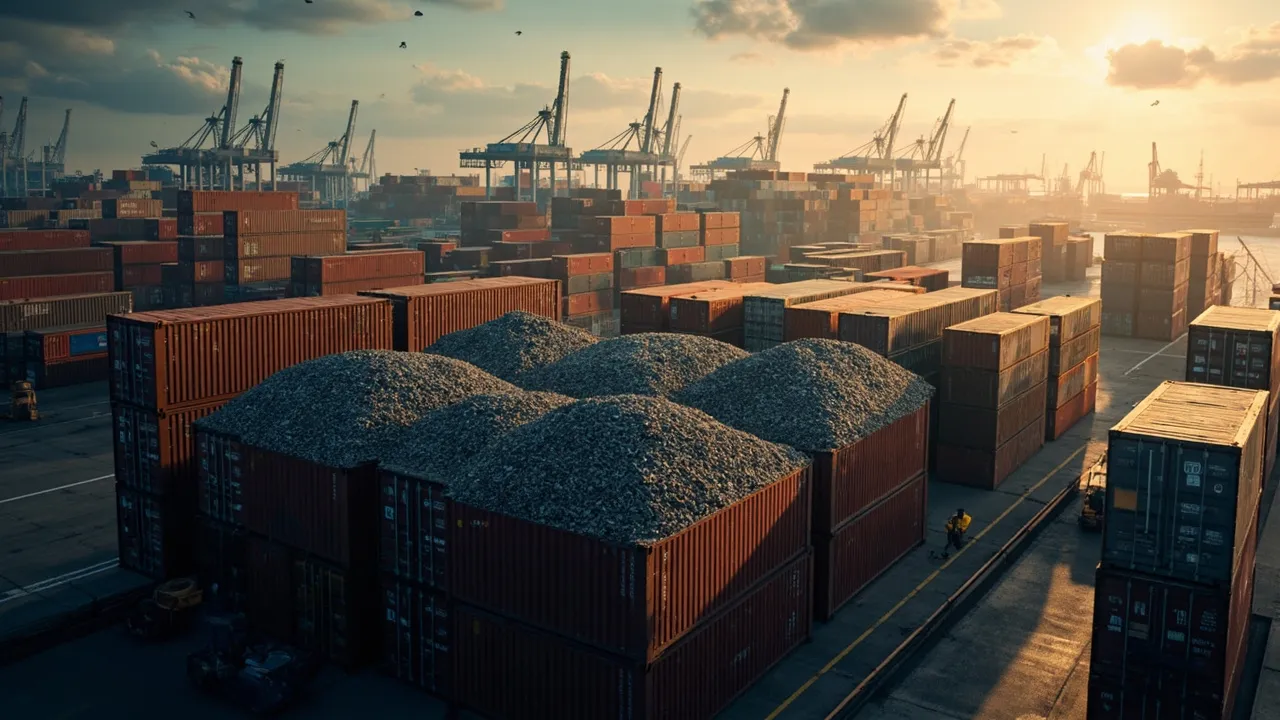
Steel producer Outokumpu is using collapsible containers to move stainless-steel scrap from Mexico to Alabama. The containers travel south in a folded state, are expanded and loaded with scrap, then return through Mobile before the material moves inland to the company’s Calvert mill. The design turns an awkward reverse flow into a productive loop without displacing outbound finished-steel cargo.
The hardware is clever. The operating model behind it matters more.
Four Empty Units in the Space of One
According to Supply Chain Dive, Outokumpu moves about 230,000 tons of cargo through the Port of Mobile annually. Vessel space was already constrained, making the shipment of conventional empty containers to Mexico impractical.
The foldable design allows four collapsed containers to occupy the footprint previously required by one. In practical terms, the same deck position can reposition four future loads instead of one empty box. At the Alabama terminal, stacked empties also reduce truck moves because a tractor is no longer limited to repositioning a single full-size empty container.
That creates value in several places:
- Better cube utilization on the southbound vessel
- Fewer empty-equipment truck moves
- Less terminal space consumed by idle assets
- Lower handling and replacement expense
- A protected container for scrap that can be difficult to move safely
- A return load that supports stainless-steel recycling
These benefits should not be collapsed into a single freight-rate comparison. Foldable equipment changes the number of moves, the handling method, the exposure to damage, and the amount of inventory required to keep the loop running. It is a packaging-asset decision with transportation consequences.
The Container Needs a Digital Identity
A reusable container can generate savings only while it remains visible and available. Once a unit disappears at a supplier yard, misses an inspection, or waits folded at the wrong node, the operation either loses capacity or pays for substitute equipment.
Each container therefore needs a persistent asset ID linked to its type, dimensions, tare weight, ownership, commissioning date, and inspection status. A barcode may be enough for controlled facilities; RFID, GPS, or cellular tracking may be justified where handoffs are numerous or loss risk is high. The technology matters less than recording the same custody events consistently.
At minimum, the event trail should show:
- Folded and released for repositioning
- Loaded aboard the outbound vessel
- Discharged and received in Mexico
- Expanded and inspected
- Assigned to a scrap load
- Sealed, booked, and loaded for Mobile
- Discharged and staged at the terminal
- Released for inland movement
- Emptied, inspected, folded, and returned to available inventory
Every event should include the asset ID, location, timestamp, responsible party, and condition. Photographs and damage codes should accompany exceptions. This creates a chain of custody that supports claims while also telling planners how many serviceable units will be available at each node.
The same discipline applies in the warehouse. Inbound Logistics describes performance management as measuring outcomes such as throughput, quality, cost per unit, safety, and customer service—not merely activity. Its review of modern warehouse operating models notes that performance-based approaches can produce up to 25% lower operating costs in some operations. Reusable packaging programs need that outcome focus: scans are activity; container cycle time, loss rate, utilization, and avoided moves are outcomes.
Build the Business Case by Lane and Cycle
The tempting calculation is simple: four folded containers fit where one conventional empty once traveled, so repositioning cost per unit falls sharply. That is directionally useful but financially incomplete.
A lane-level model should include:
- Purchase or lease cost of each foldable container
- Expected useful life and residual value
- Folding, unfolding, cleaning, and inspection labor
- Ocean, terminal, drayage, and inland charges in both directions
- Storage and dwell expense at every node
- Repair frequency, repair cost, and out-of-service days
- Annual loss rate and replacement lead time
- Tracking hardware, software, and connectivity
- Substitute-equipment cost when the pool is short
- Avoided conventional-container moves and avoided damage
The denominator matters too. Divide total annual program cost by completed, usable cycles—not by the number of containers purchased. An asset that completes ten loops creates more transport capacity than one that spends months in dwell or repair.
Planners should model at least three cases. The base case uses expected cycle time and damage. The stress case assumes port delay, slower scrap accumulation, and a higher loss rate. The growth case tests whether enough folded containers, terminal slots, and inland capacity exist for added volume. A project that pays back only when every unit returns perfectly and immediately is not robust.
Exception Triggers Protect the Pool
Reusable assets need active return management. A transportation management system should calculate an expected milestone for every custody event, then open an exception when the event is late.
Useful triggers include a unit not received after discharge, a container held beyond free time, a missed inspection, conflicting custody records, an asset assigned while marked damaged, and projected inventory below the next sailing’s requirement. Escalation should go to the party able to act: terminal operator, supplier, carrier, maintenance provider, or asset-pool manager.
This also prevents a common accounting mistake. Linehaul savings may appear in the transportation budget while losses, repairs, and extra labor land in separate cost centers. A shared asset record lets finance connect those costs to the same container cycle and lane.
From Packaging Purchase to Controlled Network
Outokumpu’s Mobile flow demonstrates the physical advantage vividly: four folded containers in one footprint, fewer truck moves, and a workable reverse stream for scrap supporting circular steel production. But copying the container alone will not reproduce the result.
The real capability is a controlled network in which equipment, cargo, custody, condition, and return deadlines remain connected. When those records are available in one operational view, teams can decide whether to reposition, repair, rebalance, or add assets before a missing container becomes a missed shipment.
CXTMS helps logistics teams connect bookings, milestones, exceptions, documents, and partner activity across complex transport loops. Request a CXTMS demo to see how reusable packaging and return movements can be managed with the same discipline as revenue freight.