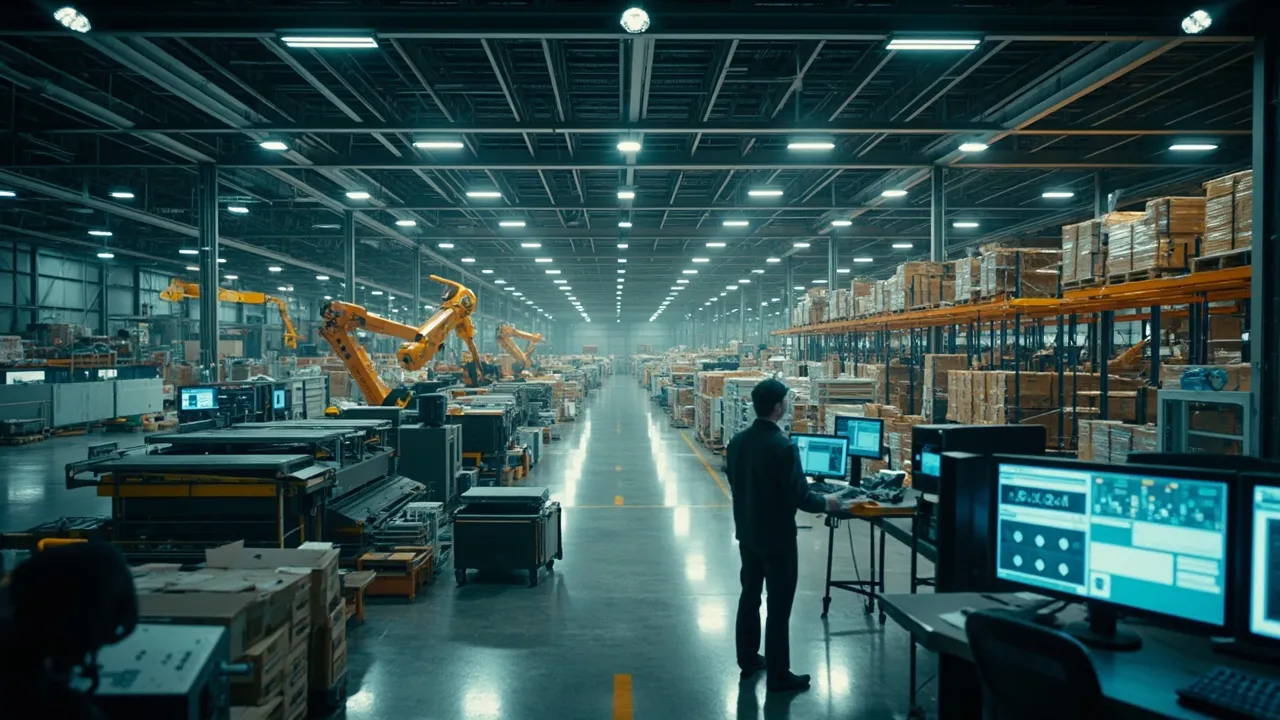
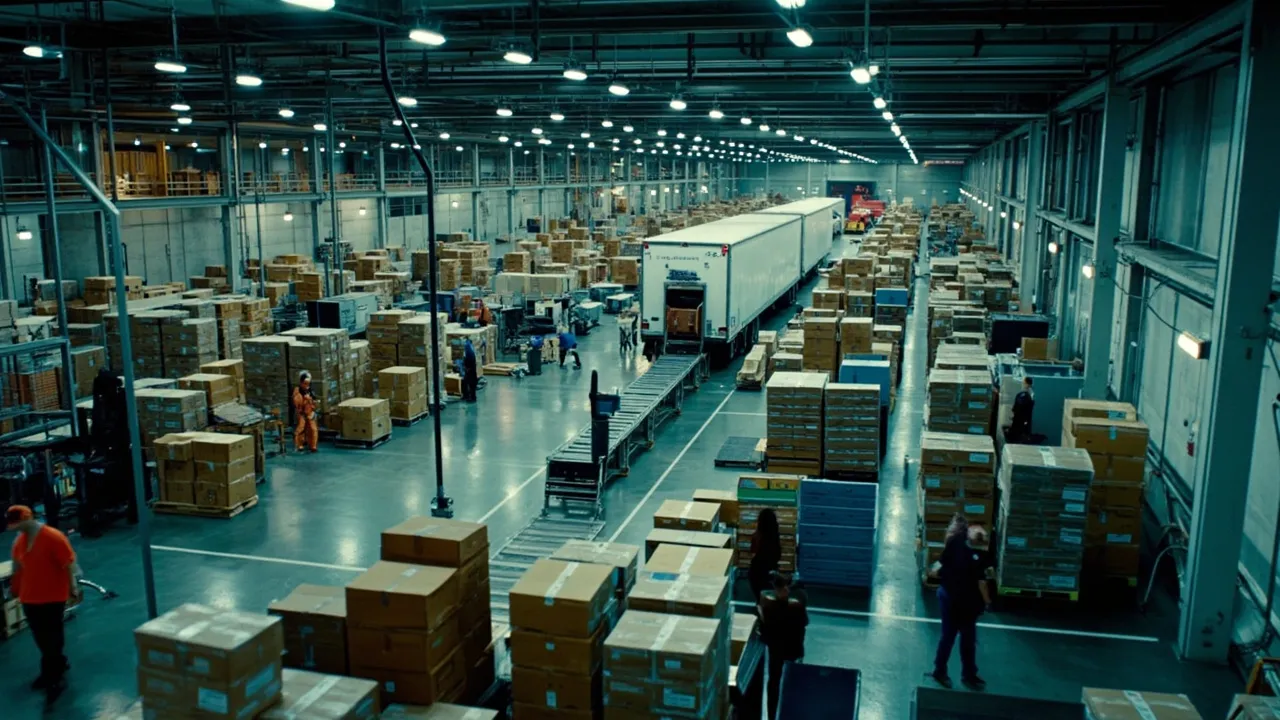
Freight Equipment Financing Confidence Is Flat—What That Means for Warehouse Capacity Plans


Equipment-finance confidence is holding steady, but warehouse operators should not mistake stability for an all-clear signal. The July 2026 Monthly Confidence Index for the Equipment Finance Industry remained at 63.7, unchanged from June. Underneath that flat headline, expectations tilted toward continuity rather than acceleration.
For distribution leaders planning forklifts, conveyors, robotics, trailers, or dock equipment, the message is practical: capital may remain available, but approval committees are likely to demand tighter business cases, clearer deployment milestones, and credible fallback plans.
A stable index still reflects caution
Modern Materials Handling reports that only 22.7% of equipment-finance executives expect business conditions to improve during the next four months, down from 30.4% in June. Meanwhile, 72.7% expect conditions to remain the same, up from 65.5%.
Capital-expenditure demand shows a similar pattern. Just 28.6% expect demand for leases and loans to increase, while 66.7% expect it to remain unchanged. The encouraging counterpoint is access to capital: 33.3% expect access to improve, 66.7% expect no change, and none expect it to worsen.
This is not a frozen financing market. It is a selective one. Warehouse projects with measured returns, resilient assumptions, and manageable implementation risk should still find support. Projects justified mainly by optimistic volume forecasts will face more scrutiny.
Deferred replacement has a real operating cost
When capital approvals slow, replacing aging lift trucks or material-handling systems is often the first decision pushed into another quarter. That can protect near-term cash, but it can also move costs from the capital budget into maintenance, labor, and rentals.
An older forklift does not fail according to the budget calendar. Unplanned downtime may leave a shift short of equipment, create congestion at staging lanes, and force supervisors to reassign labor. Emergency rentals preserve throughput but often cost more than planned fleet capacity. A conveyor or sorter running beyond its intended refresh cycle can create a wider bottleneck because one failure affects many workstations at once.
Operators should therefore compare the cost of replacement with the full cost of deferral:
- Preventive and corrective maintenance by equipment class
- Lost productive hours and overtime caused by downtime
- Short-term rental and expedited freight expense
- Safety exposure and operator productivity on aging assets
- Throughput risk during peak weeks
The useful metric is not simply monthly payment versus purchase price. It is cost per available operating hour, adjusted for the operational consequence of failure.
Capacity pressure is already visible
The financing outlook matters because logistics providers are managing simultaneous pressure on capacity and technology. In the 2026 Inbound Logistics 3PL market survey, 52% of providers cited capacity as a major challenge, up sharply from 31% one year earlier. The same share—52%—identified technology investment as a major challenge, while 66% cited rising operational costs.
Those findings make blanket spending freezes especially risky. At the same time, they argue against buying equipment without understanding where the constraint actually sits. A facility with poor appointment discipline or weak wave planning may not need another forklift. It may need better orchestration. Conversely, software cannot compensate for a dock with insufficient physical capacity during peak receiving windows.
The same survey found that 70% of 3PL respondents view supply chain technology as an important response to current challenges, while 61% point to distribution-center network optimization. Physical assets, network design, and digital execution should therefore be evaluated as one capacity portfolio.
Match approvals to the operating calendar
Capital timing should work backward from the date capacity must be productive—not the date a purchase order can be issued. A new facility or peak-season expansion includes financing approval, vendor lead time, site preparation, delivery, integration, testing, operator training, and a stabilization period.
If a system must be reliable by October, commissioning it in late September is not a plan; it is a wager. Build explicit decision gates into the calendar:
- Confirm the demand scenario and required throughput.
- Approve financing before the vendor's lead-time cutoff.
- Complete infrastructure and integration work before delivery.
- Test under representative volume, not an empty-building demo.
- Preserve time for correction before the operational deadline.
This approach also exposes when a permanent purchase will arrive too late. In that case, a temporary rental, additional shift, or short-term outsourced capacity may be the more responsible bridge.
Lease, buy, or phase the deployment?
There is no universal financing answer. The right structure depends on asset utilization, technology risk, balance-sheet priorities, and the cost of being wrong.
Buying generally fits durable, heavily utilized equipment with a long useful life and limited obsolescence risk. Standard lift trucks, dock equipment, and racking may fit this profile when demand is stable and maintenance capabilities are strong.
Leasing can fit assets that need predictable refresh cycles, preserve cash, or carry meaningful technology risk. It may also help align payments with the period when added capacity produces revenue. Operators should examine end-of-term conditions, usage limits, maintenance responsibilities, and early-termination costs rather than comparing monthly payments alone.
Phased deployment is often the strongest option under a flat-confidence environment. Start with the highest-confidence workflow or most constrained zone, establish baseline performance, and release later phases only after the first phase meets defined thresholds. A phased automation program might begin with one receiving area or pick module before expanding across the building.
Each scenario should be tested against base, upside, and downside volumes. Include utilization, labor savings, maintenance, implementation disruption, financing cost, and residual value. Most importantly, calculate the break-even volume and the cash impact if demand arrives six months late.
Turn capital discipline into capacity resilience
Flat financing confidence does not require warehouse operators to retreat. It rewards sequencing. Protect critical replacement needs, connect every expansion to a dated operating requirement, and avoid treating automation as a single irreversible bet.
CXTMS helps logistics teams coordinate transportation demand, facility activity, and execution data so capacity decisions are grounded in the work the network must actually perform. Request a CXTMS demo to see how better operational visibility can support smarter capacity and investment planning.