OSHA's 2026 Warehouse Safety Crackdown: What Every Logistics Operator Must Know About the New Emphasis Programs

OSHA is turning up the heat on warehouse safety in 2026 — literally and figuratively. With expanded National Emphasis Programs targeting heat exposure, fall hazards, and warehousing operations, logistics operators face a new enforcement landscape where penalties can reach $165,514 per willful violation. For an industry already reporting injury rates more than double the national average, the message is clear: compliance isn't optional.
Why OSHA Is Targeting Warehouses in 2026
The numbers tell the story. According to Bureau of Labor Statistics data, the warehousing and transportation sector recorded an injury and illness rate of 4.8 cases per 100 full-time workers in recent reporting — nearly double the private industry average of 2.7 per 100. A U.S. Department of Labor Office of Inspector General audit found warehouse-related injuries nearly doubled from approximately 42,500 to over 80,500 cases, while the number of warehouse facilities grew just 14%.
Those figures caught Washington's attention. OSHA's 2026 agenda features National Emphasis Programs focused specifically on heat illness, fall prevention, and warehousing operations — the trifecta of hazards that account for the majority of serious warehouse incidents.
The Three Pillars of OSHA's 2026 Warehouse Focus
1. Heat Illness Prevention Standard
OSHA's forthcoming federal Heat Illness Prevention Standard will require employers to provide access to shade, rest, and hydration; implement acclimatization protocols for new and returning workers; and actively monitor for signs of heat stress. Warehouses without climate control — which includes the majority of distribution centers — are squarely in the crosshairs.
The rule has particular implications for logistics operators in the Sun Belt, where summer warehouse temperatures routinely exceed 100°F. Operators who haven't already invested in cooling infrastructure, hydration stations, and heat monitoring should start budgeting now.
2. Expanded Recordkeeping and Data Transparency
Since January 2024, high-hazard employers have been required to electronically submit OSHA Forms 300 and 301 in addition to the annual Form 300A summary. In 2026, OSHA is ramping up enforcement and — critically — increasing public transparency of incident data. This means your safety record won't just trigger inspections; it will be visible to customers, partners, and potential employees.
For logistics operators managing multiple facilities, this creates a compliance burden that manual spreadsheet tracking simply cannot handle at scale.
3. Warehousing-Specific National Emphasis Program
The warehousing NEP directs OSHA's area offices to conduct targeted inspections of warehouse and distribution center operations. With increased federal funding expanding inspection capacity, operators should expect more unannounced visits, particularly in regions with elevated incident rates.
The Real Cost of Non-Compliance
OSHA's current penalty structure makes non-compliance an expensive gamble:
- $16,550 per serious violation
- $16,550 per day for failure to abate known hazards
- $165,514 per willful or repeated violation
But direct penalties are only part of the equation. Warehouse injuries carry hidden costs — workers' compensation claims, productivity losses from experienced workers on leave, OSHA follow-up inspections, and reputational damage now amplified by public recordkeeping data. Industry estimates put the total cost of a serious warehouse injury at $40,000–$60,000 when accounting for direct and indirect expenses.
For a mid-size 3PL operating five distribution centers, even a modest increase in inspection activity could expose hundreds of thousands of dollars in compliance risk.
Where Automation and Technology Reduce Risk
The same technologies transforming warehouse productivity are also proving effective at reducing safety incidents. Here's where the biggest impact is occurring:
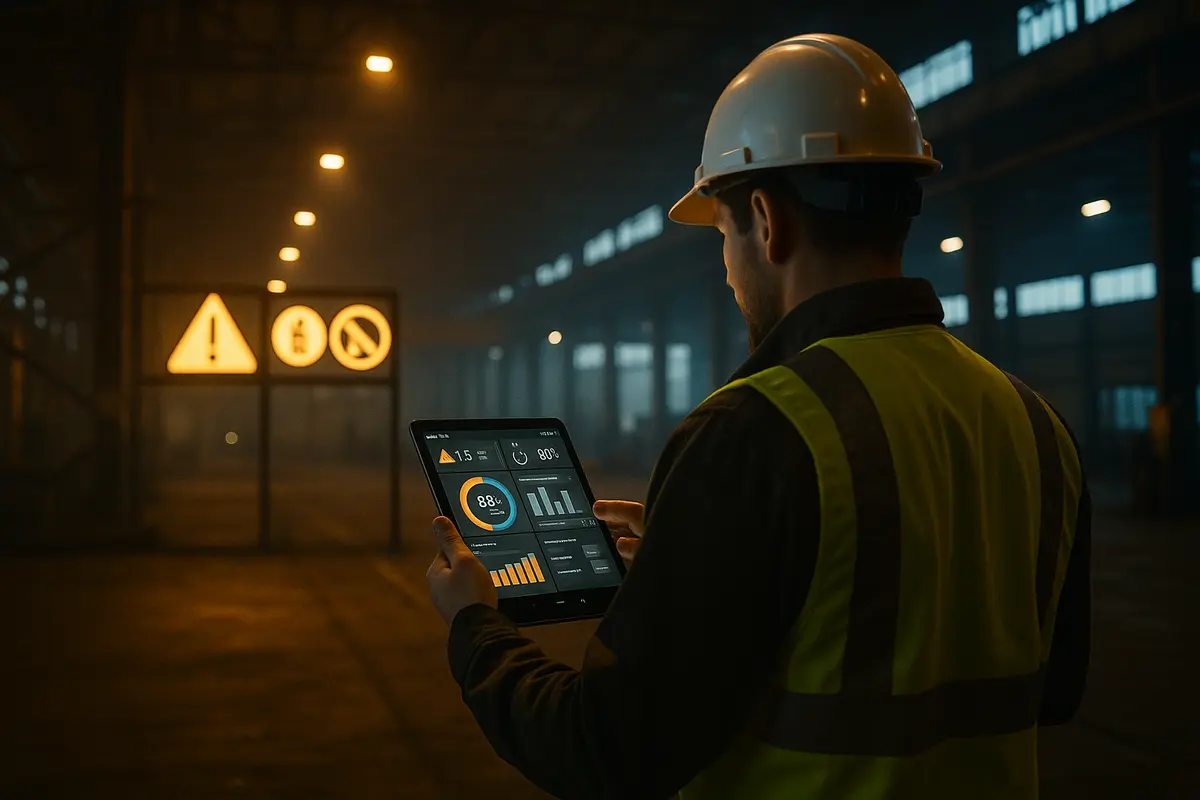
IoT-Enabled Environmental Monitoring. Networked sensors tracking temperature, humidity, air quality, and noise levels provide continuous compliance data and trigger alerts before conditions become hazardous. Wearable devices can monitor worker fatigue, heat stress indicators, and proximity to heavy equipment in real time.
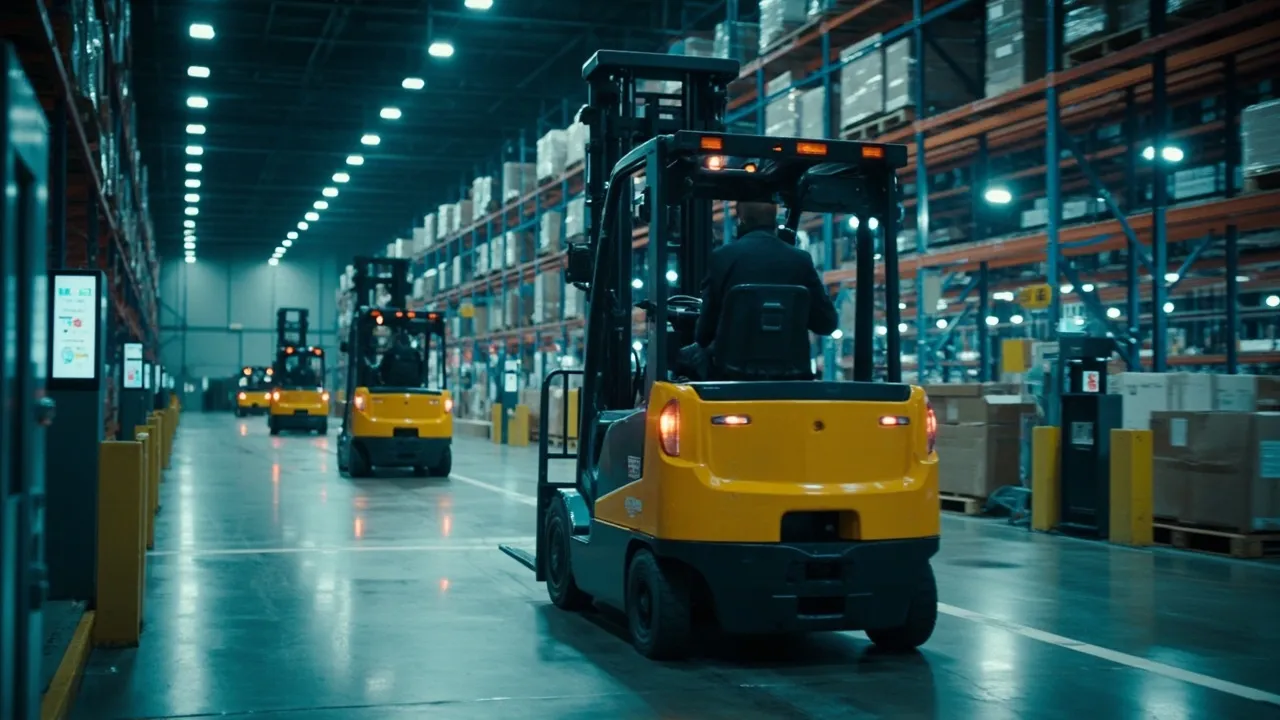
Automated Material Handling. Forklifts account for approximately 25% of all warehouse injuries and cause around 7,500 injuries and nearly 100 fatalities annually in the U.S. alone. Automated guided vehicles (AGVs) and autonomous mobile robots (AMRs) eliminate the most dangerous human-machine interactions on the warehouse floor.
AI-Powered Incident Prediction. Machine learning models analyzing near-miss data, shift patterns, and environmental conditions can identify high-risk periods before incidents occur. Loading docks — responsible for 25% of all warehouse accidents with an estimated 600 near-misses for every recorded injury — are prime candidates for predictive safety analytics.
Digital Safety Audits. Replacing clipboard-based inspections with digital checklists connected to a central compliance platform ensures consistent documentation across facilities and creates an audit trail that satisfies OSHA recordkeeping requirements automatically.
Building a Compliance-Ready Warehouse Operation
With OSHA's 2026 enforcement expansion now underway, logistics operators should prioritize these steps:
- Conduct a compliance gap analysis across all facilities, focusing on heat illness protocols, fall prevention, and recordkeeping completeness.
- Digitize safety documentation — electronic Forms 300, 301, and 300A submission is not just required but strategically important for demonstrating compliance culture.
- Invest in environmental monitoring with IoT sensors that create continuous, auditable records of workplace conditions.
- Implement automated incident reporting that captures near-misses alongside recordable injuries — OSHA's data-driven approach means proactive reporting demonstrates good faith.
- Integrate safety data with your TMS and WMS so compliance information flows alongside operational data rather than living in a separate silo.
How CXTMS Supports Warehouse Safety Compliance
CXTMS's warehouse management capabilities are designed to integrate safety tracking directly into logistics operations. Automated incident documentation, environmental monitoring integration, and compliance reporting tools help operators maintain OSHA-ready records without adding manual overhead to already-stretched warehouse teams.
When safety data lives alongside shipment tracking, inventory management, and workforce scheduling, operators gain visibility into the patterns that drive risk — and the ability to act before incidents become violations.
Facing OSHA's expanded warehouse enforcement? Contact CXTMS for a demo of integrated compliance and warehouse management.