Multimodal Rate Management Platforms: How Unified Air-Ocean-Road Pricing Is Replacing Siloed Freight Procurement

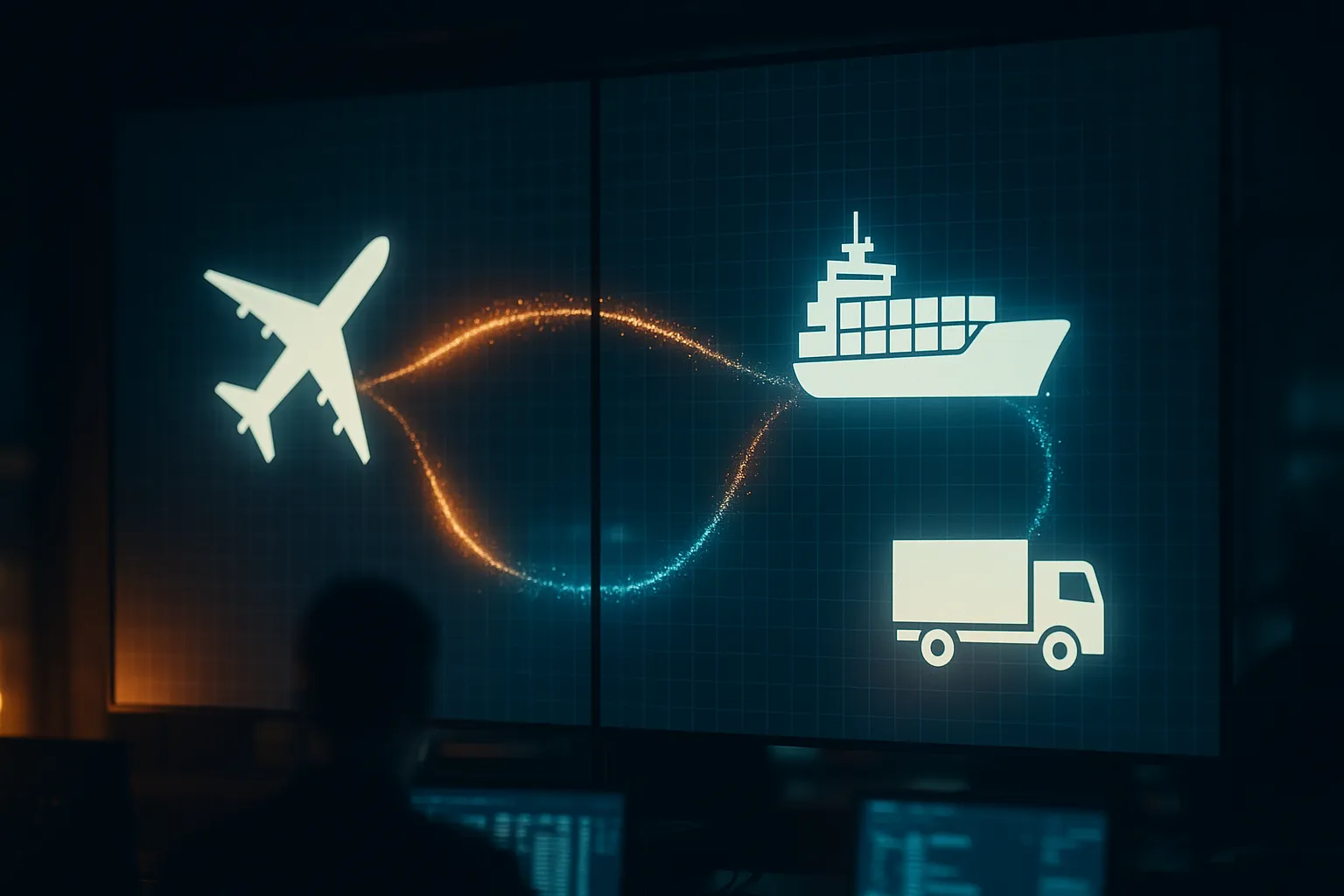
For decades, freight procurement has operated in silos. Air cargo rates live in one system. Ocean container pricing sits in another. Truckload and LTL quotes arrive through yet another channel — often via email or spreadsheet. The result? Shippers making mode-selection decisions with incomplete data, procurement teams juggling disconnected platforms, and logistics managers spending more time reconciling rate information than actually optimizing transportation spend.
In March 2026, that fragmented reality is finally breaking apart. A wave of multimodal rate management platforms is emerging to unify air, ocean, and surface freight pricing into single, AI-powered systems — and a landmark acquisition this week signals the tipping point.
The Acquisition That Signals Multimodal Convergence
On March 2, 2026, Berlin-based logistics technology provider cargo.one announced the acquisition of Lisbon's ocean rate platform Cargofive, backed by a near €17 million ($20 million) investment round with participation from Bessemer Venture Partners. Alongside the acquisition, cargo.one launched what it describes as an "AI-native OS for multimodal freight" — a platform unifying air and ocean freight data into a single foundation.
"Most AI projects in logistics fail to deliver ROI because they lack access to robust, structured data," said Moritz Claussen, founder and co-CEO of cargo.one. "Real returns come from unified data infrastructure operating at enterprise scale."
This isn't an isolated event. The acquisition follows a broader European FreightTech investment surge: Belgian TMS provider Qargo secured a €28 million Series B, Estonia's MyDello raised €3.1 million for international shipping management, and Frankfurt-based Rail-Flow closed a €12.5 million Series A for intermodal capabilities. The pattern is clear — investors are betting on platforms that bridge modal boundaries.
Why Siloed Rates Cost Shippers More Than They Realize
The financial impact of fragmented rate management extends far beyond the obvious inefficiency of logging into multiple systems. When air, ocean, and road rates exist in separate databases, three critical problems emerge:
Mode-switching friction. When a shipment needs to shift from ocean to air due to a deadline change, procurement teams often restart the quoting process from scratch. The delay between identifying the need for mode change and executing it can cost days — and in a volatile rate environment, those days translate directly to higher costs. According to FreightWaves, carriers are anticipating mid-single-digit rate increases across modes in 2026 while shippers budget more conservatively, making real-time cross-modal rate visibility a competitive advantage.
Landed cost blindness. Most shippers can quote individual legs of a multimodal journey with reasonable accuracy. But the true landed cost — including drayage, terminal handling, customs, and last-mile delivery — remains opaque when each mode's pricing lives in isolation. The global freight management system market, valued at $21.61 billion in 2026 according to Straits Research, is being reshaped precisely because shippers demand this holistic cost picture.
Procurement cycle waste. When RFP processes run separately for each mode, procurement teams effectively triple their workload. Carrier responses arrive in different formats, on different timelines, with different validity periods. Normalizing this data for apples-to-apples comparison consumes analyst hours that could be spent on strategic optimization.
How Unified Rate Platforms Actually Work
The new generation of multimodal rate management platforms shares a common architectural approach built on three layers:
1. Carrier API Integration Layer
Rather than relying on manually uploaded rate sheets, these platforms connect directly to carrier pricing APIs across modes. Air cargo rates flow from airline systems, ocean rates pull from container line tariffs, and truckload pricing connects through load board and carrier management integrations. The key innovation is normalization — converting disparate rate structures (per-kilo for air, per-TEU for ocean, per-mile for trucking) into comparable cost-per-unit metrics.
2. Cross-Modal Optimization Engine
With normalized rate data, the platform can run true multimodal comparisons. A shipment from Shanghai to Chicago, for example, can be automatically priced across multiple routing options: all-ocean through Long Beach, air-ocean split through Anchorage, or direct air freight. Each option includes estimated transit times, carbon footprint, and total landed cost — not just linehaul rates.
3. AI-Powered Rate Intelligence
As Logistics Management reports, the freight sector in 2026 is entering a phase where AI pairs with human expertise to improve audit accuracy, reduce fraud, and optimize transportation spend. In the rate management context, AI analyzes historical booking patterns, seasonal trends, and real-time market signals to recommend optimal booking windows and predict rate movements across modes.
The Market Forces Driving Convergence
Several converging trends make 2026 the inflection year for multimodal rate unification:
E-commerce demands modal flexibility. The explosive growth of cross-border e-commerce requires shippers to constantly balance speed against cost. A platform that can instantly compare a 30-day ocean shipment against a 3-day air option — and dynamically shift between them based on inventory levels — becomes essential infrastructure.
Rate volatility rewards agility. The freight market entering 2026 shows carriers and shippers with divergent rate expectations. Echo Global Logistics surveyed over 1,800 market participants and found carriers expecting pricing gains while shippers budget conservatively. This gap makes real-time, cross-modal rate intelligence a strategic imperative rather than a nice-to-have.
TMS platforms are going multimodal. The transportation management system market, valued at $15 billion in 2025 and growing at 10.6% CAGR through 2035 according to Global Market Insights, is increasingly expected to handle all modes natively. Single-mode TMS solutions face obsolescence pressure.
Sustainability reporting requires modal data. With ESG reporting mandates expanding globally, shippers need to track and compare carbon intensity across modes for the same lane. Unified platforms make Scope 3 emissions reporting dramatically simpler by maintaining consistent measurement across air, ocean, and road.
What This Means for Shippers in 2026
For logistics leaders evaluating their technology stack, the multimodal rate management shift demands three immediate actions:
Audit your rate data sources. How many separate systems, spreadsheets, and email threads currently contain your freight rates? If the answer is more than two, you're leaving optimization value on the table.
Evaluate total landed cost capability. Can your current tools compare a multimodal routing option against a single-mode option inclusive of all accessorial charges? If not, you're making mode decisions with incomplete information.
Demand API-first architecture. Any rate management platform worth investing in should connect to carrier systems via API — not manual rate sheet uploads. The speed of rate changes in 2026's market makes static rate tables obsolete within weeks of creation.
How CXTMS Supports Unified Rate Decision-Making
CXTMS was built for the multimodal reality. Our platform provides cross-modal rate visibility, automated carrier benchmarking, and AI-powered lane optimization across air, ocean, and surface transportation — all within a single dashboard. Instead of juggling disconnected systems, CXTMS gives your procurement team the unified data foundation they need to make faster, smarter mode-selection decisions.
Whether you're comparing ocean-to-air trade-offs on a trans-Pacific lane or benchmarking LTL rates against intermodal alternatives domestically, CXTMS delivers the landed-cost clarity that siloed platforms simply cannot match.
Ready to unify your freight rate management? Request a CXTMS demo today and see how multimodal visibility transforms procurement from a cost center into a competitive advantage.