Mexico’s Panama Canal Alternative Could Become a Real Multimodal Option — If Execution Catches Up

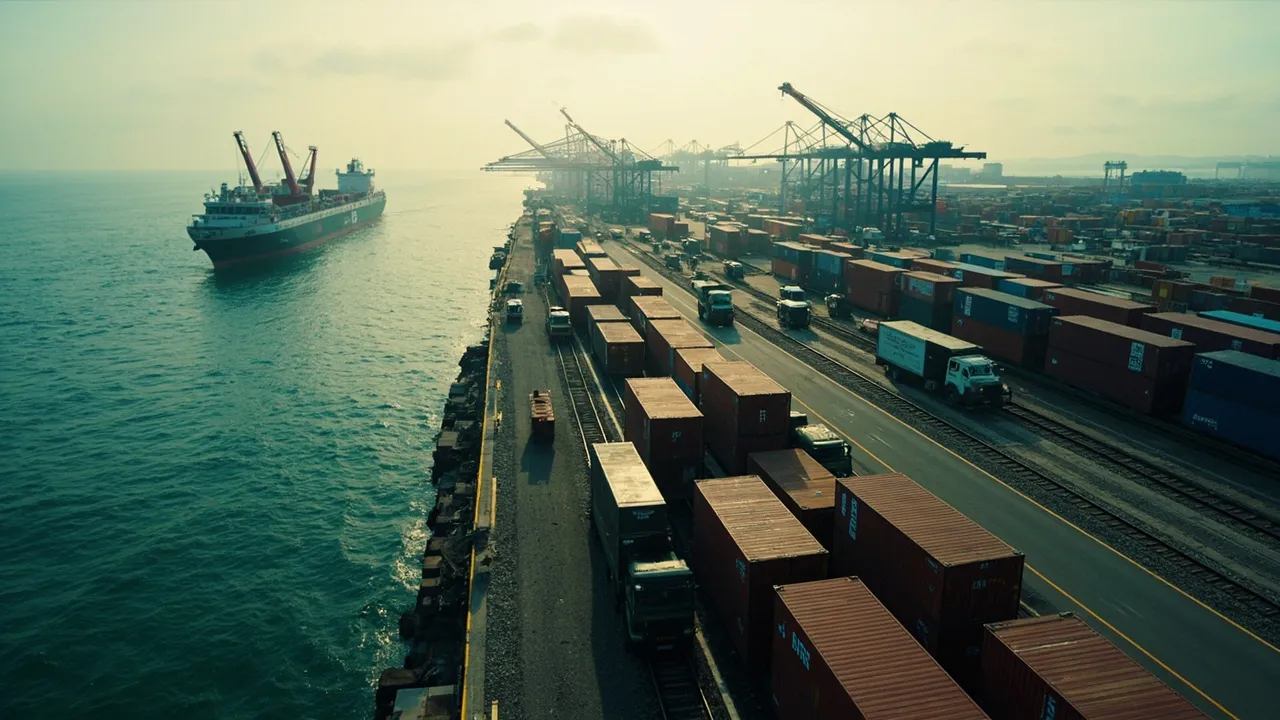
The smart way to evaluate Mexico’s Interoceanic Corridor is not to ask whether it will “beat” the Panama Canal. That framing is too dramatic and mostly useless. The better question is narrower: can the corridor become a reliable optional route for specific freight profiles when congestion, drought risk, nearshoring demand, or regional distribution needs make the traditional playbook too brittle?
That answer is starting to look like a cautious yes — but only for shippers willing to model the corridor as a multimodal product with execution risk, not as a magic shortcut across Mexico.
Supply Chain Brain reported that Mexico’s Interoceanic Corridor of the Isthmus of Tehuantepec is expected to be fully completed in the first half of 2026, with final construction work scheduled for June. The project is designed to connect Mexico’s National Port System through rail service across the Isthmus of Tehuantepec, linking the Pacific port of Salina Cruz with the Gulf port of Coatzacoalcos.
The headline numbers explain why logistics teams are paying attention. A 2025 pilot involving Hyundai and Hyundai Glovis moved 900 vehicles from Asia toward the U.S. East Coast through the corridor. The rail leg crossed the isthmus in roughly nine hours, and the broader ocean-to-ocean transfer was benchmarked at about 72 hours. Other reporting cited by Supply Chain Brain described the rail route as roughly 303 to 308 kilometers, depending on the segment measured.
Those figures do not make the corridor a Panama Canal replacement. They do make it worth a serious lane-design conversation.
What the corridor can actually solve
The strongest use case is not global ocean freight at massive scale. It is optionality for selected flows where the value of route diversification outweighs the operational complexity.
For Asia-to-U.S. East Coast vehicle, industrial, appliance, machinery, and high-value component flows, the corridor could offer a way to split risk when canal constraints, port congestion, or schedule volatility make a single routing strategy uncomfortable. It also fits the broader shift toward Mexico-centered nearshoring, where logistics networks are being redesigned around manufacturing, assembly, and distribution capacity inside North America.
That matters because freight networks are no longer optimized only for lowest cost under normal conditions. They are increasingly designed for survivability under weird conditions: drought restrictions, geopolitical shocks, tariff uncertainty, port disruptions, border slowdowns, labor actions, equipment shortages, and sudden demand swings.
A Mexico Gulf-to-Pacific route gives shippers one more lever. Not every load needs that lever. But the loads that do need it may need it badly.
The execution limits are real
Here is the blunt part: corridor infrastructure is only half the product. The other half is repeatable execution.
A shipper does not buy “a corridor.” It buys a chain of handoffs: origin booking, port arrival, vessel discharge, customs process, drayage, rail departure, rail reliability, destination port handling, export or domestic handoff, documentation, insurance, exception management, and customer communication.
Every one of those steps can work in a pilot and still wobble at scale.
The earlier Supply Chain Brain analysis, asking whether Mexico’s CIIT can really challenge the Panama Canal, noted that the project has included major investment ambitions, port modernization, industrial development zones, and a revived railway concept with roots reaching back more than a century. It also flagged a familiar infrastructure problem: funding, official visibility, and full buildout details can lag the marketing.
For transportation leaders, the key constraints are practical. How frequent are sailings? How consistent are rail departures? How much drayage capacity exists at both ends? Are customs processes predictable? Is transload capacity deep enough for mixed freight, or is the early use case mostly specialized cargo? Can the route handle disruption recovery, or does one missed handoff collapse the service promise?
Until those answers are boringly reliable, the corridor belongs in scenario models, not in the core routing guide for every eligible shipment.
Cross-border complexity raises the bar
The corridor also needs to be understood inside the wider North American trade environment. Logistics Management described a more fragmented and uncertain cross-border market, with USMCA review pressure, tariff uncertainty, equipment cost concerns, and operational imbalance across U.S.-Mexico-Canada lanes.
One detail from that report should stick with freight planners: Ryder’s Frank Bateman described a north-south imbalance of roughly three loads northbound for every one southbound, creating waste and deadhead pressure. Ryder also managed more than 280,000 cross-border moves last year, up 10%, while emphasizing that cross-border freight depends on coordination among carriers, customs brokers, drayage providers, distribution centers, and other parties.
That is exactly the kind of discipline the Interoceanic Corridor will need. If documentation, appointments, customs data, rail milestones, and drayage availability are not synchronized, the theoretical route advantage disappears fast.
The corridor’s success will not be determined only by steel rail and port cranes. It will be determined by whether shippers, forwarders, rail operators, ports, brokers, and carriers can make the information flow as cleanly as the cargo.
How shippers should model it now
The right move is to treat the Interoceanic Corridor as an optionality layer.
Start with a lane screen. Identify cargo that is valuable enough, time-sensitive enough, or disruption-exposed enough to justify a more complex multimodal route. Automotive, machinery, industrial components, electronics, and Mexico-linked production flows are better candidates than low-value freight with little tolerance for handoff complexity.
Next, compare the corridor against current routings using four variables: total transit time, recovery time after exceptions, landed cost, and service confidence. Do not compare best-case corridor performance against average canal performance. That is how bad routing decisions get dressed up as innovation.
Then define trigger conditions. A corridor option becomes useful when there is a reason to activate it: Panama Canal drought restrictions, port congestion, customer service risk, Mexico production needs, inventory imbalance, or a strategic desire to reduce dependence on one ocean routing.
Finally, connect the data. Optional routes only work if transportation teams can see booking status, customs documents, rail milestones, drayage appointments, cost deltas, inventory exposure, and customer commitments in one operating view.
That is where CXTMS fits. CXTMS helps logistics teams compare multimodal options, track execution milestones, manage exceptions, and keep freight decisions tied to cost, service, and customer impact. Emerging corridors are valuable only when teams can operationalize them without turning every shipment into a manual project.
Mexico’s Interoceanic Corridor is not the new Panama Canal. That is fine. The industry does not need another myth. It needs more resilient choices, better data, and the discipline to know when an alternative route is worth using.
Ready to model multimodal optionality without spreadsheet chaos? Schedule a CXTMS demo and see how connected transportation execution helps teams evaluate new corridors before disruption forces the decision.