Material Handling Automation Reaches the Tipping Point: When Every Warehouse Will Go Dark

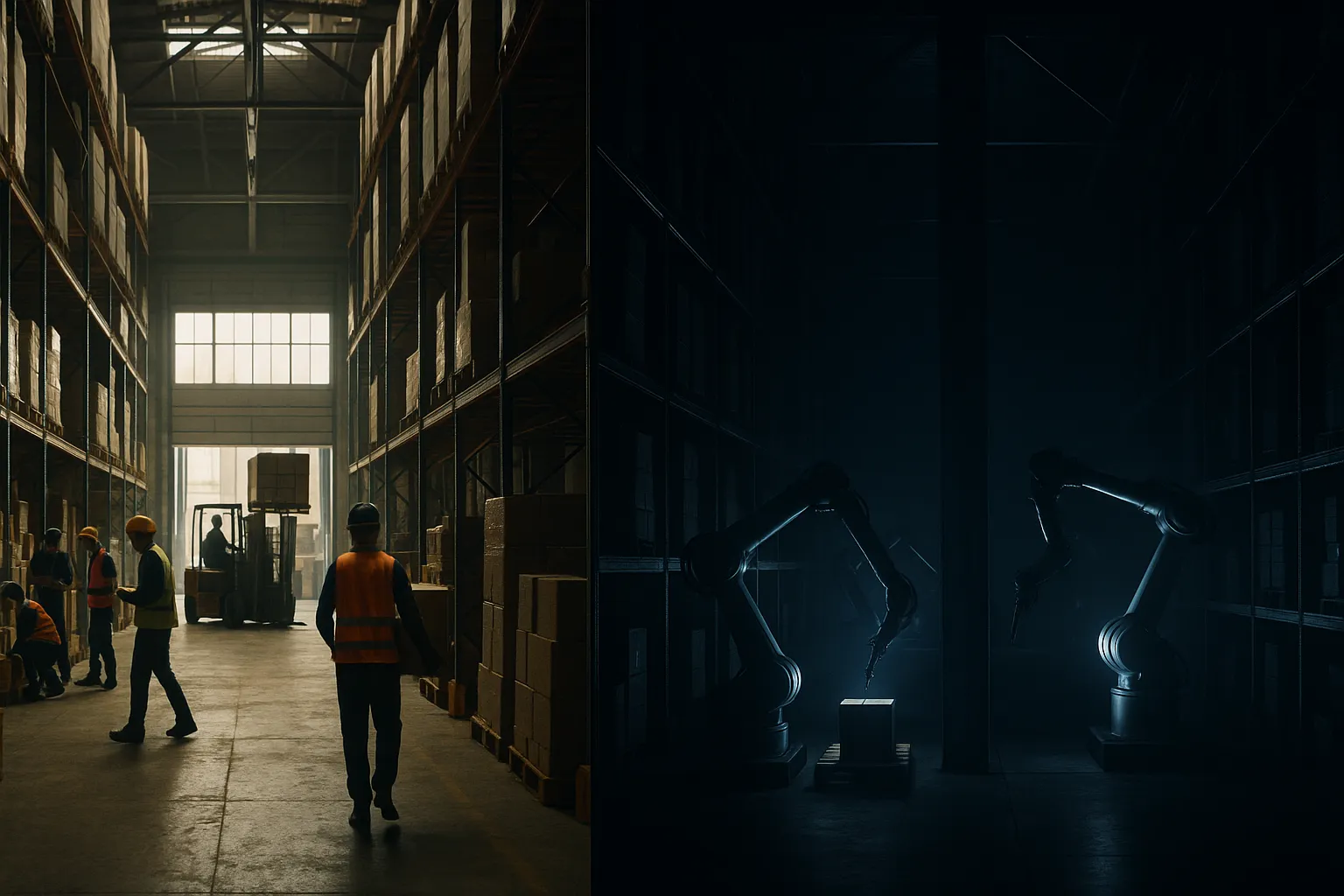
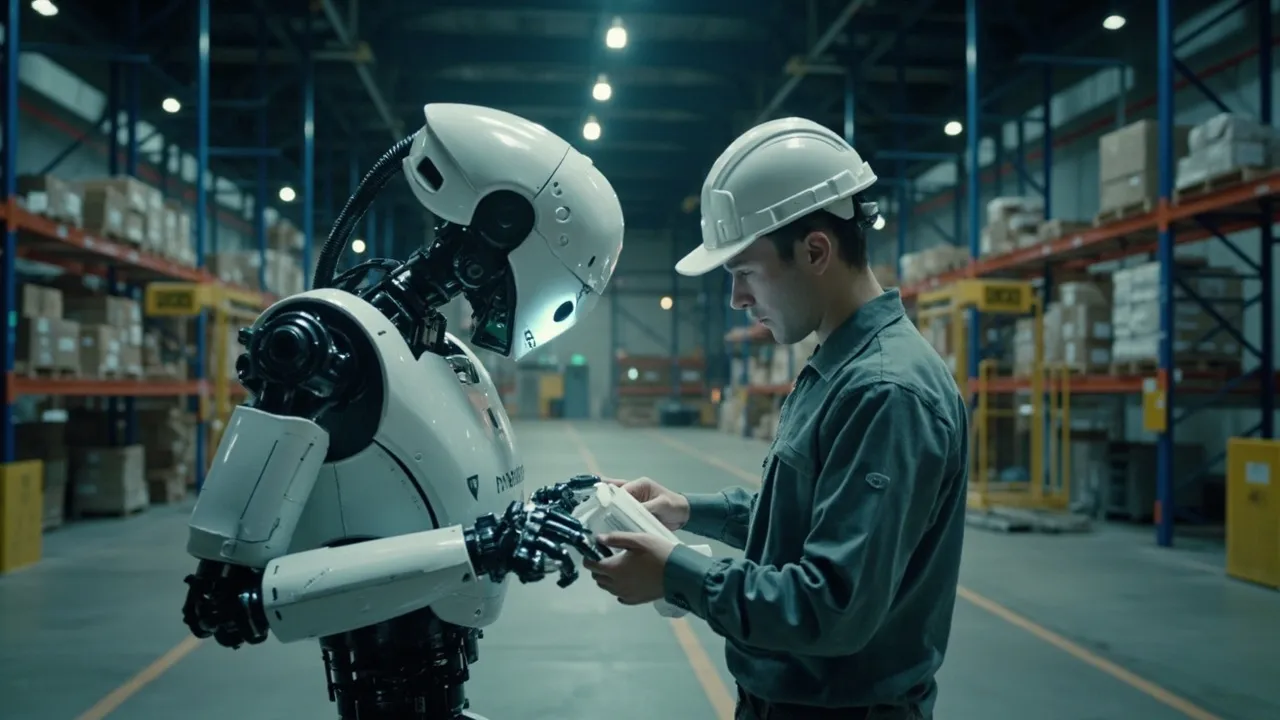
The lights-out warehouse—a facility where machines handle every putaway, pick, pack, and ship without a single human on the floor—used to be a logistics thought experiment. In 2026, it's becoming an operational reality at a growing number of distribution centers worldwide. The question is no longer if warehouses will go dark, but when and in what order the functions will hand off from human to machine.
The numbers tell the story of acceleration. Global organizations invested approximately $21 billion in warehouse automation in 2023, according to Modern Materials Handling's 2026 Automation Study. By 2033, that figure is expected to exceed $90 billion—a staggering 329% increase over a single decade. This isn't incremental growth. It's the kind of exponential curve that rewrites entire industries.
Which Functions Go Dark First?
Not all warehouse processes are created equal when it comes to automation readiness. The MMH 2026 Automation Study reveals a clear hierarchy in full automation adoption rates across key warehouse functions:
- Labeling leads at 24% full automation
- Reporting follows at 18%
- Packaging at 13%
- Picking at 12%
- Storage at 11%
- Conveyance at 10%
- Replenishment at 9%
- Retrieval remains the least automated at just 3%
This progression isn't random. It follows a predictable pattern: repetitive, rules-based tasks with consistent inputs automate first. Labeling and reporting are essentially data operations—machines excel at them. Picking, which requires spatial awareness, product recognition, and dexterity, is harder. Retrieval from unstructured environments remains the final frontier.
The Night Shift Revolution
One of the most telling indicators of where we are on the automation timeline is what's happening after hours. As SupplyChainBrain reports, a growing number of facilities are already running lights-out operations during the night shift. Automated picking robots eliminate the need for overnight staff entirely, with orders picked, buffered, and readied for packing by the time the morning crew arrives.
Jan Zizka, co-founder and CEO of Brightpick, describes robots controlled by AI with mobile arms, 3D vision, and force-sensing grippers that can pick individual items from shelves and totes. Accuracy rates hit as high as 99% for familiar packaging configurations, and the underlying route optimization software cuts travel time in the warehouse by up to 50%.
The overnight automation model is significant because it represents a proving ground. Once companies demonstrate that robots can reliably handle an eight-hour shift without human intervention, extending that window to 16 hours—and eventually 24—becomes an engineering challenge, not a conceptual one.
The 2026–2035 Automation Adoption Curve
Based on current investment trajectories, technology maturity, and adoption data from the MHI Annual Industry Report series—which found that 55% of supply chain leaders are actively boosting investments in technology and innovation—the warehouse automation timeline is taking shape:
2024–2026: The Foundation Phase Automated storage and retrieval systems (AS/RS), conveyors, and warehouse management software become table stakes. Companies that haven't invested in basic automation are already falling behind. Robotic picking handles overnight shifts and simple SKU profiles.
2027–2029: The Acceleration Phase AI-powered picking systems achieve reliability across diverse product types. Goods-to-robot configurations begin replacing goods-to-person setups at scale. The number of fully lights-out facilities doubles, primarily in pharmaceuticals, electronics, and grocery—sectors where product standardization enables machine handling.
2030–2033: The Consolidation Phase With the market exceeding $90 billion, automation becomes the default for new facility construction. Brownfield retrofits accelerate as labor costs and availability make the ROI case undeniable. The "robot manager" model—a single human overseeing an entire automated facility—becomes standard for high-volume DCs.
2034–2035: The Dark Warehouse Norm For standardized product categories, lights-out operations are no longer exceptional. Human labor concentrates in exception handling, maintenance, and the management layer. Warehouses that still rely primarily on manual labor are competitive outliers.
What's Accelerating the Timeline
Three converging forces are compressing this timeline faster than most industry forecasts predicted:
1. AI Closes the Dexterity Gap. As Zizka notes, handling the enormous variety of product sizes, package weights, and floor layouts in a typical DC "wouldn't have been possible 10 years ago." Modern AI vision and manipulation systems are solving problems that kept automation confined to controlled environments.
2. Labor Economics Force the Issue. The talent gap tops MHI's supply chain trends list for 2026. With warehouse worker turnover rates historically above 40% and an aging workforce, automation isn't a choice—it's a necessity for operational continuity.
3. E-Commerce Volume Won't Stop Growing. Consumer expectations for same-day and next-day delivery require throughput levels that manual operations simply can't sustain during peak periods. Automation provides the scalability that labor markets cannot.
What This Means for Shippers
The march toward dark warehouses isn't just a warehouse operator's concern—it directly impacts every shipper's supply chain strategy. As fulfillment partners automate, shippers need visibility into how those changes affect lead times, accuracy rates, and cost structures.
Automated warehouses generate exponentially more operational data than manual ones. Every robotic pick, every conveyor movement, every AS/RS cycle produces data points that can be leveraged for better demand planning, inventory optimization, and transportation coordination.
The shippers who win in this environment are the ones whose technology stack can ingest, normalize, and act on that data in real time. Disconnected spreadsheets and legacy EDI won't cut it when your warehouse partner is generating millions of data events per shift.
How CXTMS Connects the Automated Warehouse to Your Freight
CXTMS is built for the data-rich logistics environment that automated warehouses create. Our platform integrates warehouse management data with transportation execution, giving shippers a unified view of inventory movement from automated pick to final-mile delivery.
With real-time API connections, automated trigger-based shipment creation, and intelligent carrier selection that factors in warehouse throughput timing, CXTMS ensures that your transportation operations keep pace with your fulfillment partner's automation investments.
Ready to future-proof your freight operations for the automated warehouse era? Request a CXTMS demo today and see how our platform bridges the gap between warehouse automation and transportation management.