Conveyor M&A Is Heating Up Because Warehouse Automation Still Needs Physical Flow


Robots get the headlines. Conveyors still move the freight.
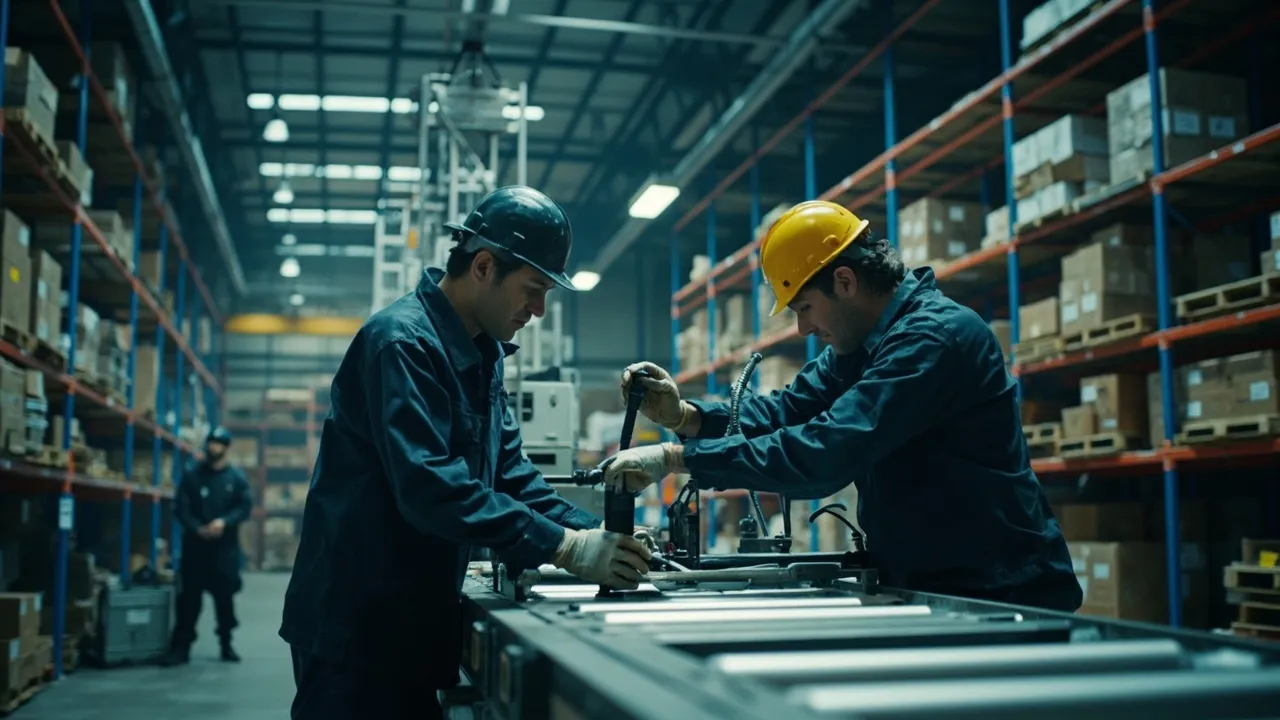
That is the practical lesson behind Interroll's acquisition of Royal Apollo Group, a Netherlands-based specialist in spiral conveyor systems, logistics equipment, baling equipment, installation, maintenance, modernization, and spare parts. According to Modern Materials Handling, Royal Apollo has been operating for nearly 180 years, runs three manufacturing sites, and built a global business around vertical conveying systems used in warehouses, distribution centers, and manufacturing operations.
The deal matters because it is not just another supplier roll-up. It is a signal that physical flow is still the hard constraint in automated warehouses. Autonomous mobile robots, robotic picking systems, cloud orchestration, and AI labor planning can improve flexibility, but they do not eliminate the need to move cartons, totes, parcels, pallets, and returns through predictable high-volume paths.
Interroll said the acquisition closes a gap in its conveyor portfolio and strengthens lifecycle services and spare parts. That second clause is the one shippers should pay attention to. In a conveyor-heavy facility, uptime is not a feature. It is the operating model. If a spiral conveyor, merge, sorter, or induction point fails during peak, the software stack can only route around the problem if the building has physical redundancy. Most facilities do not.
Automation Is Growing, But Not All Automation Is Flexible
Warehouse automation spending is accelerating. Mordor Intelligence estimates the warehouse automation market will grow from $34.17 billion in 2026 to $65.74 billion by 2031, a 13.98% CAGR. The same analysis says hardware still represented 55.12% of revenue in 2025, while software is projected to grow at 14.87% CAGR through 2031.
That split is useful. It says the future is neither pure hardware nor pure software. Facilities need the steel, sensors, drives, lifts, conveyors, robots, and sortation systems that physically execute work. They also need the software layer that tells those assets what to do, when to do it, and how to recover when demand changes.
Mobile robots are a major part of that shift. Mordor estimates mobile robots captured 41.36% of warehouse automation market share in 2025, while piece-picking robots are forecast to grow at 15.27% CAGR through 2031. Meanwhile, MMH's AMR roundtable frames autonomous mobile robots as having moved from early experimentation into mainstream warehouse operations, supporting picking, transport, and replenishment across a wider range of environments.
That is real momentum. It is also where some automation roadmaps go sideways.
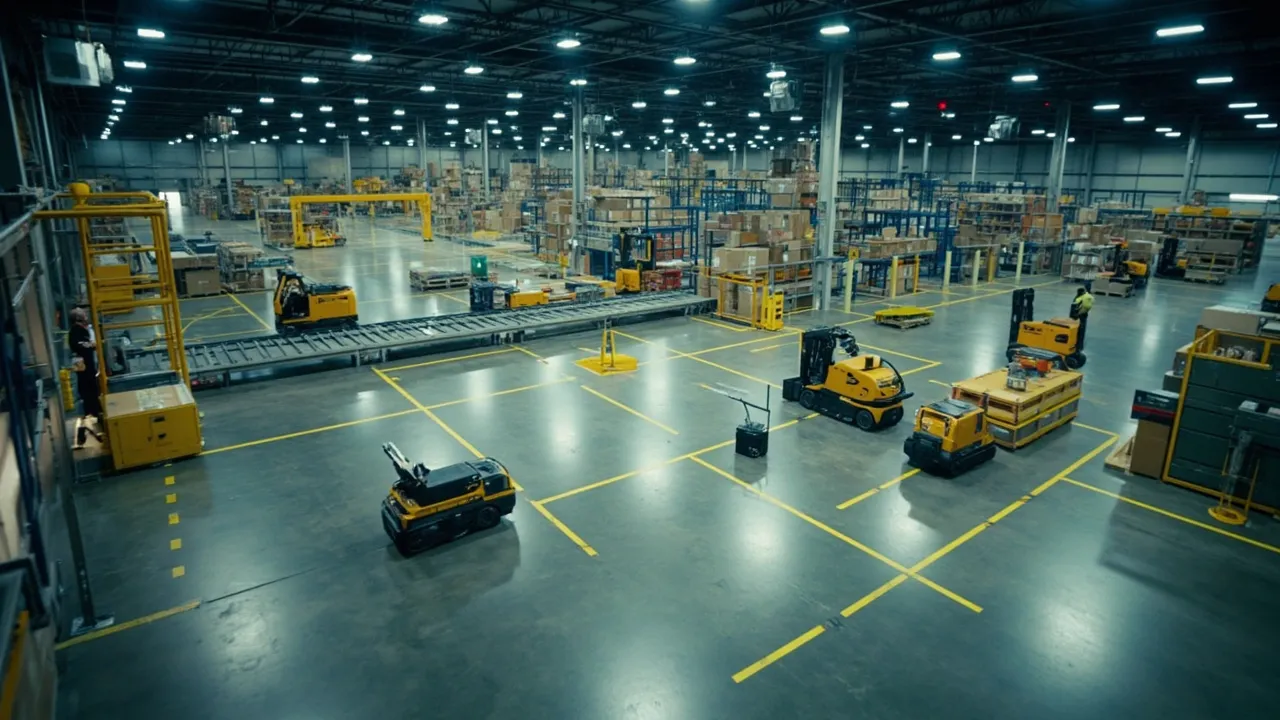
AMRs are excellent when variability is the problem: shifting pick paths, seasonal labor pressure, flexible replenishment, brownfield buildings, and workflows that benefit from incremental deployment. Conveyors are excellent when repeatable flow is the problem: sustained case movement, carton routing, vertical elevation changes, high-speed induction, automated sortation, and predictable dock-to-zone or zone-to-pack movement.
The wrong lesson from the robotics boom is that fixed automation is obsolete. The better lesson is that fixed automation must earn its place in a hybrid system.
Why Spiral Conveyors Are Strategically Interesting
Spiral conveyors are not flashy. That is part of their value. They solve a specific warehouse problem: vertical movement without consuming the footprint, labor, or traffic lanes that traditional lifts, forklift moves, or long incline conveyors require.
That matters in dense facilities where mezzanines, multi-level pick modules, automated storage, parcel sortation, and returns processing all compete for the same square footage. A spiral conveyor can connect floors, modules, or process zones continuously. In the right application, it turns vertical travel from an exception into part of the normal material-flow design.
The Royal Apollo acquisition gives Interroll more than a product line. It gives the company installed-base relationships, parts revenue, field service capabilities, and expertise around integration with system integrators. For shippers, that combination matters because the success of conveyor automation is often decided after go-live: how fast replacement parts arrive, how modernization is handled, whether controls teams can troubleshoot bottlenecks, and whether the original design can absorb SKU, carton, and volume changes.
M&A can improve that support if the acquiring company invests in continuity. It can also create short-term risk if part numbers change, support channels are reorganized, or product roadmaps shift. Buyers should treat supplier consolidation as a diligence event, not just industry news.
The Practical Risk: Integration, Not Inspiration
Most warehouse automation failures are not caused by a bad idea. They are caused by weak integration.
A conveyor project touches facility layout, electrical work, controls, WMS or WES integration, safety design, maintenance staffing, labor standards, spare-parts inventory, fire code constraints, and go-live sequencing. A robot deployment touches navigation maps, charging strategy, exception handling, task allocation, wireless coverage, floor conditions, human workflows, and software integration.
Put them together and the complexity compounds. A tote that leaves a goods-to-person station late can starve a conveyor merge. A sorter that runs at design rate can still create pack-station congestion. A spiral conveyor can add elegant vertical flow while also becoming a single point of failure if bypass routing was not designed up front.
This is why the conveyor-versus-robot debate is mostly a distraction. The real question is: where does your facility need deterministic throughput, and where does it need flexible capacity?
A Framework for Shippers Choosing Conveyor-Heavy vs. Robot-Heavy Roadmaps
Start with volume stability. If demand profiles, order channels, carton sizes, and service windows are stable, conveyor-heavy automation can deliver durable productivity. If the operation faces high SKU churn, uncertain volume, new channels, or frequent layout changes, robotics and modular systems deserve more weight.
Next, map the bottleneck by process, not by technology. If labor is walking too far, AMRs may solve it. If cartons are queueing before pack-out, the constraint may be conveyor speed, induction logic, or workstation balance. If vertical movement is choking mezzanine productivity, a spiral conveyor or lift strategy may outperform a fleet of flexible vehicles.
Then model downtime. A conveyor-heavy system needs parts discipline, maintenance windows, controls expertise, and bypass plans. A robot-heavy system needs battery planning, network resilience, fleet management, floor readiness, and exception staffing. Neither option is maintenance-free. Anyone selling that fantasy should be politely escorted out of the building.
Finally, force the roadmap to include integration ownership. The operator, WMS provider, WES provider, controls integrator, equipment OEM, robotics vendor, and maintenance team need clear boundaries before installation begins. Ambiguity at the handoff points is where automation ROI goes to die.
Interroll's Royal Apollo acquisition is a reminder that the next warehouse automation cycle will not be won by robots alone. It will be won by facilities that match physical flow, flexible movement, software orchestration, and maintenance support into one operating system.
CXTMS helps logistics teams connect planning, execution, carrier visibility, and operational data across complex networks. If your automation roadmap is changing how freight moves through the warehouse and out to customers, schedule a CXTMS demo to see how better transportation execution supports the flow beyond the dock door.