Freight Schedule Normalization: How Carrier Blank Sailing Recovery After the Suez Return Is Creating New Rate Negotiation Windows

The Red Sea crisis reshuffled global ocean freight like a deck of cards thrown into the wind. Now, as carriers cautiously resume Suez Canal transits in early 2026, the resynchronization of sailing schedules is creating something shippers haven't seen in over a year: a genuine buyer's market with negotiation leverage that won't last forever.
The Suez Return Creates Congestion Chaos at North European Ports
After more than a year of Cape of Good Hope diversions that added 10–14 days to Asia-Europe transit times, select carriers began announcing limited Suez Canal service resumptions in late 2025 and early 2026. But the return hasn't been smooth. According to Supply Chain Dive's 2026 logistics outlook, carriers are using blank sailings to manage excess capacity, and the transition back to Suez routing is creating temporary vessel bunching at key European ports.
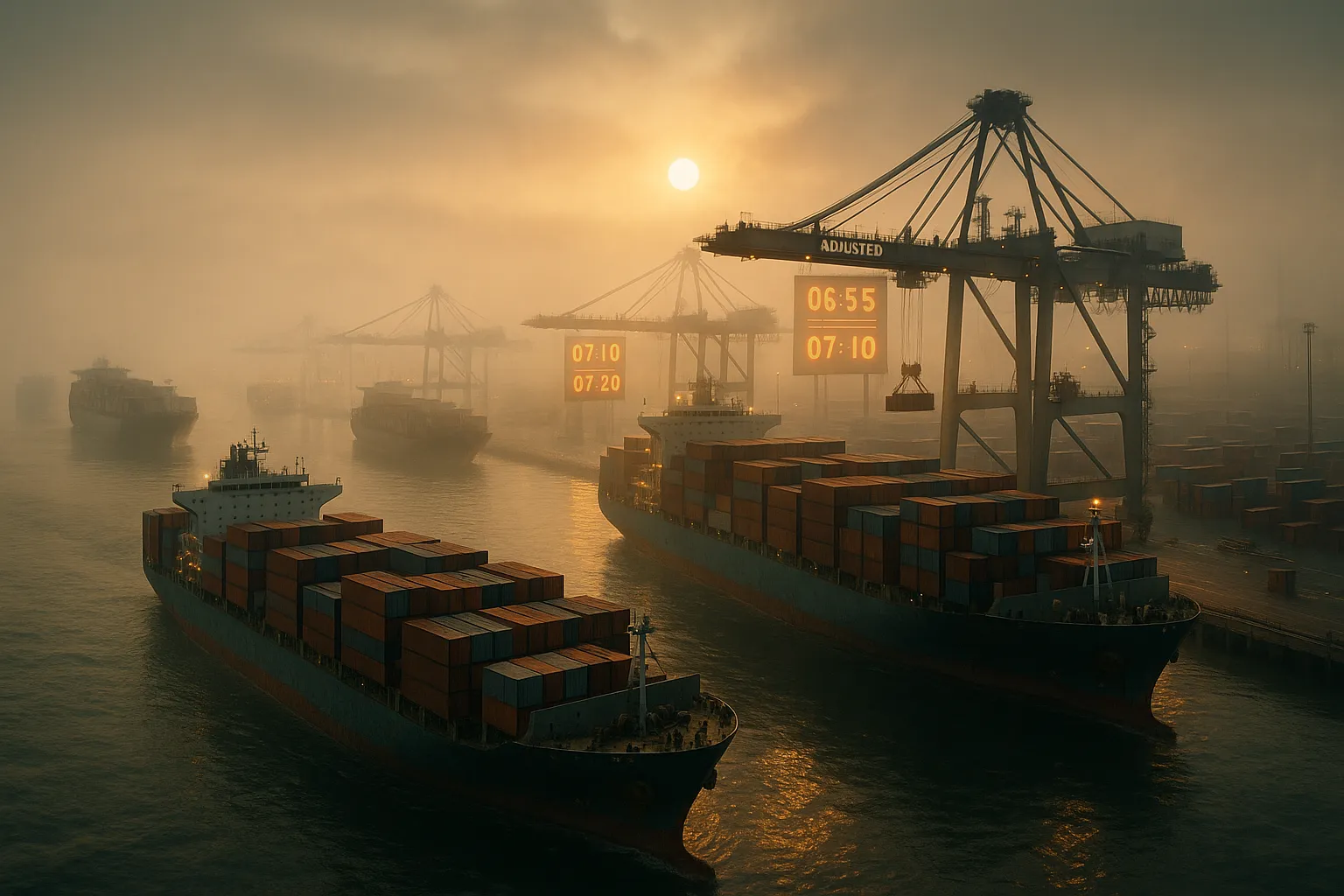
The problem is straightforward: vessels that were spread across longer Cape routes are now converging on shorter Suez lanes simultaneously. Port infrastructure designed for staggered arrivals is suddenly handling clustered vessel queues. Rotterdam, Hamburg, and Antwerp are all experiencing congestion spikes as schedule resynchronization plays out across alliance networks.
Schedule Resynchronization: A 4–6 Week Adjustment Period
Industry analysts estimate that a full normalization of sailing schedules will take four to six weeks once carriers commit to Suez routing at scale. FreightWaves reported that a gradual transition — with smaller vessels transiting first — would be less disruptive, but could weaken rates as overcapacity becomes more apparent on shortened routes.
The math is simple: Red Sea diversions previously absorbed an estimated 6% of global container shipping capacity through longer voyage distances. As routes shorten back to pre-crisis distances, that 6% floods back into the market as effective surplus capacity. Combined with the record number of new large vessels entering service throughout 2025 and into 2026, the supply-demand balance is tilting sharply in shippers' favor.
Rate Drops Signal a Structural Shift, Not Just Seasonal Softness
The numbers tell a compelling story. According to FreightWaves, the Baltic Freight Index showed Asia–U.S. West Coast spot rates tumbled 21% in a single week to approximately $1,916 per FEU, erasing all gains accumulated in early 2026. Asia–U.S. East Coast rates fell 10% to $3,457 per FEU.
Meanwhile, Xeneta data shows average spot freight rates declined across all main trades from the Far East during the week ending February 19, with the market average spot rate from the Far East to the U.S. West Coast dropping to $1,889 per FEU — down from $2,052 the prior week. East Coast rates settled at $2,688 per FEU, down from $2,882.
The National Retail Federation projects March U.S. ocean import volumes will dip 5% month-on-month, with first-quarter demand trailing year-ago levels by 7%. Maersk reported its first quarterly loss in years, and even factored a major economy's recession into its outlook for the first time — forecasting a possible profit/loss swing of $1 billion depending on whether substantial container traffic returns to the Red Sea.
This isn't typical post–Lunar New Year softening. It's a convergence of schedule normalization, fleet overcapacity, and cautious retail demand creating sustained downward pressure on rates.
Port Congestion Patterns During Normalization
The normalization period is creating a paradox: rates are falling even as congestion temporarily increases. Here's why this matters for shippers:
- Vessel bunching at European hubs is causing 2–4 day delays on Asia-Europe services, but these delays are temporary artifacts of schedule resynchronization, not structural capacity shortages.
- Transpacific routes are less affected by congestion but more affected by demand weakness, with carriers announcing 24 blank sailings on Asia-Europe/Mediterranean routes over recent weeks to manage volatility.
- Inland rail terminals in the U.S. are still clearing backlogs from recent winter storms, creating selective delays that don't reflect broader ocean market conditions.
The key insight: congestion during normalization is a short-term disruption masking a medium-term oversupply environment. Shippers who look past temporary delays will see the structural rate opportunity.
Shipper Strategy: Exploit the Normalization Window to Renegotiate
The current environment presents a narrow but significant window for contract renegotiation. Here's how to capitalize:
1. Benchmark your current rates against spot. If your contract rates are more than 15–20% above current spot levels, you have leverage. The gap between contract and spot rates is widening as spot drops faster than annual contracts adjust.
2. Push for shorter contract terms. With rates trending down and overcapacity building, locking into 12-month contracts at today's levels could leave savings on the table. Consider 6-month agreements or contracts with quarterly rate adjustment mechanisms.
3. Diversify your carrier portfolio. Alliance restructuring (Gemini Cooperation, Premier Alliance) is creating new service options. Carriers competing for volume in an oversupply market are more willing to offer favorable terms to win or retain business.
4. Negotiate on service, not just price. In a buyer's market, push for improved equipment availability, priority loading, guaranteed space allocations, and penalty clauses for blank sailings that affect your shipments.
5. Monitor the normalization timeline. The window is finite. Once schedules stabilize and carriers right-size capacity through blank sailings, rates will find a floor. The optimal negotiation period is during the chaos, not after it.
How CXTMS Rate Benchmarking Identifies Optimal Negotiation Timing
Timing a rate renegotiation requires real-time visibility into market movements — not last month's index report. CXTMS provides continuous rate benchmarking across carriers and trade lanes, alerting shippers when spot-to-contract spreads cross actionable thresholds.
Our platform aggregates carrier schedule data, blank sailing announcements, and port congestion metrics into a unified dashboard that shows exactly where normalization is creating temporary overcapacity on your specific lanes. Instead of reacting to market reports after the fact, CXTMS users identify negotiation windows as they open.
The freight schedule normalization following the Suez return is a once-in-a-cycle opportunity. Carriers are managing unprecedented fleet overcapacity, demand is muted, and schedules are in flux. Shippers who move decisively during this window will secure favorable terms that compound into millions in savings over the contract period.
Ready to benchmark your ocean freight rates against real-time market data? Request a CXTMS demo today and turn schedule chaos into contract leverage.