Europe's 233,000 Truck Driver Deficit: How the IRU's Third-Country Recruitment Framework Could Reshape Continental Freight

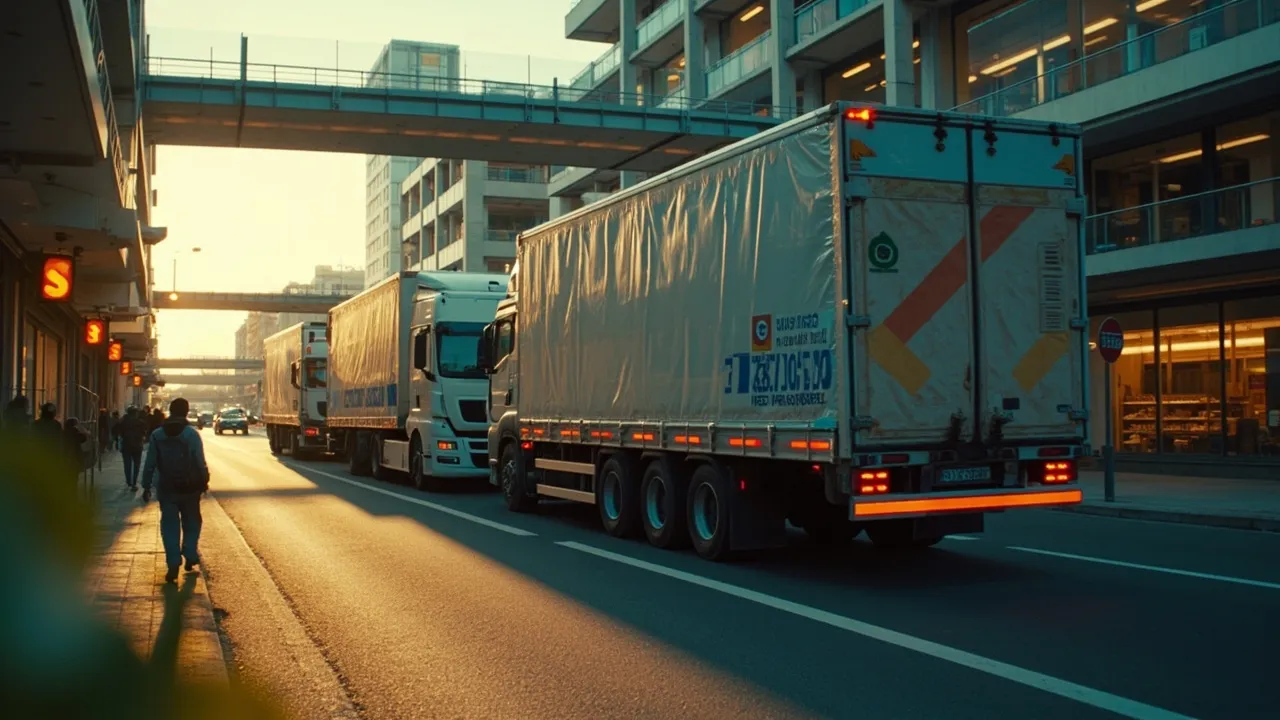
Europe's road freight network moves roughly 75% of all goods transported across the continent. Yet the industry powering that network is running out of the one resource technology cannot yet replace: human drivers. What started as a manageable labor gap has metastasized into a full-blown structural crisis — and the numbers are getting worse, not better.
The Scale of Europe's Driver Gap
According to the IRU's Global Driver Shortage Report, the number of unfilled truck driver positions across Europe surged from 233,000 in 2023 to over 426,000 by 2024 — nearly doubling in a single year. The IRU warned in late 2023 that without intervention, the rate of unfilled positions would triple to over 60% by 2026, and the trajectory has largely tracked that forecast.
These are not abstract numbers. Each unfilled position represents loads that don't move, delivery windows that slip, and supply chains that lose resilience. For shippers routing freight through Germany, France, Poland, or the Benelux corridor, driver availability is increasingly the binding constraint on capacity — not equipment, not infrastructure, not regulation.
A Demographic Time Bomb
The root cause is demographic, not cyclical. The average age of an EU HGV driver is 47, with roughly one-third of the active workforce over 55. These drivers are retiring faster than new entrants can replace them, and the pipeline of young talent is alarmingly thin.
Drivers under 25 make up just 6.5% of the total workforce globally, but in key European markets the picture is even bleaker: youth representation is as low as 2.2% in Italy and 2.6% in Germany. Women represent less than 3% of professional truck drivers across Europe. Combined, young people and women account for less than 10% of the workforce — a participation rate that makes meaningful organic recovery virtually impossible without structural intervention.
The profession's appeal has eroded over decades. Long hours away from home, physically demanding conditions, stagnant pay relative to other blue-collar trades, and the cost of obtaining a commercial license (often €5,000–€10,000 out of pocket) have all contributed to the recruitment drought. The crisis has spread from Northern Europe into Southern European markets that were previously considered well-supplied, with Spain, Italy, and Portugal all reporting acute shortfalls.
The IRU's Third-Country Recruitment Framework
In February 2026, the European Commission published a landmark study conducted by the IRU on recruiting and integrating professional drivers from third countries into the EU labor market. The study provides the most comprehensive fact-based assessment to date of the barriers preventing non-EU drivers from filling Europe's capacity gap.
The findings are built around three pillars:
1. Qualification Gap Analysis. The study maps the divergences between commercial driving license (CDL) standards across non-EU countries and EU requirements, identifying where equivalency pathways are feasible and where additional training is needed. Currently, a driver fully qualified in Morocco, Ukraine, or the Philippines faces a patchwork of recognition standards that vary by EU member state — a bureaucratic maze that deters both drivers and employers.
2. Legal and Administrative Barriers. Visa processing timelines, work permit restrictions, and inconsistent mutual recognition agreements create friction that makes third-country recruitment impractical at scale. The study catalogs best practices from member states that have streamlined these processes, providing a template for EU-wide harmonization.
3. Fair Working Conditions. Any recruitment framework must prevent exploitation. The study emphasizes that third-country drivers should receive equivalent pay, working conditions, and social protections as EU nationals — both as a moral imperative and a practical requirement for workforce sustainability.
IRU EU Director Raluca Marian framed the approach clearly: "Third-country recruitment can complement domestic solutions, provided it is based on clear pathways, fair conditions and common EU standards."
The IRU's SDM4EU (Skilled Driver Mobility for Europe) project is already translating this policy analysis into operational pilot programs, with Phase 2 initiatives launching in 2026.
ETS2 and Rising Toll Costs Add Financial Pressure
Europe's driver shortage is unfolding against a backdrop of rising operational costs that make the economics of road freight increasingly challenging for carriers.
The EU's Emissions Trading System 2 (ETS2), which extends carbon pricing to road transport fuel suppliers starting in 2027, will add meaningful cost pressure. At a projected carbon price of €45–€140 per tonne of CO₂, diesel costs for European trucking could increase by 10–22%, depending on allowance pricing. Given that fuel typically represents 30% of road freight expenses, even the lower end of that range translates to material rate increases.
Meanwhile, Germany's CO₂-based truck toll, Austria's GO-Maut system, and similar distance-based charges across Central Europe continue to escalate. For carriers already struggling to attract drivers at current wage levels, these cost pressures narrow the margin available for wage increases that might improve recruitment.
Technology Mitigates but Doesn't Replace
Autonomous trucking, driver-assist platooning, and route optimization technology will eventually ease the pressure, but the timeline for meaningful impact in Europe is longer than many assume.
Europe's fragmented regulatory landscape — 27 member states with different road authorities, licensing regimes, and approval processes — means autonomous truck deployment will lag behind the United States, where federal highway frameworks enable faster rollout. Realistically, autonomous middle-mile operations on European motorways are a 2030+ proposition at meaningful scale.
In the interim, technology plays a supporting role: route optimization reduces unnecessary mileage, telematics-driven scheduling minimizes driver idle time, and digital freight matching improves asset utilization. These tools extract more productivity from the existing workforce, but they don't create new drivers.
What Global Shippers Must Plan For
For any shipper with European freight exposure — whether through direct operations, third-party logistics, or cross-border e-commerce — the driver shortage demands proactive planning:
Expect rate increases. European truckload and LTL rates will face sustained upward pressure as carriers compete for a shrinking driver pool while absorbing ETS2 and toll cost increases. Build 5–10% annual escalation into European freight budgets.
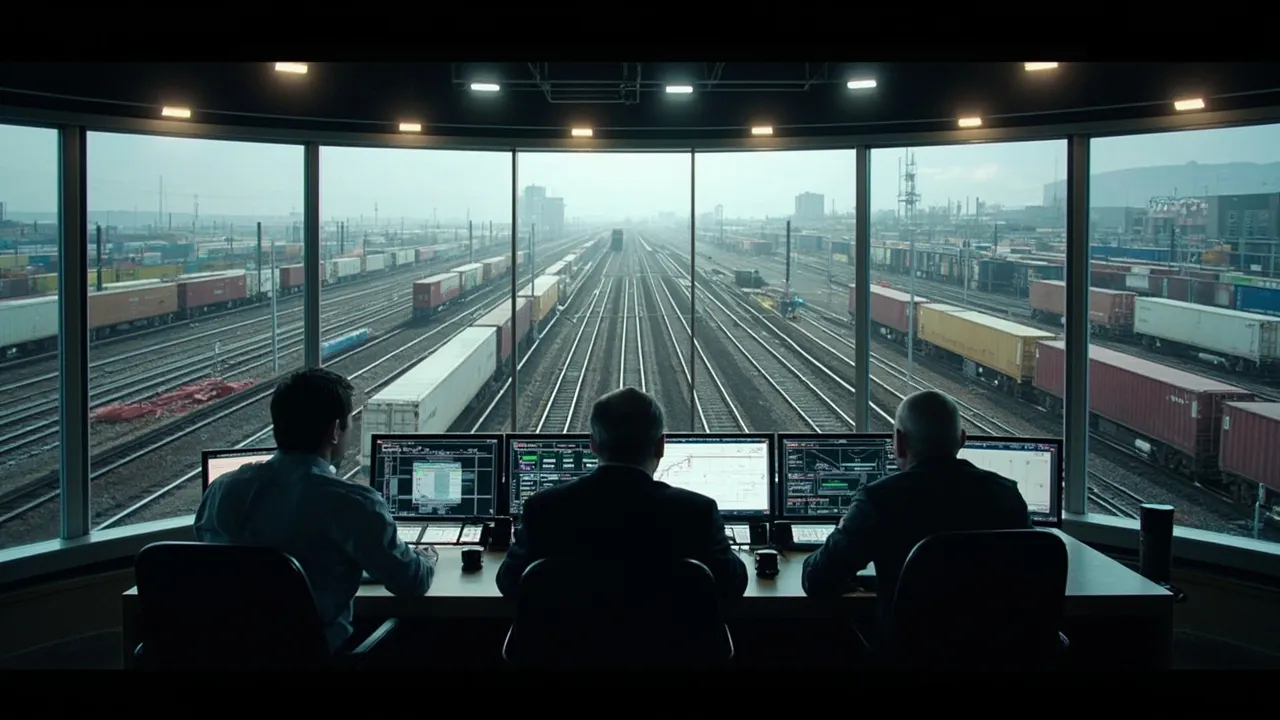
Diversify modal strategy. Rail and short-sea shipping capacity in Europe remains underutilized relative to road. Shippers who can shift volume to intermodal corridors — particularly on routes like Rotterdam-Duisburg, Antwerp-Lyon, or Baltic-Mediterranean — will gain cost and reliability advantages.
Lock in carrier capacity early. Spot market availability in European trucking will become increasingly volatile. Long-term contract commitments with performance guarantees provide more predictable capacity access.
Monitor the regulatory timeline. The IRU's third-country framework, ETS2 implementation, and autonomous vehicle regulation will all evolve through 2026–2028. Each development shifts the cost and capacity equation.
Navigating European Freight Complexity with CXTMS
Europe's driver shortage is a structural challenge that will reshape continental freight economics for the next decade. Shippers who treat it as a temporary disruption will be caught off guard by rising costs and tightening capacity.
CXTMS gives logistics teams the visibility and analytics to navigate this complexity — from modeling rate scenarios across European corridors to optimizing modal mix and benchmarking carrier performance in capacity-constrained markets.
Request a demo → to see how CXTMS helps shippers build resilient European freight strategies in the face of structural workforce challenges.