Autonomous Lift Trucks Are Creating a New Warehouse Job: Material-Flow Supervisor

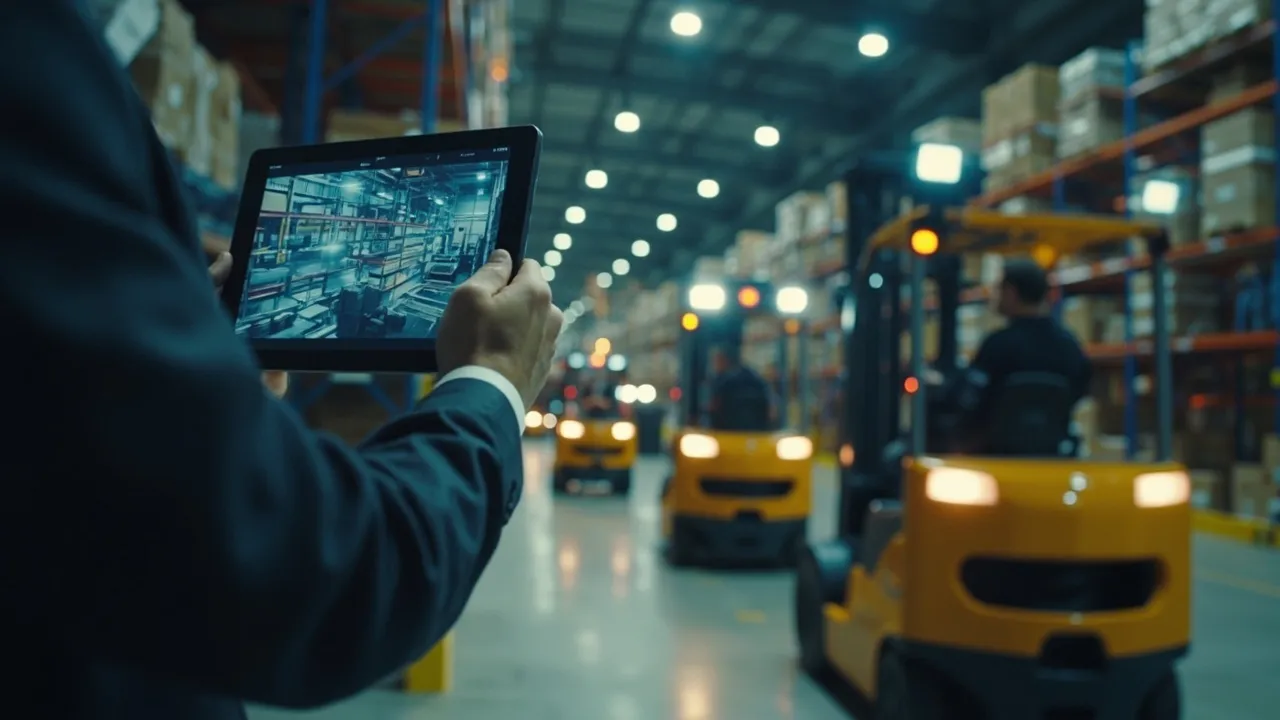
Autonomous lift trucks do not eliminate the need for warehouse expertise. They relocate it. Instead of spending an entire shift driving one vehicle, an experienced associate can supervise the flow of work across several vehicles, resolve exceptions, and keep automated missions aligned with outbound priorities.
That shift is producing a practical new warehouse role: the material-flow supervisor. It sits between frontline operations, automation support, and transportation planning. The job is less about steering and more about deciding what should move next, spotting why a mission stopped, and restoring flow without compromising safety.
From one operator per truck to one supervisor per flow
The traditional lift-truck model links labor capacity directly to equipment capacity: every active truck requires a qualified operator. Autonomous equipment changes that relationship. Routine, repeatable moves—such as dock-to-staging transfers, pallet replenishment, empty-pallet removal, and production-line delivery—can run as queued missions.
Modern Materials Handling reports that autonomous lift trucks are already reshaping workforce roles while helping warehouses address persistent labor shortages and improve safety. The important management lesson is that labor does not simply disappear from the process. It moves upstream, where one person can oversee a fleet and intervene when automation encounters conditions it cannot safely resolve.
That is valuable because warehouses are rarely static. A wrapped pallet overhangs its footprint. A trailer arrives late. An aisle is blocked by a manual cart. A pick wave changes priority. Automated vehicles can execute defined rules consistently, but people still provide context, judgment, and coordination across systems.
What a material-flow supervisor actually does
The role begins with mission management. The supervisor watches the queue, checks whether high-priority loads are moving on time, and prevents low-value tasks from consuming equipment needed for urgent replenishment or shipping. If the warehouse management system and transportation management system disagree about priorities, the supervisor makes the operational decision and documents the exception.
Daily responsibilities typically include:
- Reviewing mission queues, aging tasks, and missed service thresholds
- Monitoring blocked aisles, traffic congestion, and repeated route slowdowns
- Coordinating battery charging so too many vehicles do not go offline together
- Managing handoffs between autonomous trucks, conveyors, dock teams, and manual operators
- Recovering stalled missions within approved procedures
- Escalating sensor, network, mapping, or mechanical faults to technical support
- Recording recurring exceptions for layout, process, or master-data improvement
This is not merely a control-room job. Strong supervisors spend time on the floor verifying that a digital alert matches physical reality. They also coordinate with dispatch and dock leaders, because a perfectly optimized internal move has little value if the assigned door or trailer is not ready.
Training must define permission boundaries
An experienced forklift operator has a useful foundation, but fleet supervision requires additional skills. Training should cover mission logic, vehicle status codes, traffic rules, charging strategy, escalation paths, and the interaction between warehouse software and vehicle orchestration.
The permission model matters just as much as technical knowledge. A supervisor may be allowed to pause a mission, reassign a task, clear a verified obstruction, or place a vehicle out of service. That does not mean the person should bypass an interlock, enter a protected zone without lockout procedures, or diagnose high-voltage equipment.
Safety technology also remains essential in mixed environments. In August 2026, Modern Materials Handling reported that Amazon Germany would deploy a mobile personal-protection system on a fleet of Toyota forklifts. The example reinforces a broader point: automation governance must cover people, manual vehicles, and autonomous equipment sharing the same facility—not just the robot fleet.
Role-based access should therefore separate four levels of action: routine queue control, physical exception recovery, maintenance intervention, and system configuration. Each level needs documented authorization, refresher training, and an audit trail.
Measure flow, not robot activity
Vehicle uptime alone can create a false sense of success. A truck can be active while moving the wrong pallet, taking an inefficient route, or waiting repeatedly at a poorly designed handoff. The material-flow supervisor needs metrics tied to the warehouse outcome.
Start with five measures:
- Touches per load: Count every manual and automated handling event. Fewer unnecessary touches generally mean less delay and damage exposure.
- Intervention rate: Track human interventions per 100 missions, categorized by obstruction, load quality, system data, equipment fault, or process failure.
- Utilization: Measure productive mission time separately from charging, empty travel, congestion, and idle time.
- Safety events: Include emergency stops, near misses, protected-zone entries, route conflicts, and unsafe manual recovery attempts.
- Throughput: Compare completed pallet moves per hour with dock, replenishment, and order-cutoff requirements.
The trend matters more than a single shift. A falling intervention rate alongside stable safety performance and rising throughput indicates that the operation is learning. If throughput rises while near misses also rise, the gain is not sustainable.
Build the role before scaling the fleet
Warehouses should define supervision before moving from a pilot to a multi-vehicle deployment. Name the owner of mission priority, create a standard exception taxonomy, establish response-time targets, and decide which issues require maintenance, IT, safety, or operations involvement.
Workforce design deserves the same attention as equipment selection. Deloitte's 2026 Global Human Capital Trends, informed by input from 9,000 leaders across 76 countries, emphasizes designing the human-AI workforce and helping employees learn and apply new skills in the flow of work. Autonomous material handling is a concrete version of that challenge: technology performs repeatable movement while people supervise priorities, exceptions, and improvement.
The best candidate may be a veteran operator who understands traffic patterns, load quality, and dock pressure—not necessarily the person with the most technical credentials. Give that worker structured training, clear authority, and metrics that reward system flow rather than constant vehicle motion.
Connect warehouse movement to transportation execution
Autonomous lift trucks create the most value when their mission priorities reflect actual shipment commitments. CXTMS connects transportation plans, dock activity, and shipment status so logistics teams can see which freight must move first and manage exceptions before they become missed departures.
Ready to coordinate warehouse flow with transportation execution? Request a CXTMS demo and see how connected planning turns automation activity into reliable shipment performance.