Drone Delivery Goes Mainstream - FAA Rule Changes and the Last-Mile Revolution of 2026

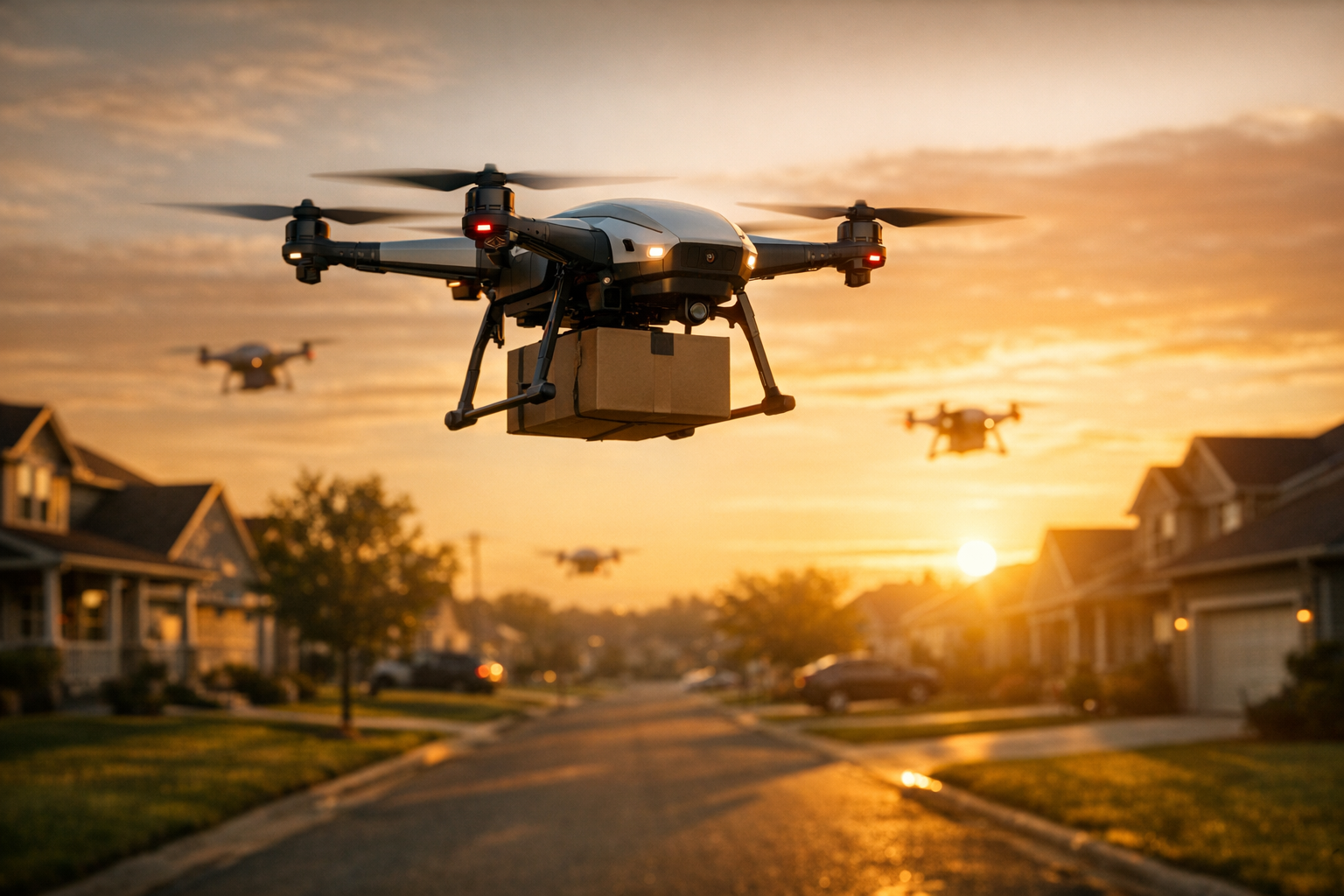
The skies above American suburbs are changing. What was once science fiction—autonomous drones delivering packages to doorsteps—is rapidly becoming logistics reality. Thanks to sweeping regulatory changes from the Federal Aviation Administration (FAA) and explosive market growth, 2026 marks the true inflection point for commercial drone delivery at scale.
The Regulatory Breakthrough: FAA's BVLOS Rule Overhaul
For years, drone delivery providers operated in regulatory limbo, forced to apply for individual waivers and exemptions to fly Beyond Visual Line of Sight (BVLOS)—the capability essential for commercial viability. Each waiver required months of review, limiting scalability and forcing operators into pilot programs rather than true commercial deployments.
That changed in August 2025 when the Trump administration proposed a comprehensive overhaul to BVLOS regulations. The proposed rule eliminates the case-by-case waiver process entirely, replacing it with two standardized authorization pathways designed to accelerate adoption while maintaining safety standards.
Part 108 Operating Permit allows operators to deploy fleets of up to 100 drones weighing 55 pounds or less, flying over suburban areas with single-family homes. The FAA anticipates most package delivery operations currently conducted under Part 107 rules will transition to this framework, unlocking scalability for last-mile delivery in residential neighborhoods.
Part 108 Operating Certificate supports heavier drones (up to 110 pounds) and operations over higher-density urban areas, including downtown locations and multifamily housing. While requiring more thorough FAA review and oversight, certificates open the door for high-capacity urban logistics networks that were previously off-limits.
Transportation Secretary Sean Duffy emphasized the transformative potential: "It's going to change the way that people and products move throughout our airspace. The way you get your products will fundamentally change."
The Market Is Taking Flight
The numbers back up the hype. The global drone delivery market is projected to reach $27.5 billion by 2031, growing at a compound annual growth rate (CAGR) of 32.68% driven by intensifying consumer demand for immediate fulfillment. The last-mile drone delivery segment alone is expected to hit $2.6 billion by 2025 with a 26.7% CAGR, according to market research.
Multirotor drones—the agile, helicopter-style craft ideal for short-range urban and suburban deliveries—account for 40% of the market share. Their maneuverability, vertical takeoff and landing capabilities, and compatibility with constrained landing zones make them the workhorse of last-mile aerial logistics.
Major retailers and logistics providers are already scaling operations. Walmart has expanded drone delivery to multiple U.S. cities, while companies like Zipline, Wing (Alphabet), and Amazon Prime Air have logged thousands of commercial deliveries. Benjamin Berlin, aviation counsel at Zipline, called the BVLOS rule "the unlock for the next generation of services" in drone operations.
Solving the "Last Meter" Challenge
McKinsey analysis highlights a critical challenge that remains: the "last meter" problem. Getting packages from aircraft to doorstep safely, securely, and without damaging property or startling residents requires more than just airborne autonomy. It demands precision landing technology, secure drop mechanisms, and consumer acceptance.
Innovations addressing this challenge include:
- Precision geofencing and AI navigation to avoid obstacles like power lines, trees, and pets
- Winch-based delivery systems that lower packages from hovering drones, eliminating risky landings
- Smart landing pads equipped with sensors and communication beacons to guide drones to exact drop points
- Package authentication via QR codes or geolocation to prevent theft and confirm delivery
McKinsey's research underscores that drone delivery economics become compelling when time-sensitive deliveries (medical supplies, hot food, urgent e-commerce) justify premium pricing. For routine parcels, drones must achieve cost parity with traditional last-mile methods—a threshold increasingly within reach as battery technology improves and fleet management software optimizes routing.
Multi-Modal TMS Integration: The Missing Link
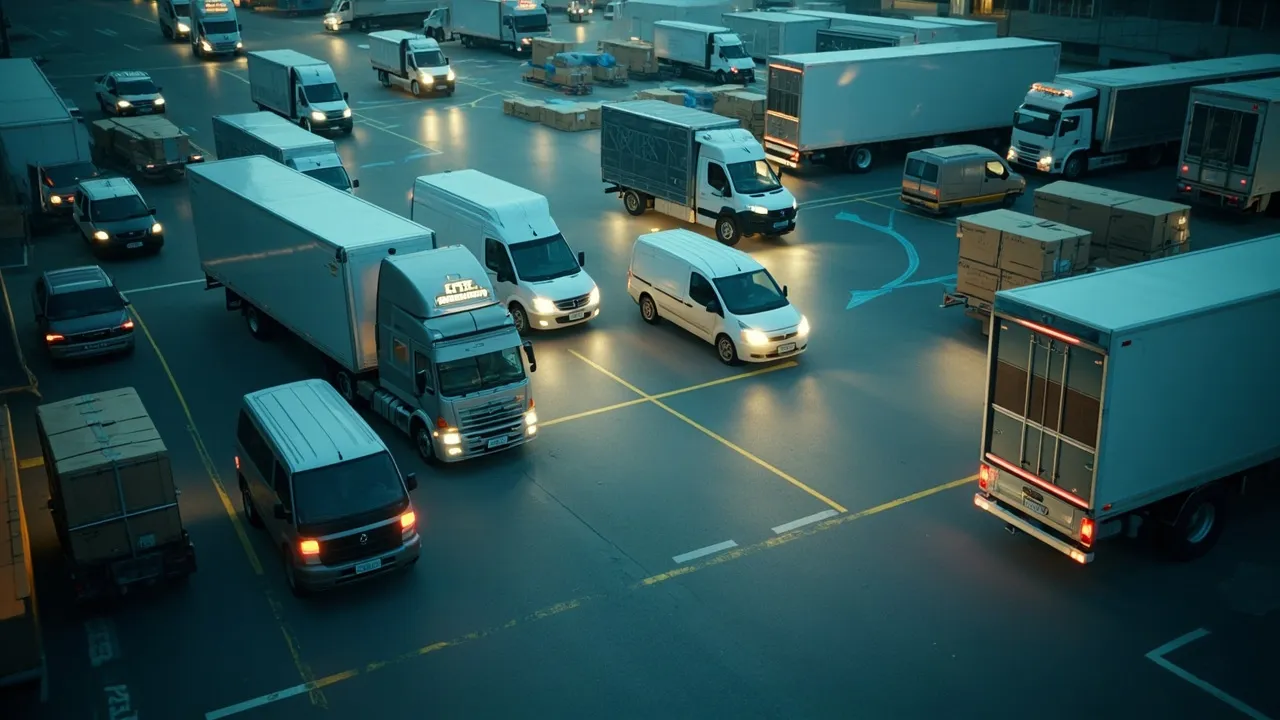
Drones won't replace trucks; they'll complement them. The real logistics revolution happens when Transportation Management Systems (TMS) seamlessly integrate aerial and ground-based delivery modes into unified networks.
CXTMS multi-modal planning incorporates drone legs for time-critical shipments while routing standard parcels via traditional carriers. The platform evaluates real-time variables—weather conditions, airspace restrictions, delivery urgency, package weight—to dynamically select optimal delivery modes.
Key integration capabilities include:
- Automated mode selection: AI-driven routing that assigns drone delivery when speed justifies cost
- Hybrid last-mile orchestration: Coordinating truck-to-drone handoffs at micro-fulfillment centers
- Real-time airspace monitoring: Integrating FAA flight restriction data to avoid no-fly zones
- Predictive ETA accuracy: Accounting for wind, battery charge, and air traffic to deliver precise arrival windows
For logistics managers, this means treating drones not as novelty but as another tool in the multi-modal toolkit—deployed strategically where they deliver measurable ROI.
The Road (and Sky) Ahead
While 2026 marks mainstream adoption, challenges remain. Battery life limits most drones to 40-60 km ranges, making them ideal for urban and suburban last-mile but unsuitable for long-haul freight. Weather sensitivity restricts operations during heavy rain, high winds, or snowstorms. And public acceptance—particularly around noise, privacy, and safety—requires ongoing community engagement.
Yet the trajectory is clear. As the FAA finalizes BVLOS rules (public comments closed in October 2025, with final regulations expected in 2026), regulatory certainty will unlock billions in investment. Operators will scale from hundreds of deliveries to millions. Battery technology will extend range. And TMS platforms like CXTMS will make aerial logistics as routine as dispatching a delivery van.
Transportation Secretary Duffy's vision—"the way you get your products will fundamentally change"—is no longer aspirational. It's happening now, overhead, one delivery at a time.
Ready to future-proof your last-mile strategy with multi-modal TMS capabilities? Contact CXTMS for a demo of how our platform integrates ground, air, and emerging delivery technologies into a unified logistics network.