Digital Twins Are Finally Becoming Practical Warehouse Tools, Not Conference Fodder

For years, digital twins in warehousing sounded suspiciously like conference-stage poetry.
Interesting idea, vague ROI, too much integration pain.
That excuse is getting weaker.
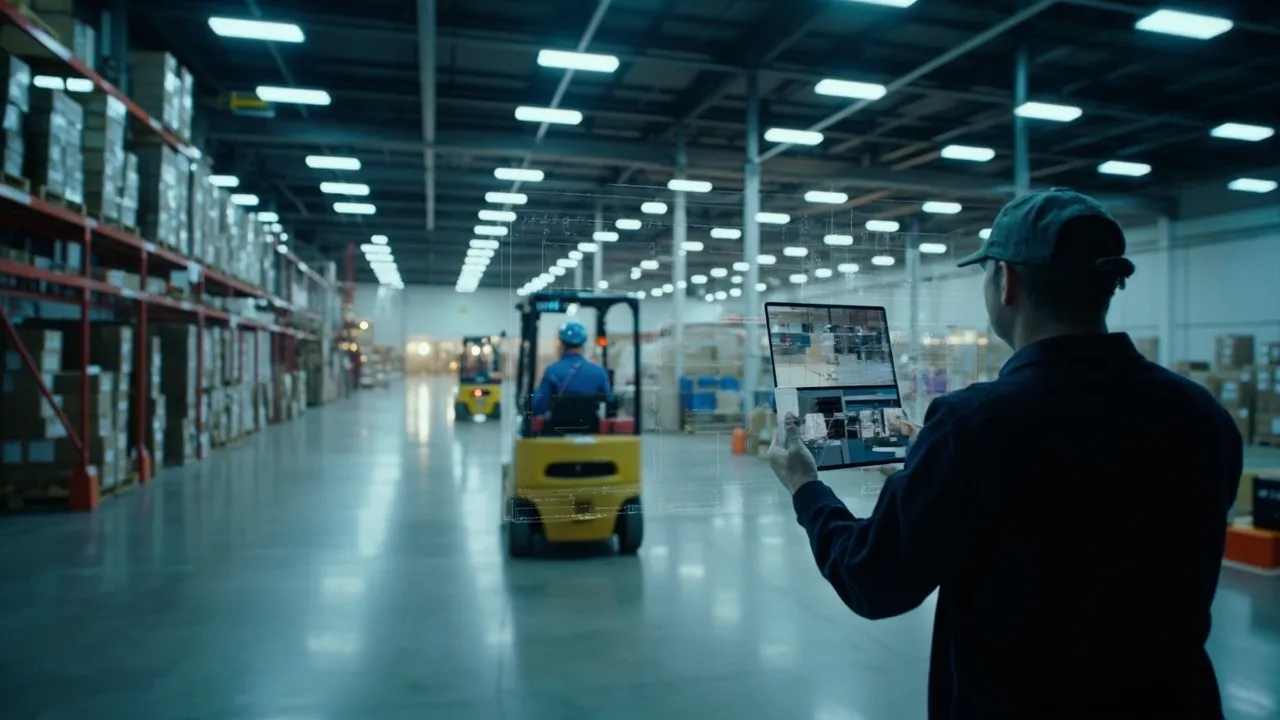
Modern warehouse digital twins are starting to look less like futuristic theater and more like a practical operations tool. The big reason is simple: they are no longer built only from static design files and wishful thinking. They are being fed by machine vision, robotics, sensor data, warehouse management systems, and APIs that keep the model anchored to what is actually happening on the floor.
That shift matters because warehouses do not need another pretty dashboard. They need better decisions around inventory accuracy, slotting, congestion, labor balancing, and exception handling.
A recent Modern Materials Handling article makes the case clearly. In one real deployment, luxury rug manufacturer Jaipur Living used a digital-twin-based cycle counting solution to improve inventory accuracy by 100% and increase cycle counting speed by 40% after struggling with average bin accuracy near 50% and overall building accuracy of only 70% to 75%. That is not hype. That is operational cleanup with teeth. Read the source here: Digital twins come of age in the warehouse.
The market signal is moving the same way. The same MMH report cites research estimating the global digital twin market at nearly $36 billion in 2025, with expectations to reach $328 billion by 2033. Separately, Mordor Intelligence says manufacturing held 35.1% of digital twin market demand in 2025, while cloud deployments are growing at a 31.2% CAGR, which tells you adoption is expanding because the economics and deployment models are getting more practical, not less. That report is here: Digital Twin Market Size, Share, Growth Analysis & Industry Trends Report, 2031.
So yes, the technology is real now. But the smarter question is where warehouses should use it first.
Inventory validation is the most obvious win
The first practical use case is inventory truth.
Most warehouse systems are good at recording what should be true. They are much worse at proving what is physically true in the building right now. That gap creates all the usual pain: ghost inventory, misplaced stock, delayed picks, emergency recounts, and angry humans hunting for product that the system swears is right there.
Digital twins close that gap when they combine visual ground truth with WMS data. Instead of trusting a logical record by default, operators can compare system data against what cameras, robots, or scanning layers actually see on shelves and in racks.
That is why the Jaipur Living example matters so much. The win was not some abstract innovation trophy. It was better inventory integrity and faster counting in a dense, fast-moving operation. Warehouses that still treat cycle counting as a labor tax should pay attention.
Slotting and congestion are next, because bad layouts bleed money
Once the digital twin reflects reality reliably, the next win is flow.
Slotting mistakes are expensive precisely because they do not look dramatic. A few poor item placements here, a little too much travel there, repeated aisle congestion during peak periods, and suddenly labor productivity gets shaved to death one inefficient step at a time.
Digital twins let operators test those conditions before rearranging half the building. They make it easier to model travel paths, identify congestion points, and see how changes in product mix or replenishment timing affect throughput.
That lines up with a broader transportation and logistics software trend. Logistics Management reports that shippers are demanding more simulation capability as supply chains grow more complex, and that software platforms are being pushed beyond basic execution into scenario testing and orchestration. Read that here: TMS 2026: 9 trends that define the next phase of transportation tech.
Warehouses should think the same way. If you can simulate congestion, labor demand, or inbound surges before they wreck the shift, you are no longer just reacting better. You are planning smarter.
Labor balancing gets more useful when the model is live
This is where digital twins stop being an engineering project and start becoming a management tool.
A live digital twin can help supervisors test questions that matter in the next hour, not just next quarter. What happens if receiving volume spikes at noon? What if six workers get moved into a specific aisle? What if a fast-moving SKU cluster shifts and pick density changes across zones?
That matters because labor planning in many warehouses is still weirdly primitive. Teams have mountains of data but still make staffing decisions with a blend of intuition, lagging reports, and crossed fingers. A real digital twin gives them a way to see likely bottlenecks before the pain arrives.
No, it does not replace judgment. It makes judgment less blind.
Do not turn the pilot into an IT science fair
This is where companies screw it up.
They hear “digital twin” and immediately imagine a giant transformation program with twelve vendors, eighteen integrations, and a PowerPoint budget large enough to annoy God.
That is not the move.
A realistic warehouse pilot should stay painfully focused:
- Pick one facility, not the whole network.
- Start with one operational pain point, ideally inventory validation or cycle counting.
- Use existing WMS and sensor data wherever possible.
- Define success in hard metrics like accuracy, count speed, travel reduction, or labor hours saved.
- Make operations own the outcome, not just IT.
If the pilot cannot prove value in one of those areas, scale is a fantasy.
But if it can, then expansion into slotting optimization, congestion analysis, labor balancing, or broader scenario planning starts to make sense.
The practical era has arrived
Warehouse digital twins are finally earning the right to be judged like real tools.
That means the conversation should get harsher and better. Less “look what is possible,” more “show me the operational delta.” Less obsession with flashy 3D visuals, more focus on accuracy, flow, and labor productivity.
The warehouses that win with digital twins in 2026 will not be the ones with the prettiest demos. They will be the ones that use the technology to clean up ugly operational truths faster than their competitors.
That is the whole game.
If your team wants better warehouse visibility, cleaner execution data, and a stronger operational foundation for smarter decisions, book a CXTMS demo and see how modern logistics platforms support practical transformation instead of empty theater.