Contactless Delivery Is Becoming a Cost-Control Lever for Big-and-Bulky Retail

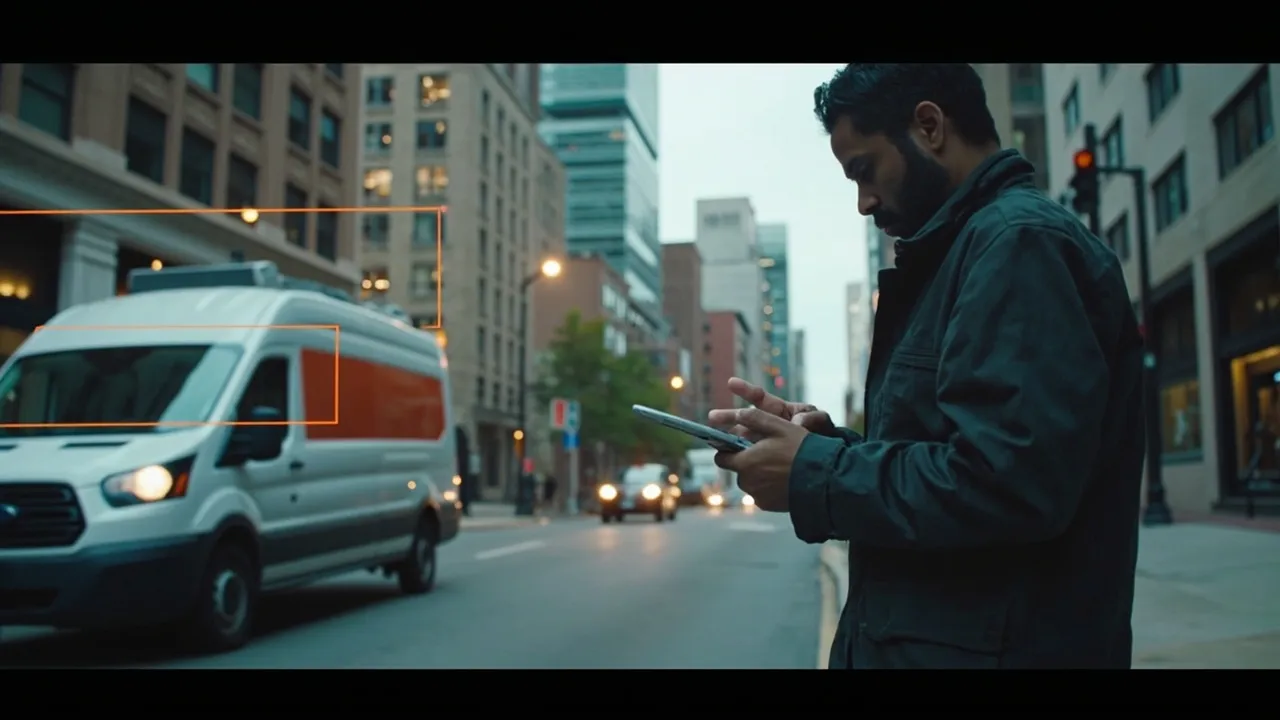
Big-and-bulky retail delivery has always carried an uncomfortable truth: the most expensive minutes are often the least visible ones. A route may look clean in the planning system, but the real margin disappears at the doorstep when a customer expects threshold service, a driver agrees to “just bring it inside,” or a delivery that should take 15 minutes turns into a 45-minute stop.
That is why contactless delivery is becoming more than a pandemic-era convenience. For furniture, mattresses, appliances, fitness equipment, and other oversized retail categories, it is turning into a cost-control lever. The operational value is not simply that the driver avoids entering the home. The bigger win is that the delivery promise becomes unambiguous.
Mattress Firm’s national rollout is a useful signal. According to Supply Chain Dive, the retailer introduced free contactless delivery after testing the model in Charlotte, and roughly 25% of its deliveries are now contactless. The service contrasts with in-home delivery, which Mattress Firm prices at $109.99 or more. That creates a clear value exchange: customers can choose free delivery if they accept a front-door drop with no home entry, or pay for the labor-intensive white-glove experience.
For big-and-bulky operators, that clarity matters because doorstep ambiguity is expensive. Mattress Firm executives described the old “threshold” model as a problem because a stop expected to take 15 minutes could stretch to 45 minutes when customers persuaded drivers to help with setup. One overrun is annoying. Repeated across a daily route, it destroys arrival windows, forces dispatchers into exception management, increases overtime, and damages customer satisfaction for everyone scheduled later in the day.
Contactless delivery gives retailers a way to segment service levels before the truck ever leaves the dock. The customer is not just buying a product; they are selecting a delivery workflow. That selection should drive the route plan, labor estimate, communication cadence, proof-of-delivery requirement, and exception rules. In other words, contactless delivery only works when it is treated as an operating model, not a checkout label.
The economics are compelling because last mile is already the costliest part of fulfillment. Inbound Logistics notes that last-mile delivery can account for up to 53% of total shipment cost. Big-and-bulky retail amplifies that pressure because deliveries often require larger vehicles, two-person crews, tighter appointment windows, and higher liability exposure inside the home. Removing unnecessary minutes from each stop can therefore have an outsized effect on route productivity.
The first lesson is that communication has to move upstream. Mattress Firm’s rollout initially ran into customer satisfaction issues because some shoppers still believed “free delivery” included setup. Once sales messaging improved and customers understood that free meant contactless, satisfaction began to normalize. That is the part logistics teams should not miss. A delivery model can be operationally sound and still fail if the promise is not communicated consistently at checkout, confirmation, reminder, and driver-arrival stages.
For retailers shipping sofas, treadmills, refrigerators, grills, patio furniture, or mattresses, the playbook should start with explicit service definitions. “Contactless” should specify exactly where the item will be placed, whether a signature is required, whether the driver will ring the bell, what happens in apartments or gated communities, and what photo evidence will be captured. “Threshold,” if offered, should have equally strict boundaries. “Room of choice” and “white glove” should be priced and scheduled as premium services, not accidentally granted at the curb.
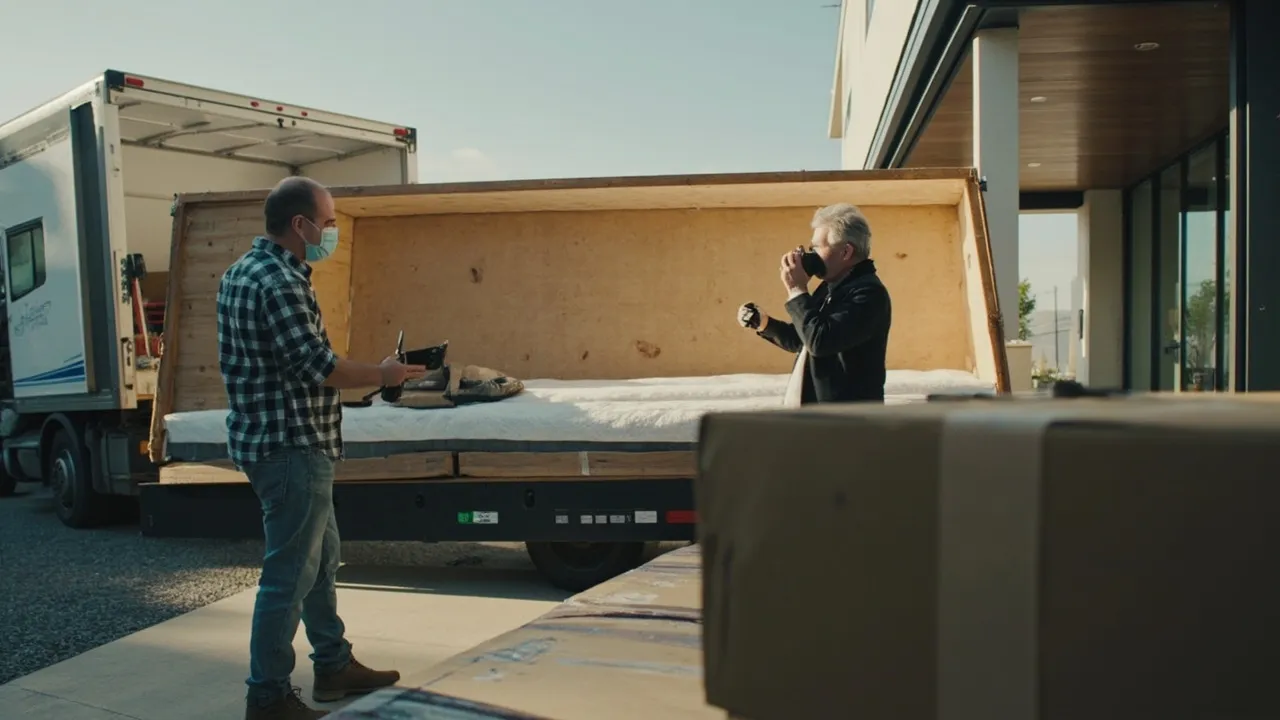
The second lesson is that proof of delivery becomes the substitute for human handoff. In parcel logistics, a porch photo is routine. In big-and-bulky delivery, the proof standard needs to be stronger because the product value is higher and the customer experience is more sensitive. Drivers should capture location, item condition, timestamp, GPS confirmation, and any access constraints. If a 200-pound mattress, appliance, or sectional is left outside a home, the record needs to be strong enough to resolve claims quickly.
The third lesson is that contactless delivery should be tied directly to route design. Stops with no home entry should be modeled differently from white-glove stops. They may require less dwell time, fewer setup tasks, and different sequencing logic. A TMS should allow planners to separate those commitments instead of averaging them into one generic residential delivery profile. Otherwise, the cost savings disappear into bad assumptions.
There is also a driver productivity benefit. Clear service boundaries reduce conflict at the door. Drivers do not have to negotiate whether they are allowed to enter the home, move furniture, climb extra stairs, or perform unpaid setup. The system, the customer message, and the driver instructions all say the same thing. That protects schedule adherence and makes training easier across company fleets and third-party delivery partners.
For retailers, the real opportunity is not to push every customer into contactless delivery. Some customers will still want and pay for in-home setup, haul-away, installation, or room-of-choice service. The opportunity is to stop giving premium labor away for free because the delivery promise was vague.
CXTMS helps logistics teams turn those promises into executable workflows: service-level rules, customer notifications, route constraints, proof-of-delivery capture, and exception handling in one operational layer. If your final-mile program still depends on drivers interpreting ambiguous instructions at the doorstep, it is time to tighten the model.
Request a CXTMS demo to see how clearer delivery commitments can protect cost, capacity, and customer experience across big-and-bulky retail logistics.