China's Reverse Migration: Why Manufacturers Are Moving Production Back Despite Tariffs

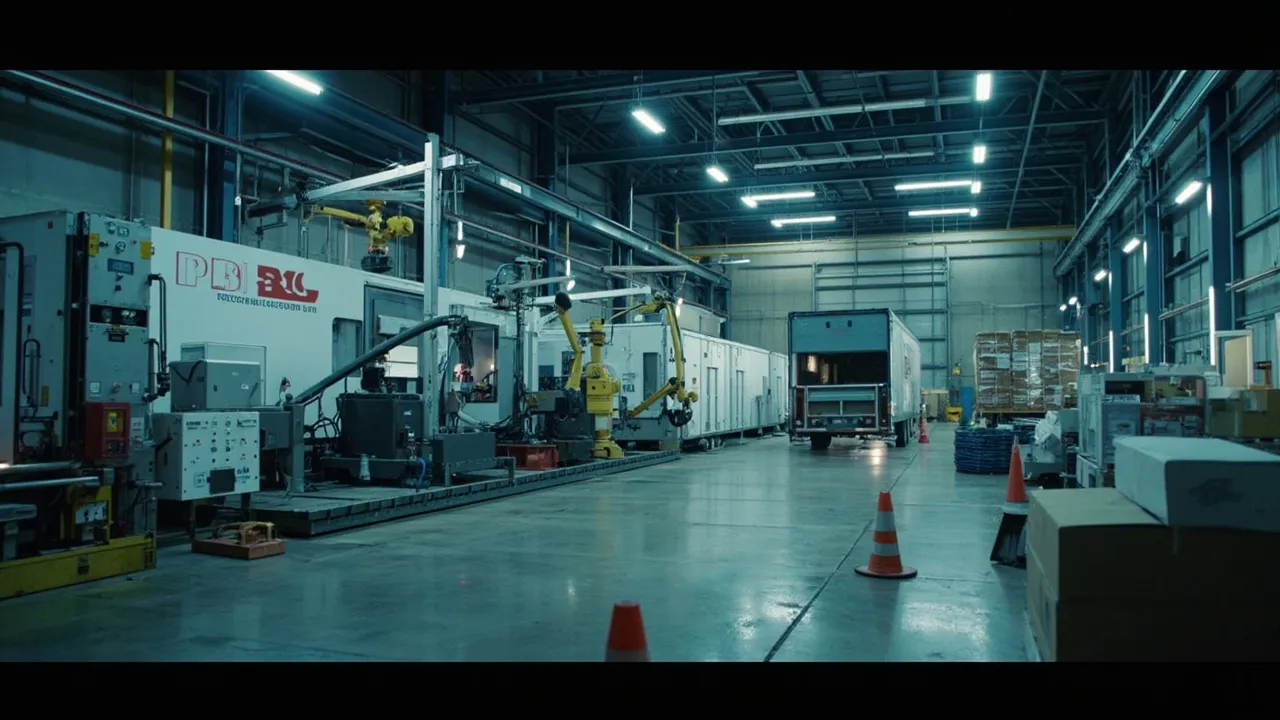
Up to 50% of production that moved from China to Southeast Asia could swing back. That's not speculation from a think tank — it's a direct estimate from Dimerco Express Group, one of Asia's largest freight forwarders, based on what they're seeing in booking data right now.
The great China exodus was supposed to be permanent. Tariffs of 60% or more on Chinese goods, first imposed in 2018 and escalated through 2025, sent manufacturers scrambling to Vietnam, Thailand, Indonesia, and India. But in early 2026, a counterintuitive trend is emerging: production is flowing back to China — not because tariffs disappeared, but because the alternatives turned out to be harder than anyone expected.
The Southeast Asian Promise vs. Reality
On paper, Southeast Asia checks every box. Lower labor costs. Generous tax incentives. Proximity to growing consumer markets. Vietnam alone absorbed billions in foreign direct investment as companies rushed to set up alternative production lines.
The reality on the ground tells a different story. According to Dailyoilfutures reporting on the reverse migration trend, manufacturers that relocated to Southeast Asia are now facing significant logistics problems driven by limited freight capacity, port congestion, and infrastructure that simply hasn't kept pace with the manufacturing influx.
Vietnam's Cat Lai port — the country's busiest container terminal — regularly experiences vessel queuing delays of 3–5 days during peak season. Indonesia's Tanjung Priok port faces chronic congestion that has prompted the government to accelerate development of the newer Patimban port. And across the region, inland transportation networks remain fragmented, with limited rail connectivity forcing heavy reliance on trucking over inadequate road systems.
Why Total Landed Cost Favors China for Complex Goods
The tariff math looks straightforward: a 60% duty should make Chinese production uncompetitive. But total landed cost tells a more nuanced story.
China's logistics infrastructure is among the most developed in the world. The country operates 7 of the world's 10 busiest container ports, with automated terminals that process vessels in hours rather than days. Its high-speed rail freight network connects inland manufacturing hubs to coastal ports with predictable transit times. And its supplier ecosystem for complex manufactured goods — electronics, auto parts, precision machinery — is unmatched in depth and specialization.
When manufacturers calculate the full picture — including higher defect rates from less experienced workforces, longer and less reliable transit times, customs delays across multiple jurisdictions, and the cost of managing split supply chains — the tariff premium on Chinese goods often narrows dramatically. For complex, multi-component products, total landed cost from China can be just 8–15% higher than from Southeast Asian alternatives, a gap that reliable delivery schedules and lower quality-control costs can easily close.
The Tariff Engineering Detour
China's supply chain isn't just pulling production back — it's also routing around tariffs entirely. As CNBC reported in January 2026, Chinese companies have rerouted manufacturing through Southeast Asian countries including Vietnam to offset tariffs, a shift that continues to benefit China's export machine even as it faces record duties.
The pattern is now well-documented: Chinese firms establish assembly operations in Vietnam or Malaysia, import 70–80% of components from China, perform minimal final assembly, and ship finished goods to the U.S. under the host country's more favorable tariff treatment. The U.S. government has begun cracking down on this transshipment strategy with new origin-verification rules, but enforcement remains spotty and the practice continues at scale.
This creates a two-track reality. Some production genuinely returns to China because it's operationally superior. Other production never really left — it just added a Southeast Asian waypoint to the shipping route.
Dual-Sourcing Becomes the Default Strategy
Smart manufacturers aren't making an all-or-nothing bet. The emerging playbook is dual-sourcing: maintaining production capacity in both China and one or two Southeast Asian countries, then dynamically allocating orders based on current conditions.
This approach requires sophisticated logistics orchestration. Companies need real-time visibility into production schedules across multiple countries, the ability to compare total landed costs dynamically as freight rates and exchange rates shift, and the flexibility to reroute shipments when port congestion or customs delays hit one origin harder than another.
According to Dimerco's 2026 outlook, companies preparing for this new reality are taking several concrete steps:
- Vetting suppliers across multiple countries with structured quality and compliance programs
- Using bonded warehouses and free trade zones in Singapore, Malaysia, and India to position inventory closer to end markets
- Expanding cross-border trucking between China, Vietnam, and Thailand to avoid port congestion
- Securing freight capacity earlier as intra-Asian trade lanes tighten
What This Means for Supply Chain Technology
The reverse migration trend — and the dual-sourcing strategy it's driving — puts enormous pressure on supply chain management systems. Legacy TMS platforms built for point-to-point shipping can't handle the complexity of multi-origin sourcing with dynamic allocation.
Modern platforms need to support multi-country origin management with real-time cost comparison, automated customs documentation across different regulatory regimes, carrier management spanning ocean, air, rail, and cross-border trucking modes, and exception handling that automatically reroutes when one supply chain leg fails.
The companies that will thrive in this fragmented landscape aren't the ones that picked the "right" country — they're the ones with the technology infrastructure to shift between countries fluidly as conditions change.
The Bottom Line
The great decoupling from China was always more narrative than reality. China's manufacturing ecosystem — its infrastructure, its supplier depth, its logistics reliability — was built over decades and can't be replicated in a few years of rushed investment. Southeast Asia will continue growing as a manufacturing hub, but it will complement China rather than replace it.
For shippers and logistics managers, the takeaway is clear: plan for complexity, not simplicity. The future isn't single-source. It's multi-origin, dynamically optimized, and entirely dependent on having the right technology to manage it.
Managing multi-origin supply chains across Asia? Contact CXTMS to see how our platform handles multi-country logistics orchestration with real-time cost optimization and automated compliance.