Best Parcel Audit Solutions for FedEx and UPS: A Shipper's Comparison Guide for 2026

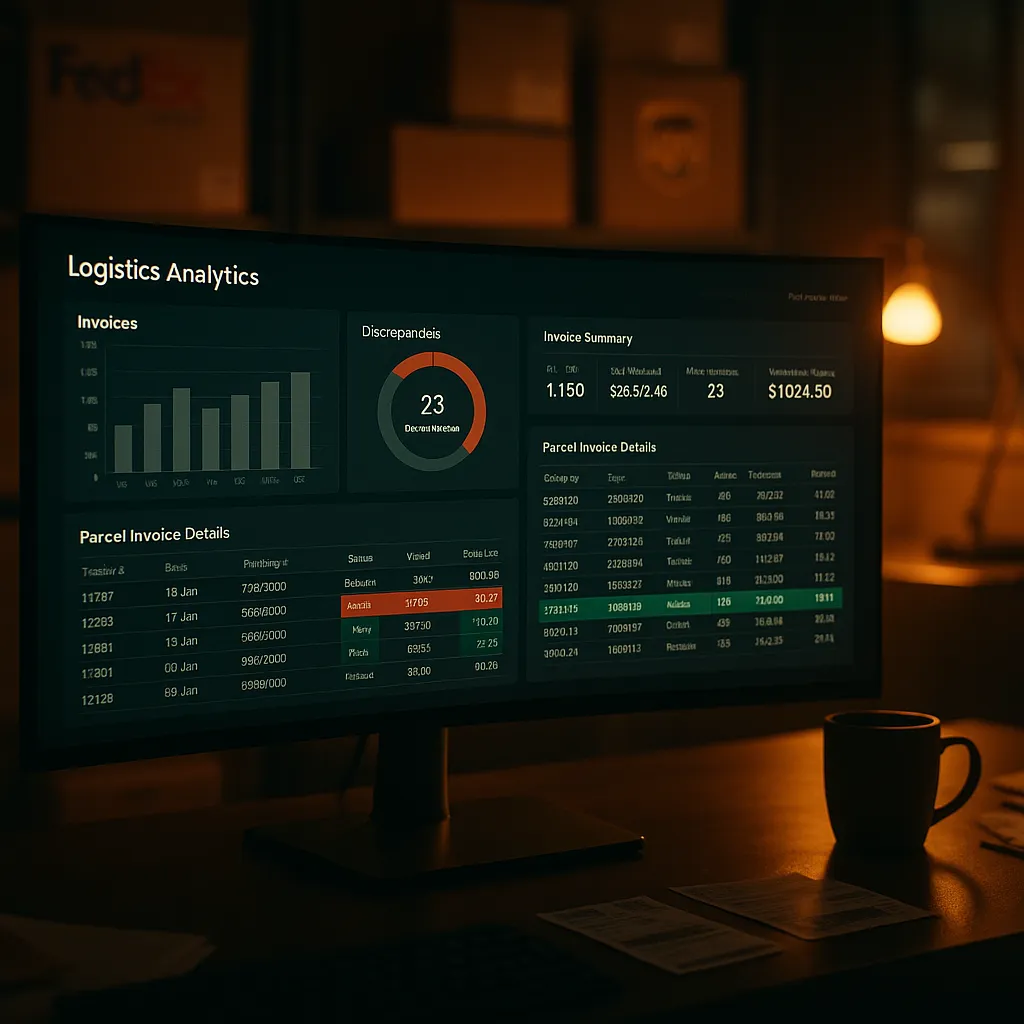
With FedEx and UPS both implementing a 5.9% general rate increase (GRI) for 2026—alongside surcharge hikes that push the real cost impact well above that headline number—shippers have never had more reason to scrutinize every line on their carrier invoices. Ground parcel rates hit 34% above the 2018 baseline during Q4 2025, driven by a 13% quarter-over-quarter surge in average surcharges assessed by carriers, according to the TD Cowen/AFS Freight Index reported by FreightWaves.
The message is clear: if you're not auditing your parcel invoices in 2026, you're leaving money on the table. This guide breaks down the types of parcel audit solutions available, the capabilities that matter most for FedEx and UPS shippers, and how to choose the right platform for your operation.
Why Parcel Audit Matters More Than Ever in 2026
The 5.9% GRI tells only part of the story. Both FedEx and UPS have layered on surcharge increases that disproportionately hit certain shipping profiles. UPS residential ground surcharges jumped from $6.10 to $6.50 per package, additional handling fees rose to $46.50 for weight-based charges, and delivery area surcharges climbed across nearly every zone, as Supply Chain Dive reported.
Meanwhile, carriers have introduced blanket demand surcharges during peak periods—even when actual volume growth was a modest 5% year-over-year—and fuel surcharges grew 26% while diesel prices rose only 4.7%. These structural pricing shifts mean the gap between what shippers should pay and what they actually pay is widening.
Industry benchmarks consistently show that automated parcel auditing recovers 2–5% of total parcel spend through a combination of service failure refunds, billing error corrections, and surcharge validation. For a mid-size shipper spending $5 million annually on parcel, that's $100,000 to $250,000 in recovered revenue—every year.
Three Types of Parcel Audit Solutions
1. Manual and Spreadsheet-Based Auditing
The most basic approach involves downloading carrier invoices and reviewing them against tracking data in spreadsheets. While it costs nothing upfront, manual auditing catches only the most obvious errors—typically late delivery refunds. It's impractical for shippers processing more than a few hundred packages per week and misses the surcharge discrepancies where the biggest savings hide.
Best for: Very small shippers with fewer than 200 packages per week and simple shipping profiles.
2. Third-Party Audit Services
Traditional parcel audit providers operate on a gain-share model—they review your invoices, file claims on your behalf, and take a percentage (typically 30–50%) of the recovered savings. These services require minimal effort from shippers but offer limited visibility into the underlying data and analytics.
Best for: Mid-size shippers who want hands-off cost recovery without investing in technology. Key considerations include whether the provider audits both FedEx and UPS equally well, the breadth of error types they catch, and whether they provide analytics beyond simple refund reports.
3. AI-Powered Audit Platforms
Modern audit software uses machine learning to scan every invoice line against contracted rates, dimensional weight calculations, zone assignments, and service-level commitments in real time. These platforms automate claim filing, track recovery, and provide actionable analytics on shipping patterns and cost drivers.
Best for: High-volume shippers seeking both cost recovery and strategic intelligence. AI-powered platforms typically recover more than traditional audit services because they can identify subtle patterns—like systematic zone misclassifications or recurring dimensional weight overcharges—that manual review misses entirely.
Key Capabilities to Evaluate
When comparing parcel audit solutions for your FedEx and UPS operations, prioritize these capabilities:
Carrier Coverage and Certification
Not all audit platforms handle FedEx and UPS with equal depth. Some solutions are built primarily around one carrier's data format and invoice structure. Look for platforms that support both carriers' full surcharge matrices, including the newer dimensional-based surcharges and demand charges introduced in 2025–2026.
Service Failure and Guarantee Claim Filing
FedEx and UPS both offer money-back guarantees on certain services, but the window for filing claims is narrow—typically 15 days. Automated platforms that file claims within hours of a service failure consistently recover more than those that batch-process weekly.
Surcharge and Rate Validation
This is where the biggest savings hide in 2026. Your audit solution should validate every surcharge against your negotiated contract terms, flag discrepancies in fuel surcharge calculations, and catch dimensional weight errors. With carriers implementing new cubic pricing logic this year, accurate dimensional auditing is more critical than ever.
Analytics and Business Intelligence
The best audit platforms go beyond refund recovery to provide shipping intelligence: lane-level cost analysis, carrier performance scorecards, surcharge trend reporting, and contract optimization recommendations. This data transforms auditing from a cost recovery exercise into a strategic procurement tool.
Integration Capabilities
Your audit solution should integrate with your TMS, ERP, and existing shipping platforms via API. Real-time data exchange enables proactive cost management rather than reactive claim filing.
How FedEx-Certified vs. UPS-Certified Auditors Differ
FedEx and UPS structure their rates, surcharges, and service guarantees differently, which matters for audit accuracy:
-
FedEx uses a more granular surcharge structure with distinct pricing tiers for Express, Ground, and Home Delivery services. FedEx's address correction fees and delivery area surcharges are assessed differently than UPS equivalents, and their fuel surcharge tables update on different schedules.
-
UPS applies a unified rate structure across more service types but has more complex zone-based pricing for additional handling and delivery area surcharges. UPS's dimensional weight divisor and minimum billable weight thresholds have diverged from FedEx's in recent years.
A parcel audit solution that treats both carriers identically will miss carrier-specific billing nuances. The most effective platforms maintain separate audit rule engines for each carrier, updated continuously as rate changes take effect.
ROI Benchmarks: What Top Solutions Recover
Based on industry data from multiple audit providers, here's what shippers can typically expect:
| Recovery Category | % of Total Spend |
|---|---|
| Late delivery / service failure refunds | 0.5–1.5% |
| Billing errors and overcharges | 0.5–1.0% |
| Surcharge validation recoveries | 0.5–1.5% |
| Duplicate charge detection | 0.1–0.3% |
| Total typical recovery | 2–5% |
The recovery rate varies significantly by shipping profile. Shippers with high residential delivery volumes, oversized packages, or complex multi-service operations tend to recover at the higher end of the range because their invoices contain more surcharge complexity and error-prone calculations.
How CXTMS Integrates Audit Data into Freight Management
Parcel audit data is most powerful when it feeds into your broader transportation management strategy. CXTMS integrates with leading parcel audit platforms to pull recovered cost data, surcharge analytics, and carrier performance metrics directly into your freight management dashboard.
This integration enables shippers to:
- Benchmark parcel costs against LTL and regional carrier alternatives using actual post-audit cost data rather than list rates
- Identify mode-shift opportunities where audit data reveals that certain shipment profiles cost less via LTL consolidation than individual parcel
- Strengthen carrier negotiations with audit-verified data on surcharge frequency, service failure rates, and billing accuracy by carrier
- Track total logistics spend across parcel, LTL, truckload, and ocean in a single platform
As Mingshu Bates, chief analytics officer at AFS Logistics, noted in the latest TD Cowen/AFS report: "Record-high rates do not spell good news for shippers, but there is still room for pricing concessions if shippers know where to look and what buttons to push."
A parcel audit solution gives you the data to know exactly which buttons to push—and CXTMS gives you the platform to act on it across your entire supply chain.
Ready to stop overpaying on parcel shipping? Request a CXTMS demo to see how integrated freight management and parcel audit intelligence can reduce your total shipping costs in 2026.