AI-Generated Return Fraud Is Costing Retailers Billions: How Logistics Teams Are Fighting Back in 2026

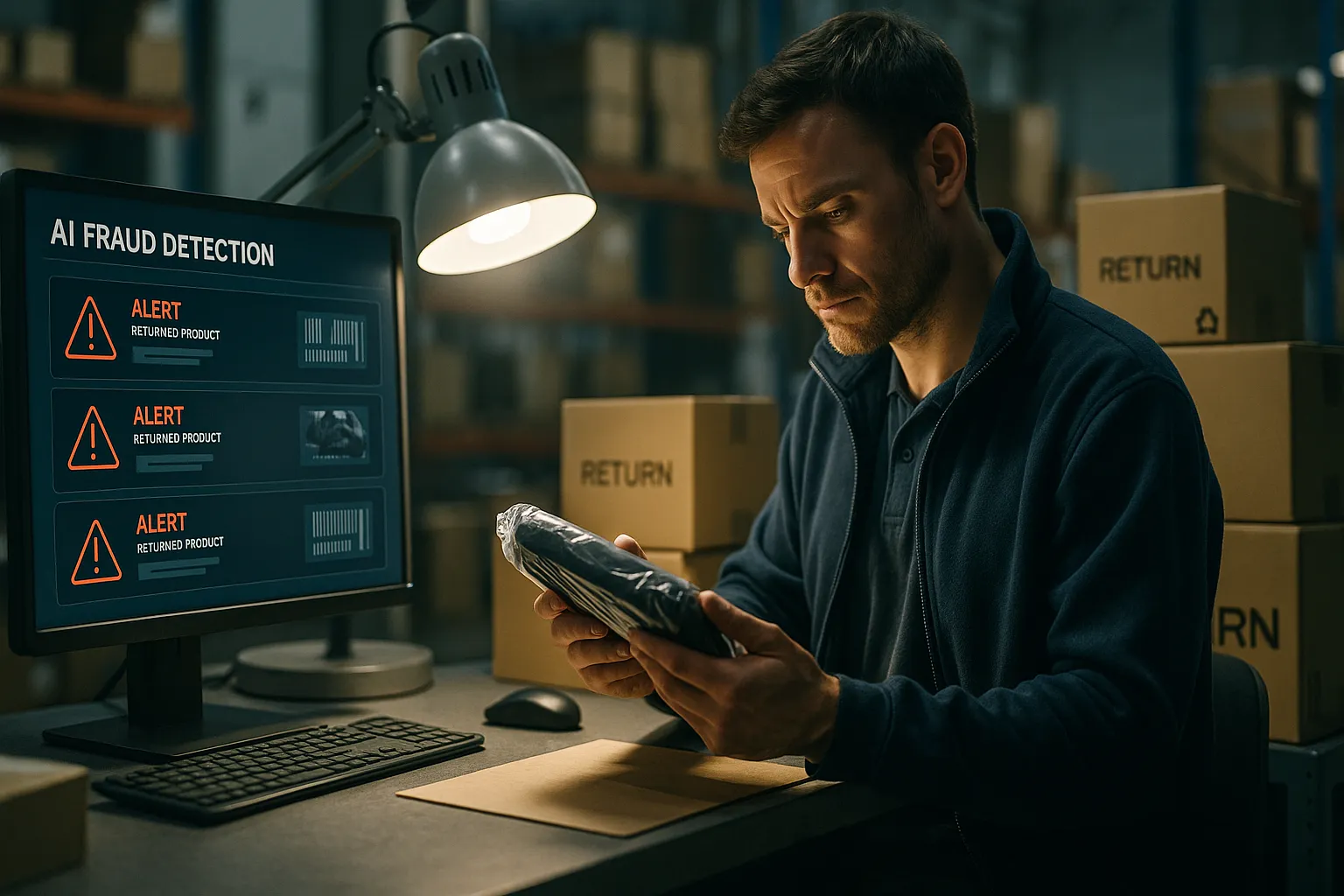
Ecommerce returns have always been expensive. In 2026, they are expected to cost brands $379 billion, according to eMarketer estimates — and a fast-growing share of that total is outright fraud. The National Retail Federation reports that approximately 9% of all retail returns are fraudulent, translating to more than $100 billion in annual losses across the industry. But a new and far more sophisticated threat is emerging: fraudsters armed with generative AI tools are creating fake damage photos to steal refunds at scale.
The New Threat: AI-Generated Damage Photos
Earlier this month, Scott Tannen, CEO of premium home goods brand Boll & Branch, noticed something suspicious about a customer service ticket. A shopper claimed a set of $489 sheets arrived torn and submitted photographic evidence. The problem? The tear didn't resemble how cotton actually frays — and one image even carried a visible AI watermark.
After reviewing recent tickets, Tannen's team discovered multiple instances of AI-generated damage photos. And Boll & Branch is far from alone. Fraud prevention platform Yofi reports that AI-powered return scams have "exploded overnight," going from isolated incidents to daily occurrences across thousands of merchant accounts. Deepfake detection firm Pindrop estimates that three in 10 retail fraud attempts are now AI-generated, with some large retail chains reporting more than 1,000 AI bot-driven fraud calls per day.
The mechanics are simple and alarming. A bad actor buys a high-value product online, then uses generative AI tools to create realistic images showing the product as damaged, defective, or incorrect. They submit the fake photos through automated return portals, receive a refund, and keep the original product. The entire process can be completed in minutes without any human interaction.
Why Traditional Return Processes Cannot Keep Up
For years, ecommerce brands built their return and refund processes on a foundation of trust. When a customer reported a damaged item and submitted a photo, customer service teams approved refunds quickly to maintain satisfaction scores. Manual review of every photo was neither practical nor cost-effective when returns volumes run into the tens of thousands per week.
That trust-based model is now being exploited at scale. As Sucharita Kodali, VP and principal analyst at Forrester, noted: there was a period when brands believed they could process claims quickly and maintain high satisfaction simultaneously. Generative AI has shattered that assumption by giving fraudsters the ability to produce convincing evidence at zero cost.
The logistics implications run deeper than lost merchandise. Every fraudulent return that enters the reverse logistics pipeline consumes warehouse labor, transportation capacity, and inspection time — all spent processing items that should never have been accepted. When a fraudulently returned item reaches a returns processing center, workers must receive it, inspect it, attempt to reconcile the claimed damage with the actual product condition, and then make a disposition decision. Each false return diverts resources from legitimate returns that need processing.
How AI Is Fighting AI: The Technology Response
The logistics industry is responding with its own AI-powered countermeasures. In January 2026, UPS subsidiary Happy Returns launched Return Vision, an AI-powered inspection tool piloted with brands like Everlane. The system works in two stages: first, it generates a behavioral risk score for each return based on timing, frequency, and shopper patterns. High-risk returns are then audited using computer vision that compares the returned product against the retailer's original catalog images, checking for discrepancies in stitching, logos, labels, and product dimensions.
The results are striking. Nearly all returns from Happy Returns' bar locations are verified as legitimate, with less than 1% flagged for review. But on those flagged items, retailers see an average of $218 in prevented loss per return — a significant number when multiplied across thousands of flagged transactions annually.
Meanwhile, ReturnPro partnered with Clarity in February 2026 to bring X-ray intelligence combined with computer vision to the returns process. Clarity's technology can inspect returned items without opening the box, comparing each product against its original manufacturer profile to detect counterfeits, missing accessories, and altered items at the point of return.
Key Technology Capabilities Emerging in 2026
- AI image authenticity verification — algorithms that detect artifacts, inconsistencies, and metadata signatures common in AI-generated photos
- Behavioral scoring engines — machine learning models that flag suspicious return patterns based on frequency, timing, value thresholds, and historical shopper behavior
- Computer vision product matching — systems that compare returned physical products against catalog images to catch decoy returns and counterfeit substitutions
- Serial returner identification — cross-merchant databases that track and score repeat offenders across multiple brands and platforms
- Automated disposition routing — AI-driven systems that route flagged returns through enhanced inspection workflows instead of standard refund processing
The Logistics Cost of Fighting Back
Implementing these fraud prevention measures comes with its own operational complexity. Returns processing centers must integrate new inspection technology into existing workflows without creating bottlenecks. The average return already costs retailers between $21 and $46 to process, according to Optoro research. Adding AI-powered inspection to even a fraction of returns increases per-unit handling costs — but the alternative of absorbing billions in fraud losses is far more expensive.
The key is intelligent triage. Rather than inspecting every return, leading logistics operations are using behavioral scoring to route only high-risk returns through enhanced verification. This approach keeps processing speeds high for legitimate customers while creating friction specifically where fraud signals are strongest. It is a precision instrument, not a blanket slowdown.
For reverse logistics providers, the technology investment is becoming table stakes. Brands are increasingly selecting returns partners based on their fraud detection capabilities, not just their processing speed and cost per unit. The ability to catch AI-generated fraud before issuing a refund is becoming a competitive differentiator in the returns management market.
What Shippers and Retailers Should Do Now
Supply chain and logistics leaders should take immediate action to assess their exposure:
- Audit your current return acceptance rate — if your refund approval rate exceeds 95% on damage claims with photo evidence, you likely have undetected fraud
- Implement AI image verification on submitted damage photos before approving refunds
- Deploy behavioral scoring that flags unusual return frequency, high-value patterns, and new-account returns
- Require live verification (video call or in-person inspection) for claims above a defined value threshold
- Track fraud patterns across your carrier and logistics network to identify geographic or channel-specific concentrations
How CXTMS Helps Retailers Protect Their Reverse Logistics Operations
CXTMS provides the transportation visibility and data infrastructure that retailers need to connect the dots across their reverse logistics networks. By integrating carrier tracking data, return shipment analytics, and warehouse receiving information into a single platform, CXTMS helps retailers identify anomalous return patterns — such as clusters of damage claims from specific regions, unusually high return rates on certain carrier lanes, or mismatches between shipped product weights and return package weights.
When every return shipment is tracked and every data point is captured, fraud patterns that would be invisible in siloed systems become clear. CXTMS gives logistics teams the network-wide intelligence to spot, investigate, and stop return fraud before it erodes margins.
Ready to protect your reverse logistics operations with data-driven fraud intelligence? Request a CXTMS demo today and see how unified transportation visibility exposes the patterns that fraudsters hope you will never find.