From Autonomous Agents to Interoperable Robots: The Two Breakthroughs That Will Define Logistics in 2026

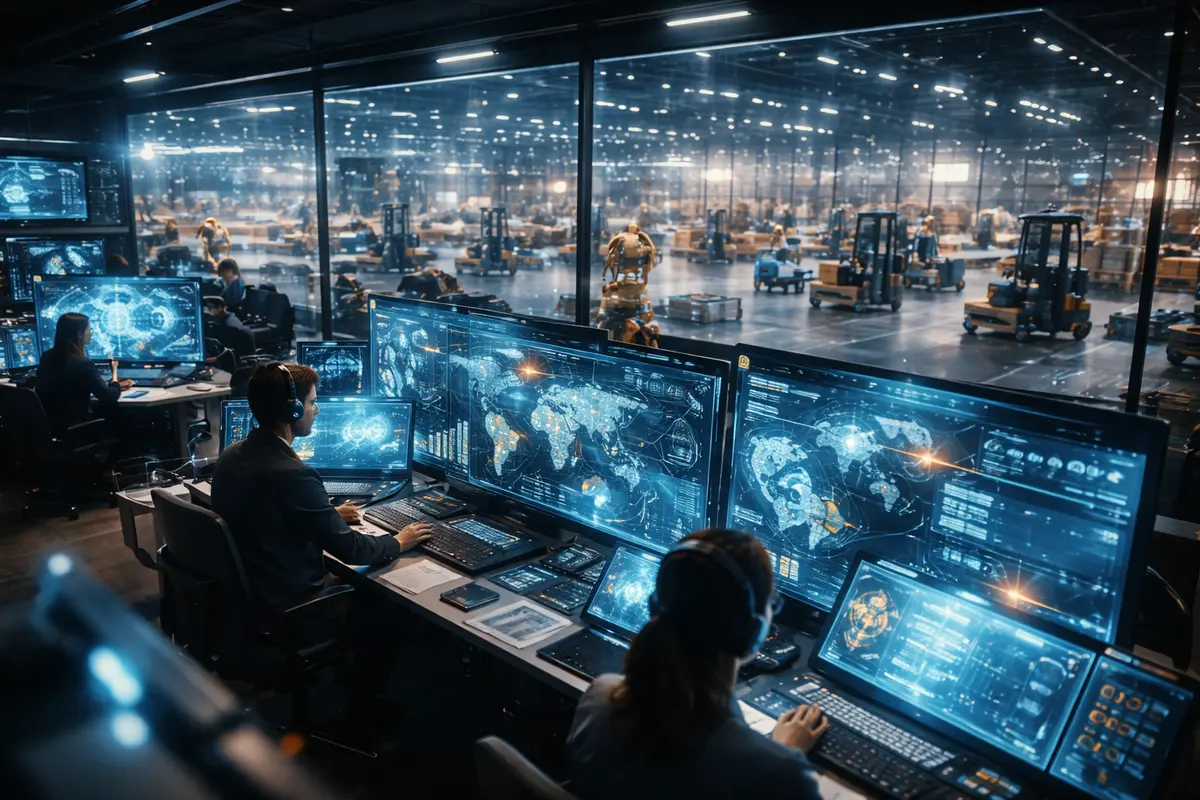
Two technological shifts are converging to redefine how goods move through the global supply chain. On one side, autonomous AI agents are graduating from assistants to independent decision-makers. On the other, robot interoperability standards are finally enabling multi-vendor warehouse ecosystems to operate as unified systems. Together, they represent the most significant logistics transformation since containerization.
The Rise of Autonomous AI Agents in Logistics
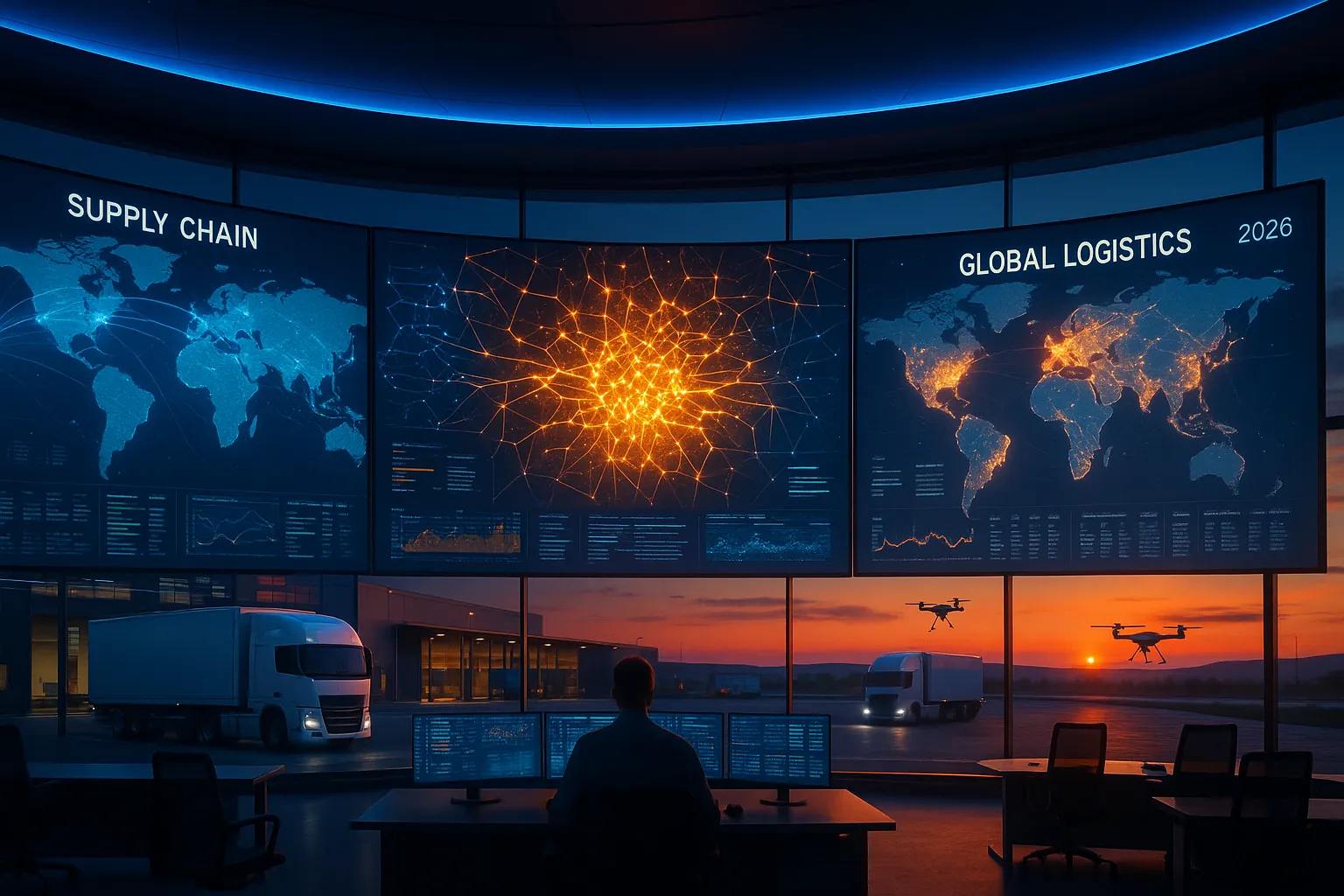
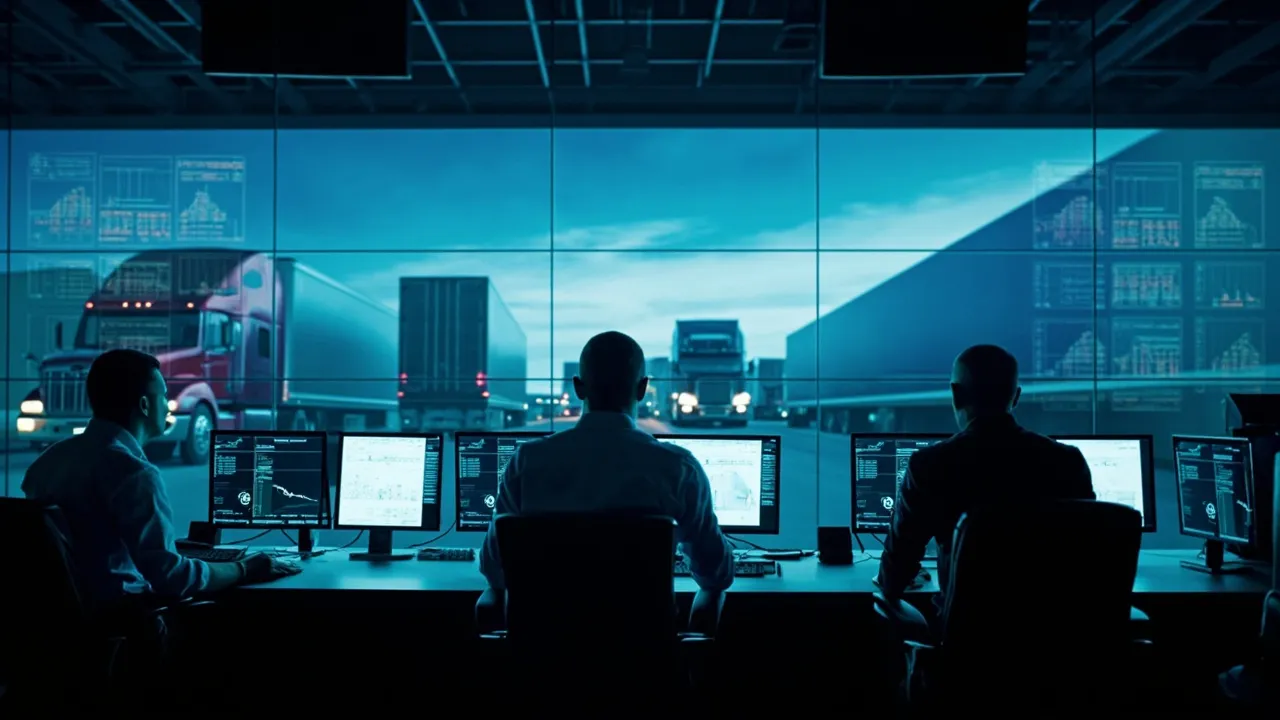
For years, AI in logistics meant dashboards, alerts, and recommendations that a human had to act on. That era is ending. In 2026, the industry is witnessing the emergence of agentic AI—systems that don't just analyze data but autonomously execute decisions across procurement, routing, and inventory management.
The numbers tell the story. According to an IBM study on supply chain AI automation, 57% of executives expect agentic AI will make proactive recommendations based on what it learns by 2026, and 62% expect AI agents will make supply chain process automation and workflow reinvention efforts more effective.
This isn't theoretical. DHL Supply Chain's VP of Analytics, Eric Walters, told Inbound Logistics that "agentic AI will automate routine communication to improve efficiency" while AI-driven computer vision helps warehouses "process goods faster, reduce errors, and optimize space utilization." Industry leaders rated AI's expected usefulness in 2026 at an average of 8 out of 10, with many giving it a perfect score.
What Makes Agentic AI Different
Traditional AI tools operate within narrow parameters—they optimize a single route or forecast demand for one SKU. Agentic AI operates across entire workflows. It can:
- Monitor carrier performance and autonomously renegotiate rates when service levels drop
- Detect supply chain disruptions from weather, port congestion, or geopolitical events and reroute shipments before delays cascade
- Manage inventory replenishment end-to-end, from demand signal to purchase order to warehouse allocation
- Coordinate cross-docking operations by matching inbound freight with outbound orders in real time
The key distinction: these agents don't wait for human approval on routine decisions. They act within defined guardrails, escalating only when situations fall outside their training parameters.
Robot Interoperability: The Missing Piece
While AI agents handle the digital orchestration, physical warehouse operations face their own revolution. The International Federation of Robotics (IFR) reported that the global market value of industrial robot installations reached an all-time high of $16.7 billion in 2025. Service robots for transportation and logistics alone hit 102,900 units sold in 2024—a 14% increase year-over-year.
But deploying robots has never been the hard part. Making them work together has.
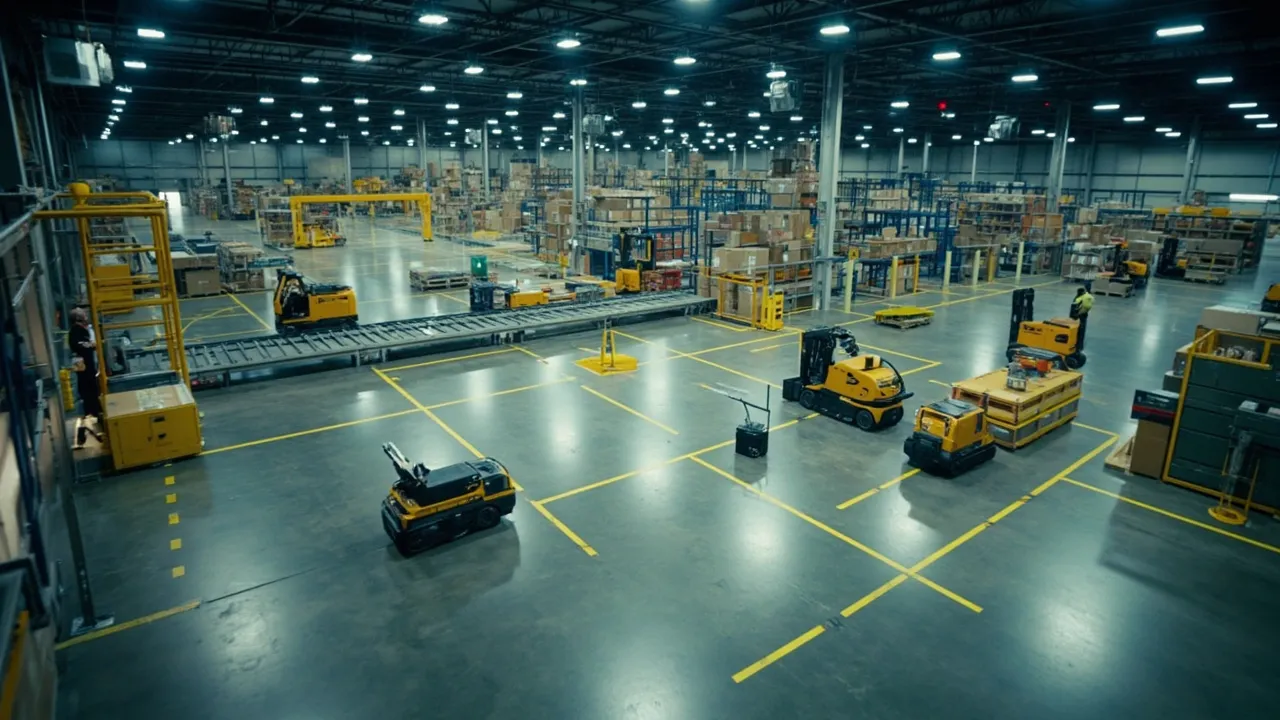
Most warehouses run equipment from multiple vendors—automated guided vehicles from one manufacturer, robotic arms from another, conveyor systems from a third. Each speaks its own language. The result: siloed automation islands that can't coordinate, creating bottlenecks at every handoff point.
The IT/OT Convergence
The IFR's Top 5 Global Robotics Trends for 2026 identifies the convergence of Information Technology (IT) and Operational Technology (OT) as a foundational shift. By merging IT's data-processing capabilities with OT's physical control systems, warehouses can achieve real-time data exchange between robots, warehouse management systems, and enterprise platforms.
This convergence enables:
- Unified fleet management across robot vendors through standardized communication protocols
- Dynamic task allocation where the orchestration layer assigns picks, moves, and staging tasks to whichever robot is closest and capable
- Predictive maintenance coordination so robot downtime is scheduled around operational peaks, not discovered during them
- Seamless human-robot collaboration with natural language commands and vision-based interaction
The IFR also highlights agentic AI as a key robotics trend—combining analytical AI for structured decision-making with generative AI for adaptability. This hybrid approach enables robots to work independently in complex, real-world warehouse environments.
Where the Two Breakthroughs Converge
The real transformation happens when autonomous agents and interoperable robots operate as a single system. Consider a fulfillment center processing 50,000 orders per day:
- AI agents analyze incoming order patterns and predict the next four hours of demand by zone
- The orchestration layer repositions autonomous mobile robots to pre-stage inventory in high-demand areas
- Picking robots from different vendors receive coordinated instructions through standardized APIs
- Exception agents detect a delayed inbound shipment and automatically adjust pick waves, notify affected customers, and reroute partial orders to alternative fulfillment nodes
No human touched any of these decisions. The entire chain—from demand signal to delivery promise—was managed by interconnected AI agents coordinating interoperable robotic systems.
The Orchestration Challenge
This convergence creates a critical need: a platform that sits above both the AI agents and the robotic systems, providing unified visibility, control, and auditability. Without orchestration, autonomous agents become unpredictable, and interoperable robots become chaotic.
CXTMS serves as this orchestration layer. By connecting AI-driven decision engines with physical warehouse automation, transportation management, and carrier networks, CXTMS ensures that autonomous operations remain visible, auditable, and aligned with business objectives. Every agent decision is logged. Every robot task is tracked. Every exception is escalated through defined workflows.
What This Means for Shippers
The logistics operations that thrive in 2026 won't be the ones with the most robots or the most sophisticated AI. They'll be the ones that integrate both into a coherent, orchestrated system. The 542,000 industrial robots installed globally in 2024 alone—more than double the number from a decade ago—represent massive capital investment. Without intelligent orchestration, that investment underperforms.
For shippers evaluating their technology roadmap, the priorities are clear:
- Invest in platforms that support multi-vendor robot integration, not proprietary ecosystems that lock you in
- Deploy AI agents incrementally, starting with high-volume, rule-based decisions before expanding to complex orchestration
- Ensure your TMS can serve as the connective tissue between digital agents and physical automation
- Demand auditability—autonomous doesn't mean unaccountable
The twin breakthroughs of 2026 aren't just about faster warehouses or smarter routing. They're about building supply chains that think, act, and adapt—with humans setting the strategy and machines executing at speed.
Ready to orchestrate your autonomous logistics operations? Contact CXTMS for a demo of our AI-integrated transportation management platform.