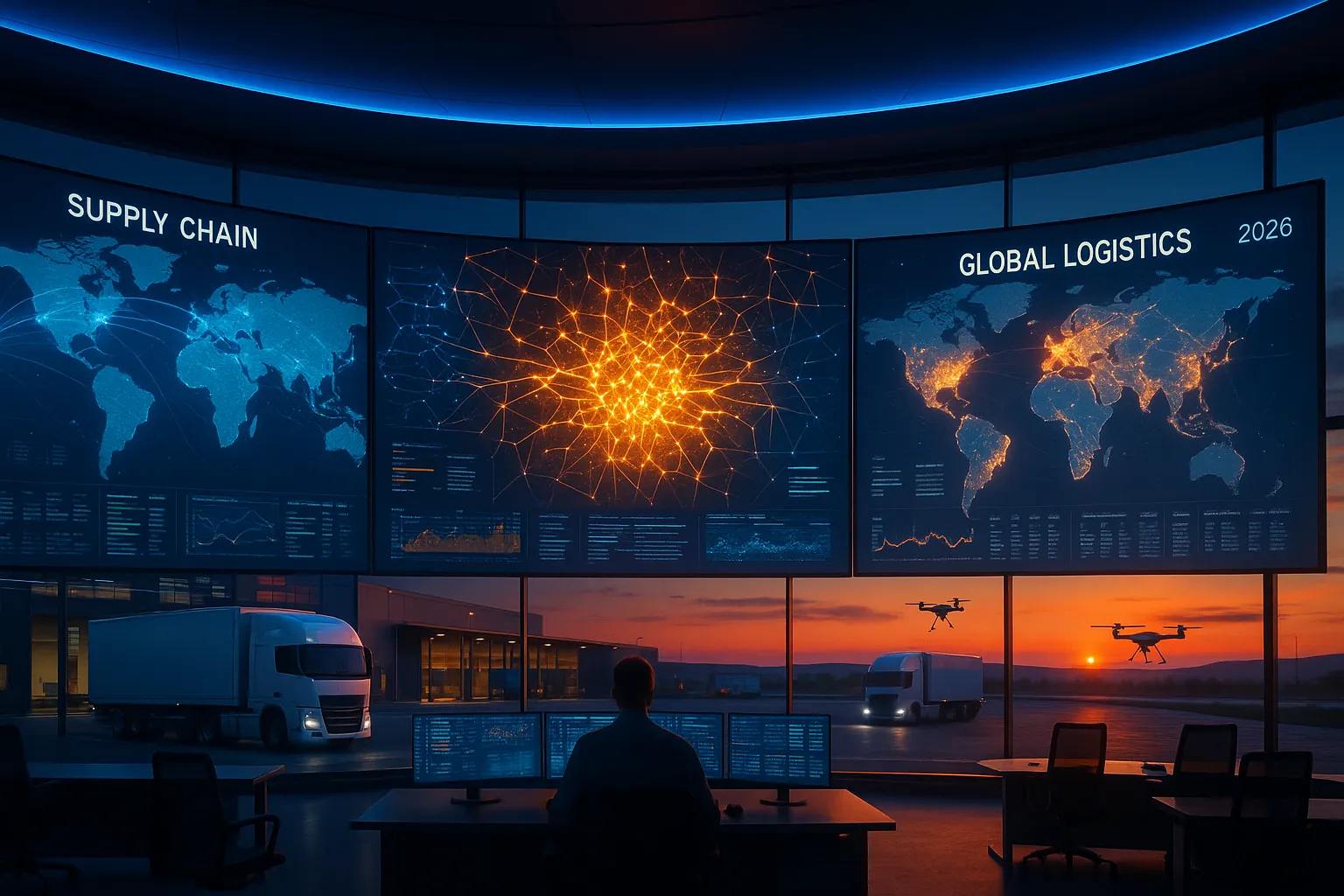
AI Demand Forecasting Is Cutting Supply Chain Delays by 40%: Here's How Shippers Are Deploying It in 2026


The gap between companies that forecast demand with spreadsheets and those using AI is no longer measured in percentage points — it's measured in survival. According to McKinsey, organizations deploying AI-driven forecasting have reduced errors by 20–50%, translating into up to 65% fewer lost sales and 25–40% improvement in on-time delivery performance. In 2026, that's not a competitive advantage. It's table stakes.
The Problem with Traditional Forecasting
Traditional demand forecasting relies on historical sales data, seasonal trends, and human intuition. It works — until it doesn't. A sudden weather event, a viral social media moment, a port congestion ripple effect, and the carefully calibrated forecast crumbles.
The consequences are brutal. Overstocking ties up capital in dead inventory. Understocking means missed revenue and expedited freight costs that devour margins. The Council of Supply Chain Management Professionals estimates that U.S. businesses hold roughly $2.3 trillion in inventory at any given time, with a significant portion sitting in the wrong place at the wrong time.
AI demand forecasting changes the equation by ingesting signals that traditional models can't process: real-time weather data, social media sentiment, port congestion alerts, commodity pricing, and even geopolitical risk indicators. The result isn't just a better number — it's a fundamentally different approach to planning.
What the Data Shows in 2026
Gartner predicts that 70% of large organizations will adopt AI-based supply chain forecasting by 2030, with early adopters already pulling ahead. The research firm notes that AI-based forecasting enables "touchless forecasting" — systems that continuously improve without manual intervention, consistently delivering value with less risk of accuracy deterioration.
McKinsey's research on AI in distribution operations paints an equally compelling picture: AI can reduce inventory levels by 20–30% through improved demand forecasting via dynamic segmentation and machine learning. Combined with optimized safety stock calculations, that translates into millions in freed working capital for mid-size shippers.
The numbers get more dramatic at scale. Amazon forecasts demand across more than 400 million products using machine learning models that factor in variables no human planner could track simultaneously. The company's inventory positioning — getting products closer to where demand will emerge — has become so precise that same-day delivery is increasingly the default, not the exception.
From Reactive to Predictive: How It Works
AI demand forecasting operates on three layers that build on each other:
Signal ingestion. Modern platforms pull data from dozens of external sources — weather APIs, freight rate indices, port dwell times, consumer sentiment trackers, and competitor pricing feeds. Each signal is weighted and correlated against historical demand patterns to identify which variables actually drive buying behavior for specific SKUs and regions.
Pattern recognition. Machine learning models identify demand patterns that human analysts miss. A spike in social media mentions of a product category three weeks before Black Friday. A correlation between diesel price increases and bulk purchasing behavior. Seasonal patterns that shift by days or weeks depending on climate conditions. These models get sharper with every forecast cycle.
Autonomous decision support. The most mature implementations don't just forecast — they recommend action. Shift 2,000 units from Dallas to Chicago before a cold snap drives heating product demand. Pre-book LTL capacity on the Atlanta lane before rates spike next Tuesday. Cancel the replenishment order because the promotional campaign was postponed.
The Shift from Just-in-Case to Optimized Inventory
The pandemic-era hoarding of "just-in-case" inventory was expensive insurance. Companies bloated their safety stocks, absorbed warehousing costs, and prayed they'd guessed right. Most didn't.
In 2026, the standard is shifting toward what analysts call risk-based inventory optimization — holding the right amount of the right product in the right location, informed by AI predictions rather than gut feeling. According to Supply Chain Dive, AI-driven shopping patterns are pushing companies to position inventory closer to consumers, with demand forecasting as a core input to distribution network design.
This isn't theoretical. Companies implementing AI-powered demand sensing report 15% reductions in logistics costs and up to 50% improvements in forecast accuracy. The compounding effect — better forecasts leading to fewer expedited shipments, less dead stock, fewer stockouts — creates a virtuous cycle that widens the gap between AI adopters and laggards.
Where TMS Platforms Fit In
Demand forecasting doesn't exist in isolation. The forecast is only valuable if it connects to execution — to carrier selection, route optimization, warehouse allocation, and freight procurement.
This is where transportation management systems become the critical integration layer. A TMS that ingests demand forecasts can pre-book capacity before rate spikes, consolidate shipments based on predicted order volumes, and dynamically adjust routing as demand signals shift.
CXTMS integrates predictive analytics directly into freight planning workflows. When the demand forecast shows a 30% volume increase on the West Coast next week, the system automatically surfaces capacity options, rate comparisons, and consolidation opportunities — before a single order is placed. The planning team works with recommendations, not raw data.
Building Your AI Forecasting Stack
For shippers evaluating AI demand forecasting in 2026, the implementation path matters as much as the technology:
Start with data quality. AI models are only as good as their inputs. Clean historical data, consistent SKU hierarchies, and reliable external data feeds are prerequisites, not afterthoughts.
Layer in external signals gradually. Don't try to ingest every possible data source on day one. Start with weather and freight rate data — the two external variables with the highest correlation to demand variability for most shippers.
Connect forecasting to execution. The forecast must flow into your TMS and WMS. If the demand prediction sits in a dashboard that nobody checks, you've built an expensive decoration.
Measure forecast accuracy religiously. Track Mean Absolute Percentage Error (MAPE) weekly. Compare AI forecasts against your previous method. The delta is your business case for continued investment.
The Bottom Line
AI demand forecasting in 2026 isn't about replacing human planners — it's about giving them capabilities that manual analysis simply cannot match. The shippers deploying these systems are seeing 20–50% reductions in forecast errors, 20–30% lower inventory carrying costs, and measurably fewer supply chain disruptions.
The question for logistics leaders isn't whether to adopt AI forecasting. It's how quickly they can close the gap with competitors who already have.
Ready to connect predictive demand intelligence to your freight operations? Contact CXTMS for a demo of our integrated forecasting and TMS platform.