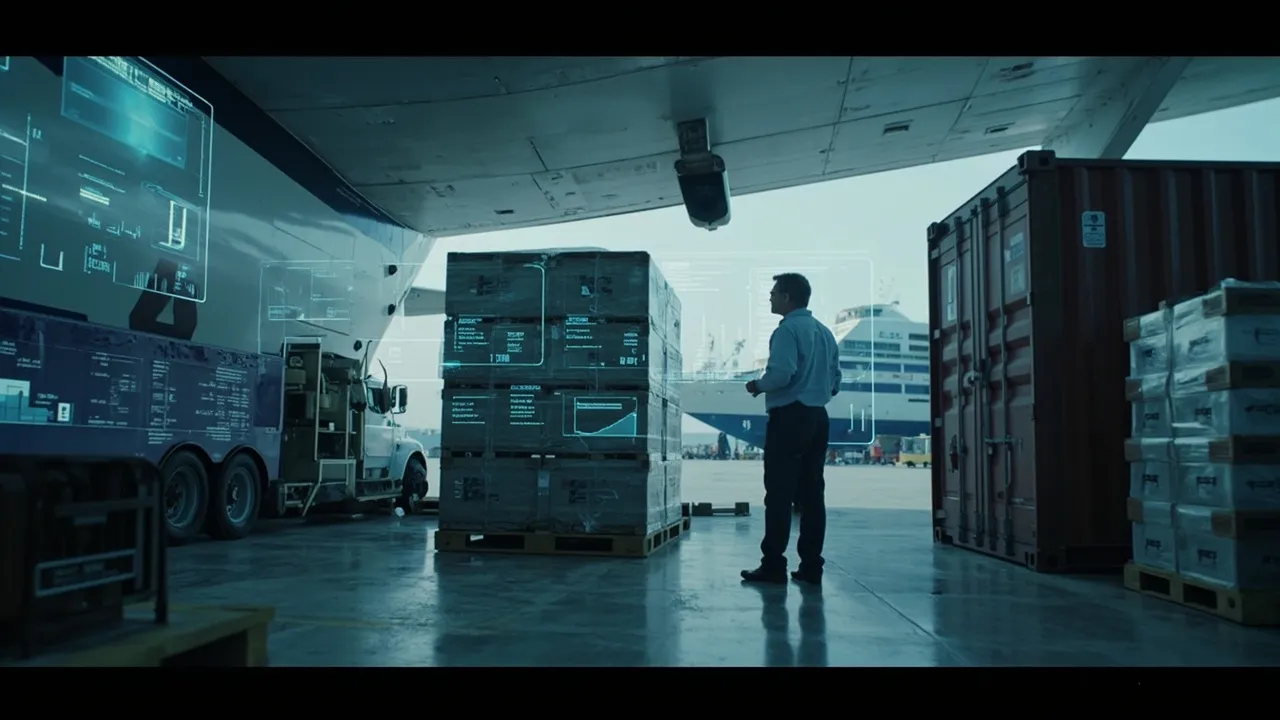
Air Cargo Digitization Accelerates: How ONE Record and API-First Platforms Are Replacing Paper-Based Air Freight


Air cargo has long been the last analog frontier in global logistics. While ocean shipping embraced EDI decades ago and trucking moved to real-time GPS tracking, air freight clung stubbornly to paper — an estimated 30 different documents per shipment, passed hand-to-hand across airlines, ground handlers, forwarders, and customs brokers. In 2026, that era is ending. IATA's ONE Record standard, rising e-air waybill adoption, and API-first cargo platforms are converging to digitize the $158 billion air freight industry from the ground up.
The Paper Problem: Why Air Cargo Stayed Analog So Long
The air cargo supply chain is uniquely fragmented. A single shipment can involve a shipper, freight forwarder, ground handling agent, carrier, customs broker, and consignee — each with their own systems, formats, and data requirements. Unlike containerized ocean freight, where a bill of lading follows a relatively standardized path, air cargo documentation has historically relied on physical paper air waybills (AWBs), shipper's letters of instruction, dangerous goods declarations, and customs paperwork.
This paper dependency costs the industry billions annually. Processing errors, re-keying mistakes, and document delays account for an estimated 20% of total shipment processing time. When a paper document gets lost between a warehouse and a carrier's acceptance desk — which happens more often than anyone likes to admit — the entire shipment stalls.
E-Air Waybill Adoption: The Foundation Layer
The first wave of digitization has been the electronic air waybill (e-AWB), and it's now reaching critical mass. According to industry data, e-AWB adoption has surpassed 75% globally and is expected to reach nearly 90% by the end of 2025, streamlining documentation processes and reducing handling times significantly.
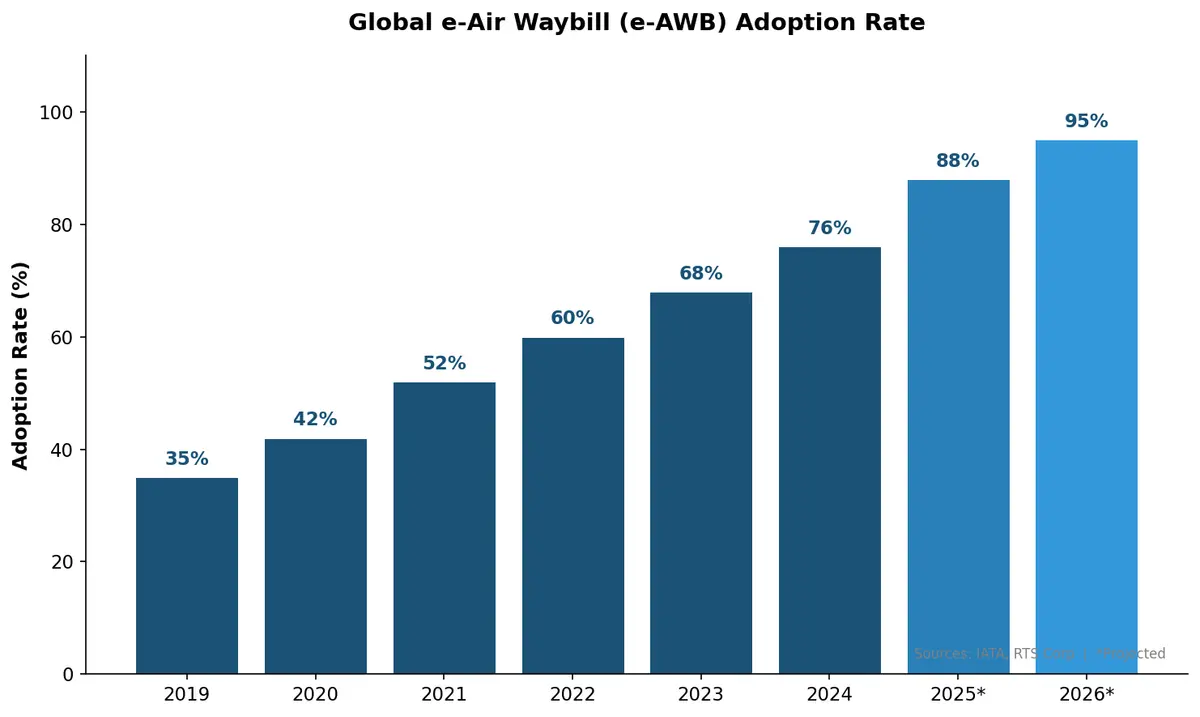
IATA is now mandating electronic air waybills across major trade lanes, and Air Cargo Week reports that in 2026, the full-scale rollout of e-AWB compliance will formalize the transition to paperless, real-time logistics. Forwarders and carriers that haven't digitized risk exclusion from major trade lanes entirely.
But e-AWBs are just the beginning. They digitize one document. The real transformation requires digitizing the entire data ecosystem — and that's where ONE Record comes in.
IATA ONE Record: A Single Digital Language for Air Cargo
ONE Record is IATA's most ambitious data-sharing initiative in decades. Rather than digitizing individual documents one at a time, ONE Record creates a single, consistent data model where every stakeholder in the supply chain shares and accesses the same shipment record through standardized APIs.
The concept is deceptively simple: instead of passing documents between parties — each re-keying data into their own systems — all participants contribute to and read from a single, linked data object. One shipment, one record, accessible via RESTful APIs.
An IATA survey from December 2025 found that over 70% of air cargo industry participants are now aware of ONE Record, with nearly 50% indicating readiness for implementation. The standard went into effect on January 1, 2026, marking a pivotal milestone for the industry.
What ONE Record Changes in Practice
For shippers and forwarders, ONE Record means:
- No more re-keying: Data entered at origin flows through to destination without manual intervention
- Real-time visibility: Shipment status, milestones, and exceptions are updated by each handler in the chain as they occur
- Interoperability by default: Any ONE Record-compliant system can exchange data with any other, eliminating bilateral integration projects
- Audit trails built in: Every data change is logged with timestamps and contributor identity
For TMS platforms, it means supporting a fundamentally different integration architecture — moving from point-to-point EDI connections to API-based data sharing against a common ontology.
API-First Platforms: The New Air Cargo Infrastructure
The shift to APIs isn't just about ONE Record. A broader wave of API-first air cargo platforms is replacing the legacy messaging systems (Cargo-IMP, Cargo-XML) that have connected airlines and forwarders for decades.
Modern cargo booking platforms now offer real-time rate queries, instant booking confirmation, e-booking capabilities, and live capacity data — all via API. Supply Chain Dive reports that air freight growth is forecast in the low single digits for 2026, but the digital infrastructure supporting it is growing exponentially. API-enabled dynamic rates, market intelligence, and e-bookings through third-party platforms are becoming the norm rather than the exception.
This API-first approach has several advantages over traditional EDI:
- Speed: API calls return in milliseconds versus hours for batch EDI processing
- Flexibility: New data fields and capabilities can be added without renegotiating interchange agreements
- Cost: API integrations are dramatically cheaper to build and maintain than custom EDI mappings
- Ecosystem reach: APIs enable marketplaces, aggregators, and multi-carrier platforms that were impossible with EDI
The Integration Challenge for Forwarders and Shippers
Despite the momentum, the transition isn't painless. Many freight forwarders — particularly mid-market operators — still run on legacy systems that were designed around document-based workflows. Adapting these systems to API-based, record-centric data sharing requires more than a software update; it requires rethinking how shipment data flows through the organization.
The biggest challenges include:
- System modernization costs: Legacy TMS and forwarding platforms may need significant upgrades or replacement to support API-based integration
- Data quality: ONE Record demands clean, structured data — something many forwarders struggle with when their processes rely on free-text fields and manual entry
- Change management: Staff accustomed to paper-based workflows need training on digital-first processes
- Multi-modal complexity: Air shipments rarely travel by air alone. Integrating air cargo digitization with ocean, road, and rail systems requires platforms that handle all modes natively
What This Means for TMS Platforms
The air cargo digitization wave is a forcing function for TMS modernization. Platforms that were built for ocean and trucking can no longer ignore air freight as a "manual process." Shippers increasingly expect:
- Native multi-modal support that handles air waybills, ocean bills of lading, and truck BOLs in a single workflow
- API-first architecture that can connect to ONE Record endpoints, carrier booking APIs, and customs systems simultaneously
- Real-time event processing that ingests milestone updates from multiple air cargo handlers and presents a unified shipment timeline
- Compliance automation for dangerous goods declarations, security filings, and customs documentation specific to air freight
CXTMS was built with multi-modal logistics at its core, supporting air, ocean, and ground freight documentation within a unified platform. As ONE Record adoption accelerates, having a TMS that speaks the same API-first language as the air cargo ecosystem isn't optional — it's table stakes.
Looking Ahead: Air Cargo in a Digital-First World
IATA forecasts 71.6 million tonnes of air cargo volume in 2026, generating $158 billion in revenue — yields that remain approximately 30% above pre-pandemic levels. The industry is healthy, but its infrastructure is catching up fast.
The convergence of e-AWB mandates, ONE Record adoption, and API-first platforms means that by the end of 2026, paper-based air freight operations won't just be inefficient — they'll be increasingly incompatible with the digital ecosystems that airlines, handlers, and customs authorities are building.
For shippers and forwarders, the message is clear: digitize now, or risk being left on the tarmac.
Ready to bring your air freight operations into the digital age? Contact CXTMS to see how our multi-modal TMS handles air cargo documentation, ONE Record integration, and API-first carrier connectivity.