INTTRA API and the Future of Ocean Freight Digitization: What Shippers Need to Know

Ocean freight still runs on an uncomfortable amount of paper. Despite handling over 80% of global trade by volume, the container shipping industry has been one of the slowest sectors to digitize—and that gap is costing shippers billions in inefficiencies every year.
The tide is turning. Platforms like INTTRA and industry-wide standards from the Digital Container Shipping Association (DCSA) are finally making API-first ocean freight management a practical reality. For shippers still managing bookings through email chains and PDF attachments, 2026 is the year that approach becomes genuinely untenable.
The Paper Problem in Ocean Freight
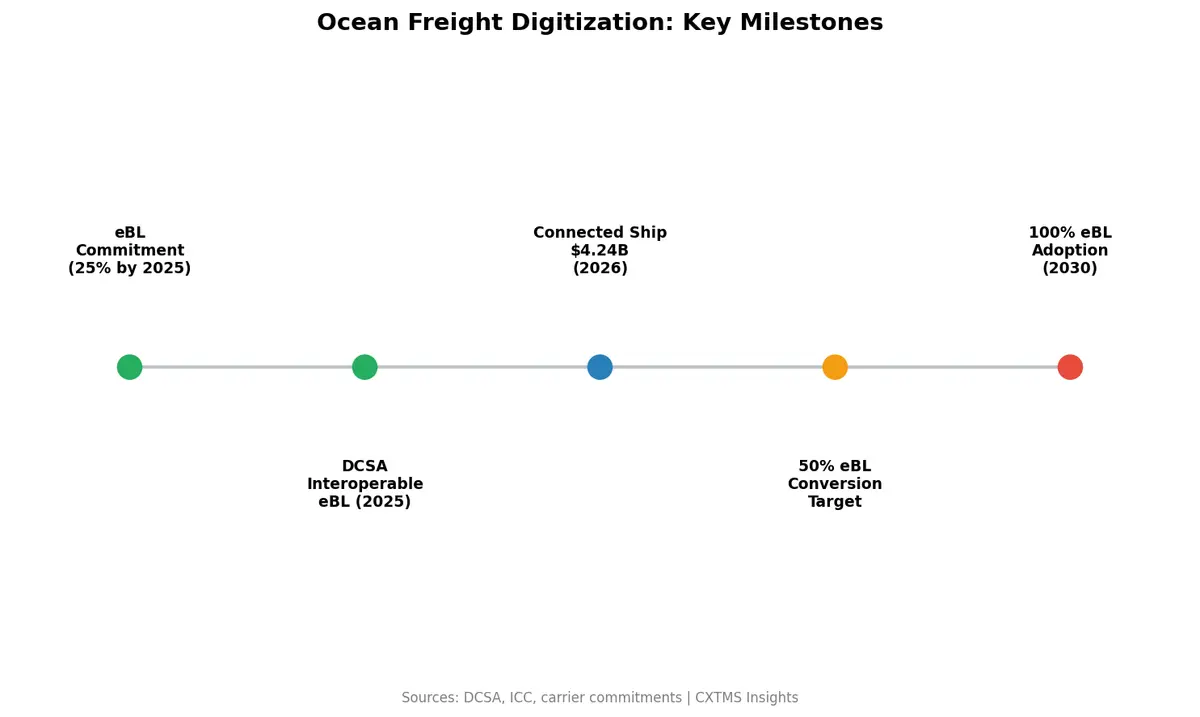
A single international ocean shipment can generate 20 to 30 separate documents—bills of lading, booking confirmations, shipping instructions, customs declarations, certificates of origin, and more. According to DCSA, the industry's goal is 100% electronic bill of lading adoption by 2030, but current eBL usage still represents a fraction of total trade volume. Major bulk shippers committed to using eBLs for at least 25% of seaborne trade volume by 2025, signaling a dramatic acceleration in digital document adoption.
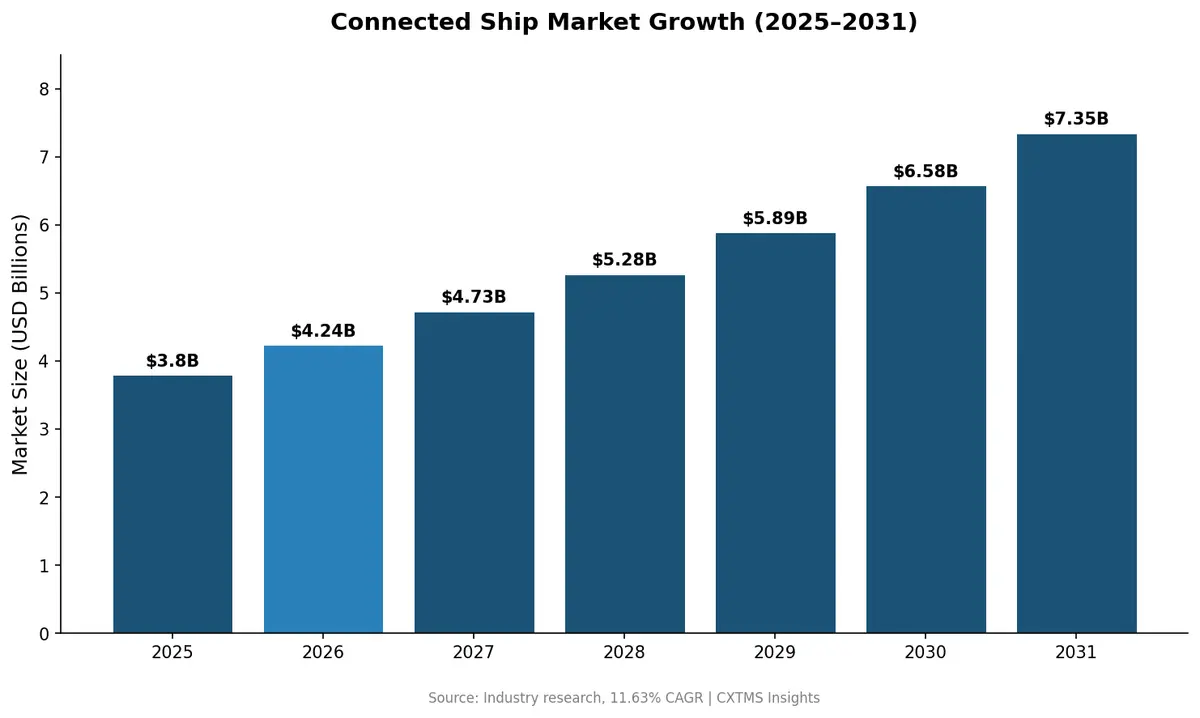
The connected ship market alone is estimated at $4.24 billion in 2026 and projected to reach $7.35 billion by 2031, growing at an 11.63% CAGR—a clear indicator that maritime digitization spending is accelerating fast.
What INTTRA's API Actually Does
INTTRA operates the largest neutral ocean freight network, connecting shippers and forwarders with carriers through a standardized digital platform. Their REST API covers four core ocean execution products:
- Booking — Submit, amend, and confirm container bookings electronically
- Ocean Schedules — Query real-time sailing schedules across carriers
- Rates — Access contracted and spot rates programmatically
- Visibility / Track & Trace — Monitor container movements from origin to destination
What makes this significant isn't any single feature—it's the network effect. When your TMS can programmatically book across multiple carriers, pull live schedules, and track containers through a single API integration, the operational overhead of managing ocean freight drops dramatically.
As FreightWaves reported, INTTRA was originally founded by several top ocean carriers as a neutral platform to replace "cumbersome paper faxes and time-consuming phone calls." That carrier-backed neutrality remains its strongest asset—no single carrier controls the platform, which means shippers get unbiased access to the full market.
DCSA Standards: The Missing Interoperability Layer
Individual platforms like INTTRA solve point-to-point connectivity. But the industry's deeper challenge is interoperability—making sure that data flows seamlessly between carriers, ports, terminals, freight forwarders, and technology providers without custom integration work for every connection.
That's where DCSA comes in. The association has published open API specifications for:
- Track & Trace — Standardized container event tracking
- Electronic Bill of Lading (eBL) — Digital document transfer with legal validity
- Booking — Carrier-neutral booking request formats
- Operational Vessel Schedules — Consistent schedule data across carriers
In May 2025, DCSA completed its first standards-based interoperable eBL transaction, marking a major milestone. Ten leading ocean carriers have now committed to converting 50% of original bills of lading to digital within five years and 100% by 2030.
Why This Matters for Your TMS Strategy
The shift from manual ocean freight management to API-driven workflows isn't just about convenience. It directly impacts three areas that hit the bottom line:
Booking Speed and Accuracy
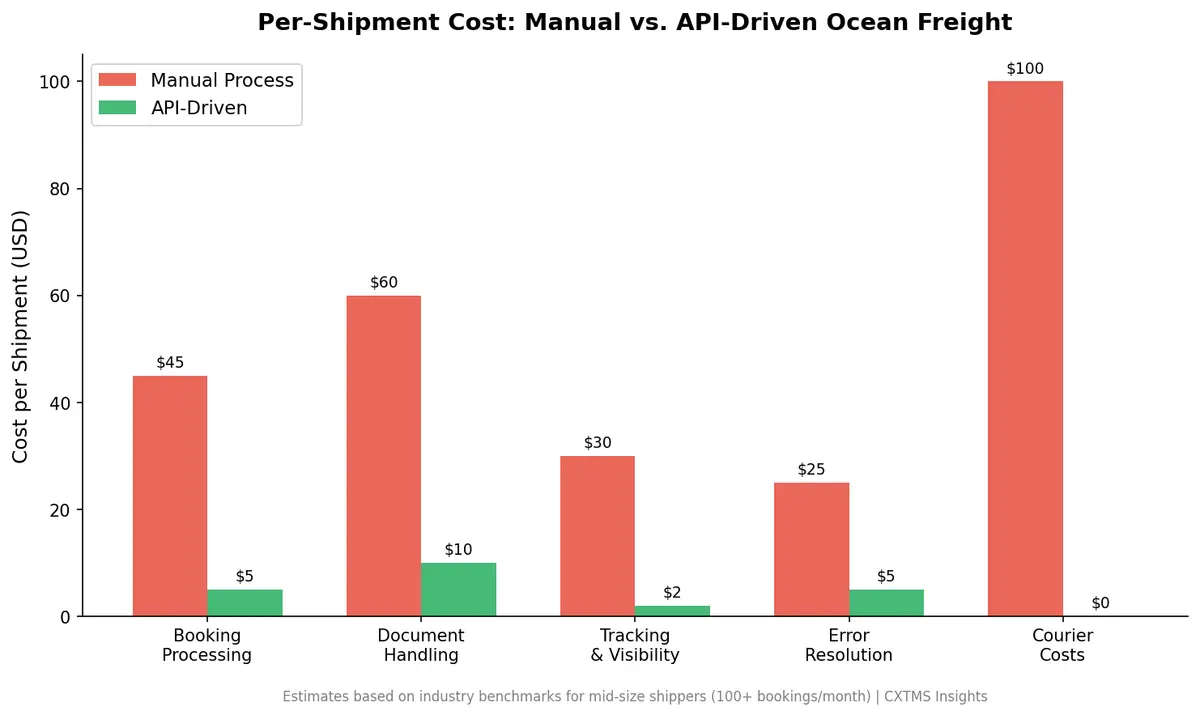
Manual booking via email typically takes 2–4 hours round-trip for confirmation. API-based booking can reduce that to minutes, with structured data validation catching errors before submission. When you're managing hundreds of bookings per month, the cumulative time savings are substantial.
Real-Time Visibility
Container tracking through carrier websites means logging into multiple portals, each with different interfaces and update frequencies. API-based tracking consolidates all container movements into your TMS dashboard, with push notifications for exceptions—vessel delays, port congestion, customs holds—the moment they occur.
Document Digitization
Every paper document that requires manual handling introduces delay and error risk. eBLs eliminate courier costs (typically $50–$150 per shipment for express document delivery), reduce processing time from days to hours, and create an auditable digital trail.
Integration Patterns That Work
For shippers evaluating ocean freight digitization, the practical question is how to connect these platforms to existing systems. Three patterns dominate:
1. Direct API Integration Your TMS connects directly to INTTRA or carrier APIs. Best for large shippers with dedicated IT teams and high booking volumes. Offers maximum control and customization.
2. Middleware / iPaaS Integration platforms like MuleSoft or Boomi handle the API connections, data mapping, and error handling between your TMS and ocean platforms. Reduces development burden but adds a technology layer.
3. TMS-Native Connectivity Modern TMS platforms come with pre-built ocean carrier integrations. This is the fastest path to digitization for mid-market shippers—no custom development, no middleware, just configuration.
The third pattern is where the industry is heading. Shippers shouldn't need to become API developers to book a container. The TMS should handle the technical complexity while exposing simple, reliable workflows.
The 2030 Deadline Is Closer Than You Think
With major carriers committed to 100% eBL adoption by 2030, the window for voluntary digitization is closing. Shippers who wait will eventually face carrier mandates—and rushing digital transformation under deadline pressure rarely produces good outcomes.
The smart move is starting now, while you can pilot with select trade lanes, refine your processes, and build internal capability at your own pace. The technology is mature. The standards are published. The carrier network is connected.
The only question is whether you digitize on your terms—or on someone else's timeline.
Ready to connect your ocean freight operations through a modern, API-integrated TMS? Contact CXTMS for a demo and see how our platform streamlines booking, tracking, and documentation across carriers.