AI and TMS Integration: Why Legacy Transportation Systems Need an Intelligent Layer, Not a Rip-and-Replace

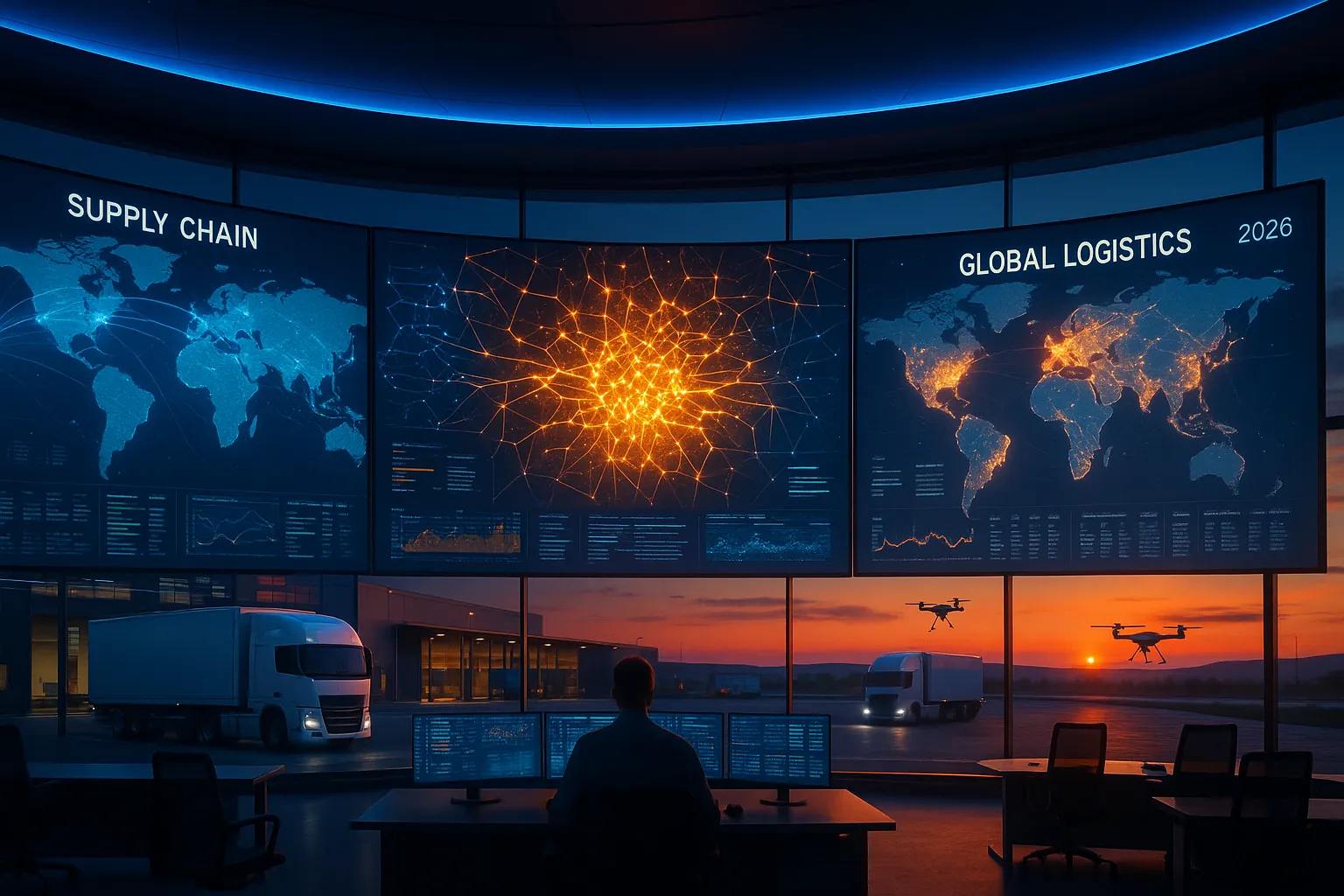
The modernization question for transportation teams is changing. A few years ago, many shippers treated artificial intelligence as a future-state feature that would arrive after a full transportation management system replacement. That view is too slow for 2026. Freight networks are volatile now, integration budgets are finite now, and operations teams need better decisions now.
The smarter pattern is not rip-and-replace. It is an intelligent layer that improves the systems already running the business.
Inbound Logistics frames the point clearly: legacy TMS infrastructure does not have to be discarded to benefit from AI. The practical path starts with data-quality checks, connects AI to existing enterprise systems through APIs, keeps humans in the loop during testing, and uses the new layer to continuously re-optimize around traffic, severe weather, driver compliance, emissions thresholds, and cost changes. That is less glamorous than a blank-slate software transformation. It is also much more likely to survive contact with real freight operations.
The market is moving toward intelligent orchestration
Transportation management is no longer a static planning category. Mordor Intelligence estimates the TMS market at $9.71 billion in 2026, growing to $14.89 billion by 2031 at an 8.93% CAGR. The report also says cloud deployment held 61.23% of the market in 2025, while real-time visibility and tracking is projected to grow at a 9.96% CAGR through 2031.
Those numbers matter because they show where buyer expectations are heading. Shippers are not just buying a digital filing cabinet for shipments. They are buying orchestration: rate selection, routing, tendering, appointment awareness, shipment tracking, exception management, freight audit, and reporting that can react as conditions change.
At the same time, Mordor points to a real barrier: integration with legacy ERP and WMS stacks can be expensive and slow, especially for enterprises with older on-premise systems. That is why the intelligent-layer model is so compelling. It lets logistics teams improve decision quality without forcing a single massive cutover that puts every lane, carrier, and customer commitment at risk.
Legacy systems are not the enemy
The phrase "legacy TMS" gets used like an insult. Often, that is lazy. Many older transportation systems still hold valuable operating logic: carrier contracts, routing guides, customer rules, accessorial structures, equipment preferences, facility constraints, and exception history. The problem is not that these systems know nothing. The problem is that they were not built for the speed, uncertainty, and data volume now hitting transportation desks.
A legacy system may be perfectly capable of storing a routing guide but poor at deciding when the primary carrier is no longer the best option. It may record shipment milestones but fail to distinguish a minor delay from a customer-service failure. It may calculate freight cost but struggle to weigh cost against service risk, emissions impact, appointment availability, or driver-hours constraints in real time.
AI is useful when it strengthens those weak points. It can identify bad or incomplete shipment data before it pollutes downstream workflows. It can compare live conditions against historical performance. It can recommend a backup carrier before a load ages into a fire drill. It can flag when a cheap route is likely to become expensive because of dwell, rework, or missed delivery windows.
But AI alone does not move freight. Recommendations need to land inside the execution workflow where dispatchers, brokers, forwarders, and transportation managers actually work.
Proof points are already operational
The Inbound Logistics article cites two practical examples. One global carrier reduced driving distances by more than 100 million miles annually after integrating AI routing engines, with additional fuel and carbon benefits. A third-party logistics provider used AI-supported transport data workflows to handle 30% more volume with the same workforce, while improving customer response speed.
Those are not abstract dashboard wins. They are operating wins. Fewer miles mean fewer driver hours, less fuel exposure, lower emissions, and less network waste. More volume with the same team means better productivity without simply asking people to work faster in more browser tabs.
That distinction is important. The strongest AI business cases in transportation are rarely about replacing human operators. They are about removing the low-value friction that keeps skilled operators trapped in data cleanup, status chasing, portal switching, and manual exception triage.
What the intelligent layer has to do
For AI and TMS integration to work, the intelligent layer needs four practical capabilities.
First, it must clean and normalize data. Shipment references, locations, carrier names, appointment windows, cost fields, and milestone events have to be reliable enough for recommendations to be trusted. Garbage in still means garbage out, just faster.
Second, it must connect through APIs rather than forcing every system into one monolith. Most logistics teams already have ERP, WMS, accounting, visibility, carrier, and customer systems in place. The modernization layer should connect them, not pretend they do not exist.
Third, it must support human-in-the-loop controls. Transportation is full of edge cases: customer promises, hazmat constraints, facility quirks, strategic carrier relationships, and commercial exceptions. AI recommendations should be explainable, reviewable, and adjustable before they become automated actions.
Fourth, it must execute. This is where many AI pilots fail. A model that predicts a delay is useful; a workflow that turns that prediction into a tender change, customer alert, appointment update, or margin-protection action is valuable.
The CXTMS angle: intelligence tied to execution
CXTMS is built around that execution layer. Transportation teams do not need another isolated prediction engine sitting beside the work. They need intelligence connected to rates, routing, tendering, tracking, exception management, and customer communication.
That is the practical future of AI and TMS integration: not a dramatic demolition of every legacy system, but a disciplined modernization path that makes the existing transportation stack smarter, faster, and easier to operate. Keep what works. Connect what is fragmented. Add intelligence where decisions are slow. Then make sure every recommendation can become an action.
If your team is trying to modernize transportation without risking a painful rip-and-replace project, schedule a CXTMS demo. We will show how connected execution workflows help turn AI-assisted recommendations into freight decisions that actually move loads.