The 91,000-Pound Truck Pilot Could Redraw the Rail-versus-Truck Cost Equation

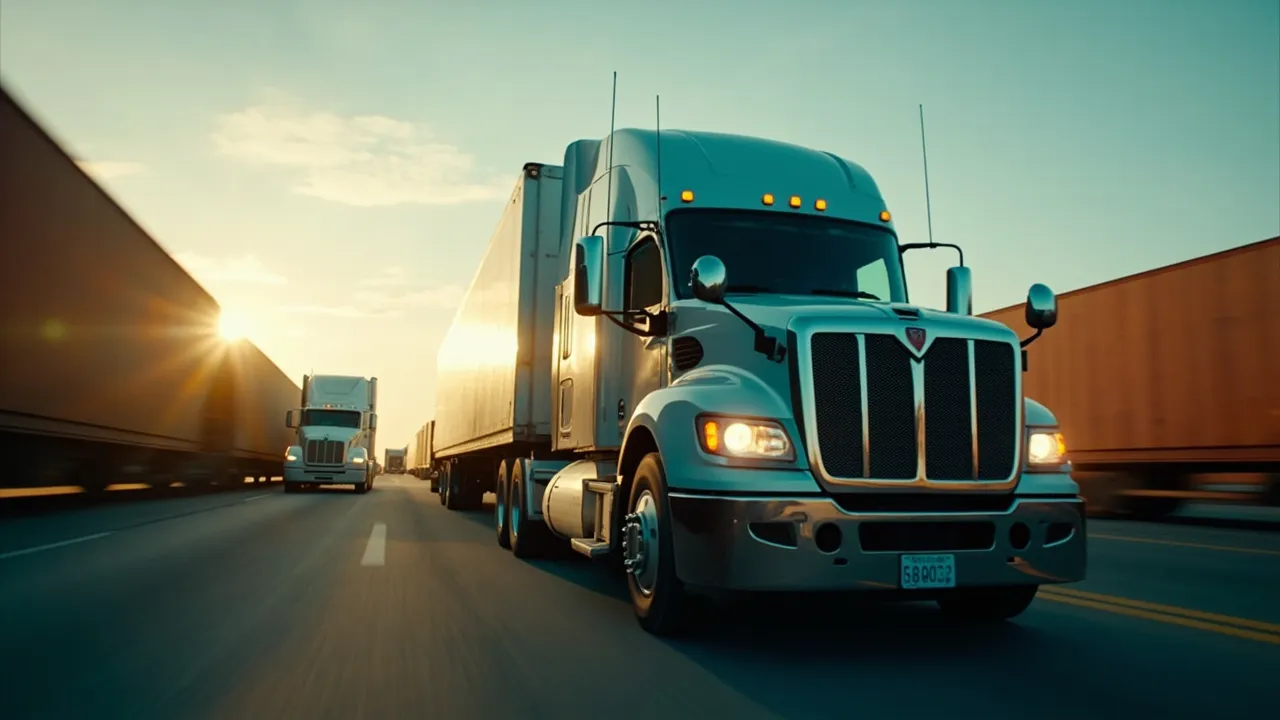
Truck weight policy sounds like Washington inside baseball until it changes the freight math on a shipper's desk. A proposed 91,000-pound truck pilot in federal surface transportation legislation could do exactly that, especially for dense freight that sits near the line between truckload and rail economics.
The issue surfaced during the House Transportation and Infrastructure Committee's work on the BUILD America 250 Act, a five-year surface transportation reauthorization bill. According to Logistics Management, the committee approved the bill after a 14-hour markup, advancing a package focused on freight movement, bridge investment, rail safety, autonomous commercial vehicle frameworks, and new Highway Trust Fund revenue.
One amendment has rail interests especially concerned: a 10-year pilot program allowing truck weights up to 91,000 pounds in some states. Because the current federal gross vehicle weight limit on the Interstate System is generally 80,000 pounds, the pilot would not be a minor adjustment. It would materially expand how much dense cargo certain trucks could carry on eligible routes.
For shippers, the question is not whether railroads or trucking groups win the policy argument. The question is what a higher weight ceiling would do to lane-level cost models, service promises, procurement strategy, and sustainability claims.
Why Short Lines Are Pushing Back
Short line railroads are vulnerable to modal shifts because they often provide the first-mile and last-mile rail connections that make carload and intermodal networks work. If heavier trucks pull dense freight off rail, short lines can lose traffic density while fixed infrastructure costs remain.
Industry reporting on the American Short Line and Regional Railroad Association response noted that ASLRRA President Chuck Baker criticized the 91,000-pound amendment, warning that heavier trucks would shift freight from what he called the safer and more sustainable rail network onto an already overburdened highway system.
The short line argument has two layers. The first is competitive: higher payloads may make truckload more attractive for freight that previously tipped toward rail because of weight limits. The second is infrastructure: railroads largely maintain privately owned infrastructure, while highways rely heavily on public funding. If policy gives trucks more productivity without fully pricing pavement wear, bridge stress, and highway maintenance into rates, the shipper's quote may not reflect the full system cost.
That critique also points to Highway Trust Fund math. Federal funding still must cover an estimated $50 billion annual shortfall between planned contract authority spending of $95 billion per year and Highway Trust Fund revenue of roughly $45 billion per year. That gap matters when heavier trucks are framed as a pure productivity gain.
The Bill Cuts Both Ways
The BUILD America 250 Act is broader than truck weights. Logistics Management reported initiatives for nationally significant multimodal freight and highway projects, bridge programs, railway-highway grade crossings, and the National Highway Freight and High Priority Corridor Program.
Industry reaction reflects that mix. Intermodal groups welcomed attention to freight issues such as cargo theft and truck parking, while warning that supply chain reliability could suffer without dedicated discretionary grant funding for intermodal infrastructure. Rail groups criticized provisions they said would add cost without proven safety benefits.
Trucking groups were more supportive. Logistics Management quoted American Trucking Associations President and CEO Chris Spear saying bottlenecks and record-high congestion cost the economy more than $109 billion. Manufacturers see the same cost pressure: the National Association of Manufacturers said highway congestion and bottlenecked ports cost manufacturers nearly $40 billion annually, while freight delays drain 65 million hours of efficiency each year.
That is the tension. Heavier trucks may improve productivity on some lanes. Rail investment may improve resilience on others. Safety mandates may add rail cost. Highway subsidies may hide truck cost. The shipper's job is to model the network impact, not pick a political tribe.
Where the Cost Equation Could Change
The clearest impact would be on dense freight: paper, beverages, building materials, metals, chemicals, agricultural inputs, and other products that hit weight limits before trailer space runs out. If a shipper can load more product per truck, per-unit transportation cost can fall even if the rate per mile rises for heavier equipment or operational complexity.
That could make truckload more competitive against rail on short and medium-length lanes where speed, inventory carrying cost, and drayage complexity already make rail a close call.
But the benefit is not universal. Heavier-truck economics depend on state participation, route eligibility, bridge restrictions, axle configurations, customer dock constraints, carrier equipment availability, and backhaul balance. If procurement teams design routing guides around heavier trucks before the carrier market can support them, they may create a new bottleneck while trying to solve an old one.
Sustainability Claims Need Lane-Level Math
The sustainability debate will get messy. Rail advocates will argue that shifting freight from rail to heavier trucks increases emissions and highway wear. Trucking advocates will counter that carrying more freight per truck can reduce total trips, driver demand, congestion, and emissions per unit on certain lanes.
Both claims can be true. A dense 150-mile plant-to-DC move may need fewer truck trips under a higher weight limit. A 900-mile move pulled off a strong rail lane may worsen emissions and resilience while saving narrowly on transportation cost. Procurement teams should force the math down to the lane: payload, miles, dwell, drayage, empty repositioning, service failures, inventory buffers, and carbon factors.
What Shippers Should Do Now
Start by identifying lanes where weight, not cube, is the binding constraint. Compare current truckload, intermodal, and rail costs against a 91,000-pound truck scenario. Stress-test the result against limited carrier participation, state-by-state restrictions, higher accessorials, and different fuel or toll assumptions.
Then review contracts. Routing guides may need separate rules for pilot-qualified lanes and standard lanes. Carrier bids should ask whether equipment can legally and safely support higher gross weights, which states and corridors are covered, and what happens when a shipment falls outside pilot rules. Rail agreements should be checked for volume commitments that could be affected if dense lanes migrate to truck.
This is where CXTMS-style mode analytics matter. A modern TMS should not treat truck, rail, and intermodal as static rate tables. It should let teams model policy-driven scenarios, compare modal cost and service tradeoffs, flag lane eligibility, and preserve the assumptions behind procurement decisions.
The 91,000-pound pilot may or may not survive the legislative process unchanged. But the debate is a useful warning: transportation policy can rewrite cost curves faster than annual bid calendars can adapt. Shippers that model now will know which lanes to defend, which lanes to convert, and which promises need a second look.
CXTMS helps freight teams turn policy uncertainty into operational planning. From rail-versus-truck scenario modeling to routing-guide controls and procurement-ready lane analytics, CXTMS gives logistics teams the visibility to make mode decisions with evidence instead of guesswork.
Ready to model freight cost scenarios before the market moves? Schedule a CXTMS demo and see how CXTMS helps shippers plan smarter across truck, rail, and intermodal networks.