Savannah’s New 25-Acre Breakbulk Hub: Design the Multimodal Handoff Before Booking Cargo

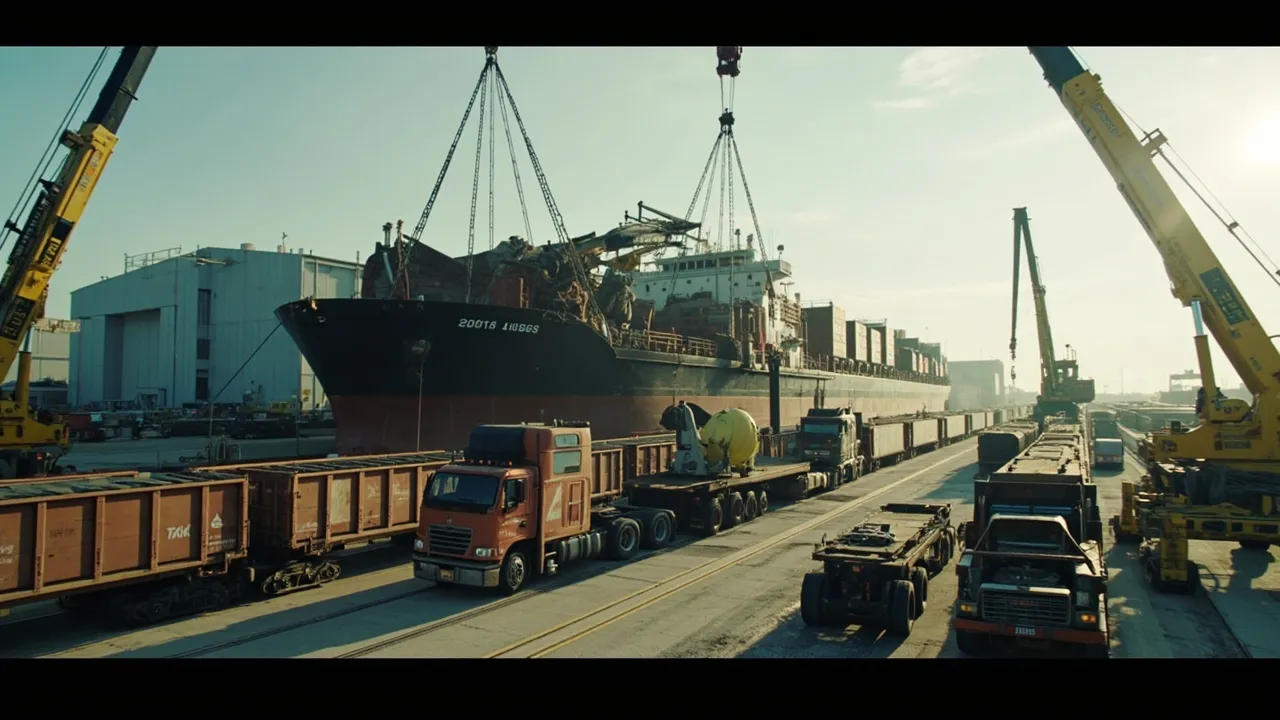
Savannah has added a compelling new route for steel, forest products, machinery and other non-containerized freight. But a terminal with vessel, rail, truck and storage access does not automatically create a seamless move. For breakbulk cargo, every change of custody and every lift is a potential source of delay, damage and unplanned cost.
That makes the operating plan—not merely the port selection—the decisive factor. Before booking recurring volume through a new facility, shippers should design the complete handoff from vessel discharge to inland departure, assign ownership at each point and define the evidence needed to compare the route with existing options.
Foundation 3 expands Savannah's breakbulk toolkit
FreightWaves reports that Colonial Terminals has opened Foundation 3, a 25-acre multimodal breakbulk facility on the Savannah River designed for 24-hour operations. Its infrastructure includes an 810-foot heavy-capacity dock, more than 14,000 feet of onsite rail track, terminal-operated switching and rail-served warehouse access.
Storage is substantial as well. Two warehouses provide a combined 130,000 square feet, including a renovated dockside building, while a 75,000-square-foot concrete outdoor area supports cargo that can be staged outside. Adjacent acreage is reserved for expansion.
The project has been years in the making. In 2023, FreightWaves reported that the planned infrastructure was expected to support more than 1 million tons of throughput and a wide-span berth intended for steel, paper and forest products while remaining capable of handling general breakbulk cargo.
Those numbers matter because they describe optionality: discharge alongside storage, switch railcars onsite, or move cargo by truck without first routing it through a distant transfer location. Yet optionality has value only when the chosen sequence fits the cargo.
Identify the loads that actually benefit
Foundation 3 is most relevant when a shipment cannot economically or safely fit into a standard container, or when containerization adds dismantling, packaging or handling that defeats its purpose. Likely candidates include steel coils and plate, lumber and paper, large machinery, transformers, fabricated modules and other heavy or out-of-gauge units.
The strongest use case is not simply “large cargo.” It is cargo whose origin, discharge method, storage requirements and inland mode align with the terminal's assets. A heavy industrial component destined for a rail-served plant may benefit from dock-to-rail transfer. Steel moving to several regional customers may need covered staging and scheduled flatbeds. A project shipment released in construction sequence may need storage positions that allow retrieval without reshuffling every unit.
Planners should test four questions before routing:
- Can the dock, crane plan, slings and ground-bearing capacity support each unit's weight and dimensions?
- Does the cargo require covered, climate-sensitive or outdoor storage, and is suitable space reserved?
- Is the final site genuinely rail-capable, or will an extra rail-to-truck transload erase the benefit?
- Can permits, escorts, chassis, railcars or specialized trailers arrive in the same sequence as discharge?
Multimodal is not synonymous with intermodal. Breakbulk pieces generally do not remain inside one standardized loading unit as they change modes. Every lift therefore needs its own method, equipment, inspection and chain-of-custody record.
Build the handoff backward from final delivery
Start with the required arrival sequence at the job site or consignee, then work backward. Create a unit-level cargo register containing dimensions, weight, lifting points, center of gravity, packaging condition, discharge priority, storage requirement, inland mode and final delivery window. The vessel stowage and discharge sequence should reflect that register.
Next, assign a destination immediately after discharge. Each piece should move to a named warehouse zone, outdoor position, railcar or truck—not to an undefined holding area. Pre-assigning locations reduces searching and reshuffling, two activities that add labor and expose cargo to more handling.
Confirm the equipment plan by lift rather than by shipment. Record crane capacity at the operating radius, spreader bars, slings, shackles, forklifts, mobile cranes and any dunnage or weather protection. Include a fallback for equipment failure. A terminal may operate around the clock, but a specialized lifting attachment may not be replaceable at 2 a.m.
Rail moves require car type, quantity, placement time, loading and securement rules, switching windows and interchange acceptance. Onsite switching and 14,000-plus feet of track can simplify coordination, but only if cars are available when the cargo is ready. Truck moves require equally specific controls: trailer type, driver credentials, port access, permits, escorts, appointment windows and a staging rule for early or late arrivals.
Finally, establish inspection gates. Photograph cargo at vessel discharge, after each lift, before storage and at inland release. Record condition exceptions against the individual unit and obtain acknowledgment from the receiving party. That evidence separates pre-existing damage from handling damage and accelerates claims.
Measure touches, dwell and exceptions—not just the freight quote
A low terminal or line-haul rate can be overwhelmed by extra handling, storage and delay. Compare routes using end-to-end cost: ocean charges, stevedoring, lifts, storage, switching, rail or truck transport, permits, escorts, inspections, damage, detention and administrative exception work.
Track four core measures during the first shipments:
- Cargo touches per unit: Count every lift or repositioning after discharge.
- Dwell by stage: Measure discharge-to-storage, storage-to-release and release-to-gate or rail departure.
- Damage and documentation exceptions: Separate packaging, handling, weather and custody failures.
- Planned versus actual landed cost: Include accessorials and the cost of schedule variance.
This is where broader port-rail lessons apply. An Inbound Logistics review of port-rail performance cites average rail dwell of four days at one major port in July 2024, compared with 16 days during the October 2022 disruption. The location differs, but the lesson travels: rail connectivity is a capability; dwell determines whether that capability produces service.
Pilot a representative set of loads before reallocating recurring project freight. Establish the current route's baseline, run comparable cargo through Foundation 3, and review results by cargo profile rather than averaging unlike shipments together. Expand only when the new path reduces touches, dwell or total cost without increasing damage risk.
Turn terminal capacity into controlled execution
Foundation 3 gives Savannah shippers a useful combination of dock, rail, truck and storage capacity. The opportunity is real, especially for cargo that benefits from direct inland rail or staged regional delivery. The winning move, however, is not booking first and coordinating later. It is engineering the handoff before the purchase order becomes a vessel manifest.
CXTMS helps freight teams connect bookings, unit-level milestones, appointments, documents, costs and exceptions across multimodal moves. Request a CXTMS demo to see how one execution workflow can make complex breakbulk handoffs visible and accountable.